

Secondary Battery Housing with Control Electronics
a second battery and control electronics technology, applied in secondary cells, battery servicing/maintenance, instruments, etc., can solve the problems of consuming more than 120 mw of all commercially available converters, insufficient protection of cells, and large amount of emi, and achieve the effect of low nois
- Summary
- Abstract
- Description
- Claims
- Application Information
AI Technical Summary
Benefits of technology
Problems solved by technology
Method used
Image

Examples
Embodiment Construction
[0049]The invention relates to the assembly of cell packs into a housing with integrated control electronics to form a rechargeable battery. The battery, for example, a Lithium-Ion (Li-Ion) Battery, may be useful for vehicle and other high capacity applications.
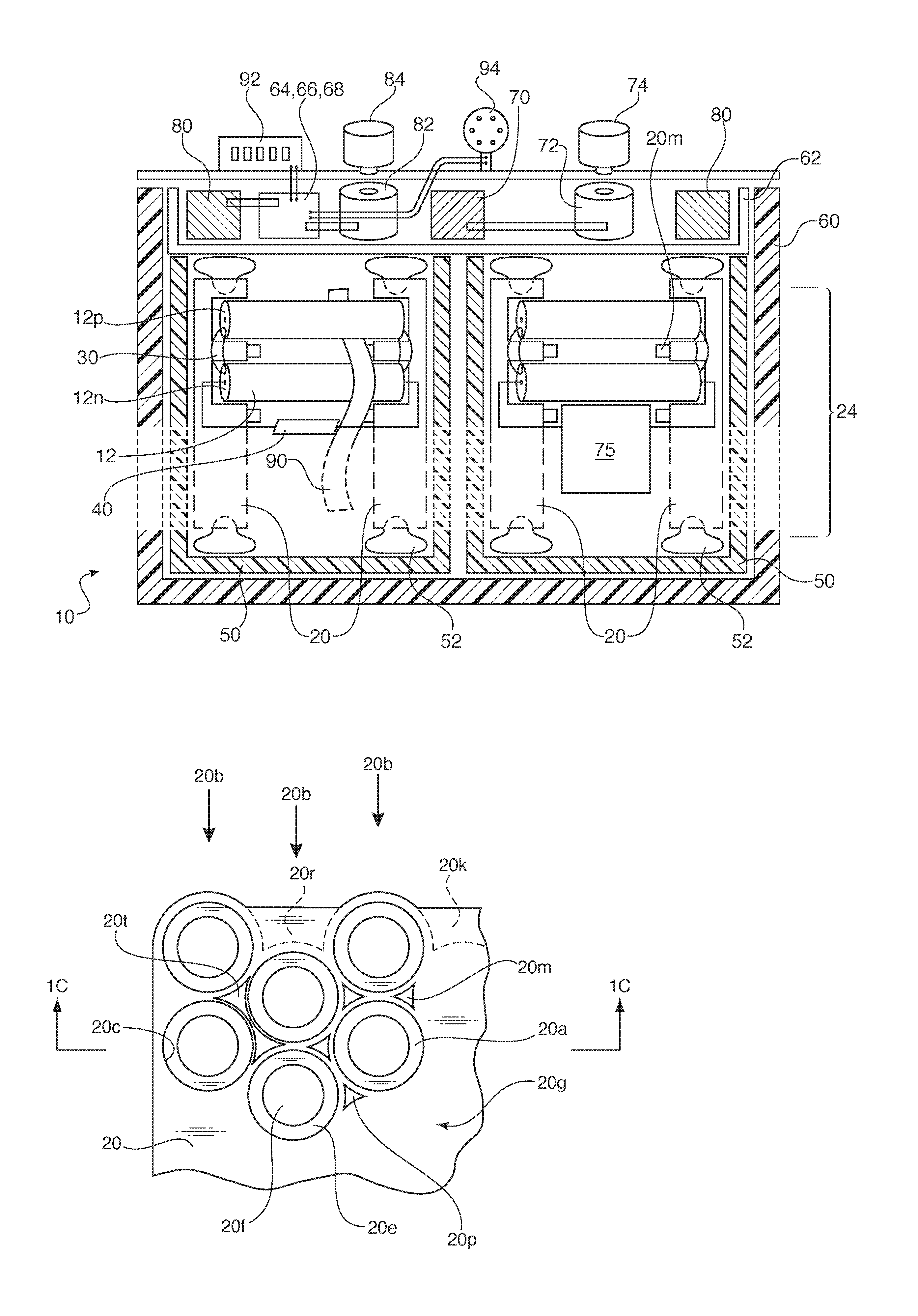
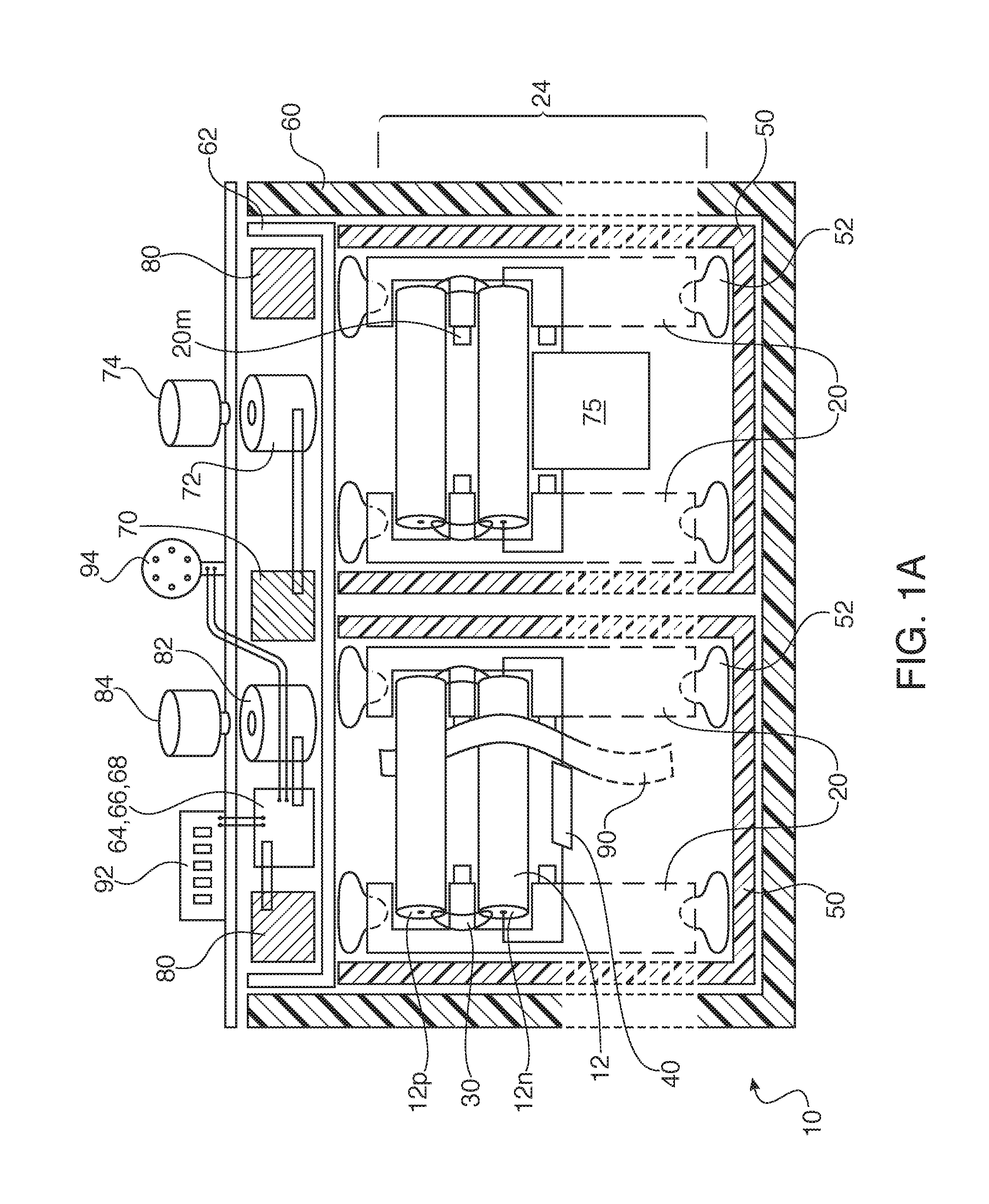
[0050]The arrangement of cells is critical to facilitate the assembly process. The series and parallel arrangements of cells are often inefficient to connect in an economical and functional arrangement. The assembly is shown in FIG. 1A as an apparatus 10 for electronically controlling and mechanically coupling cells together within a battery housing 60.
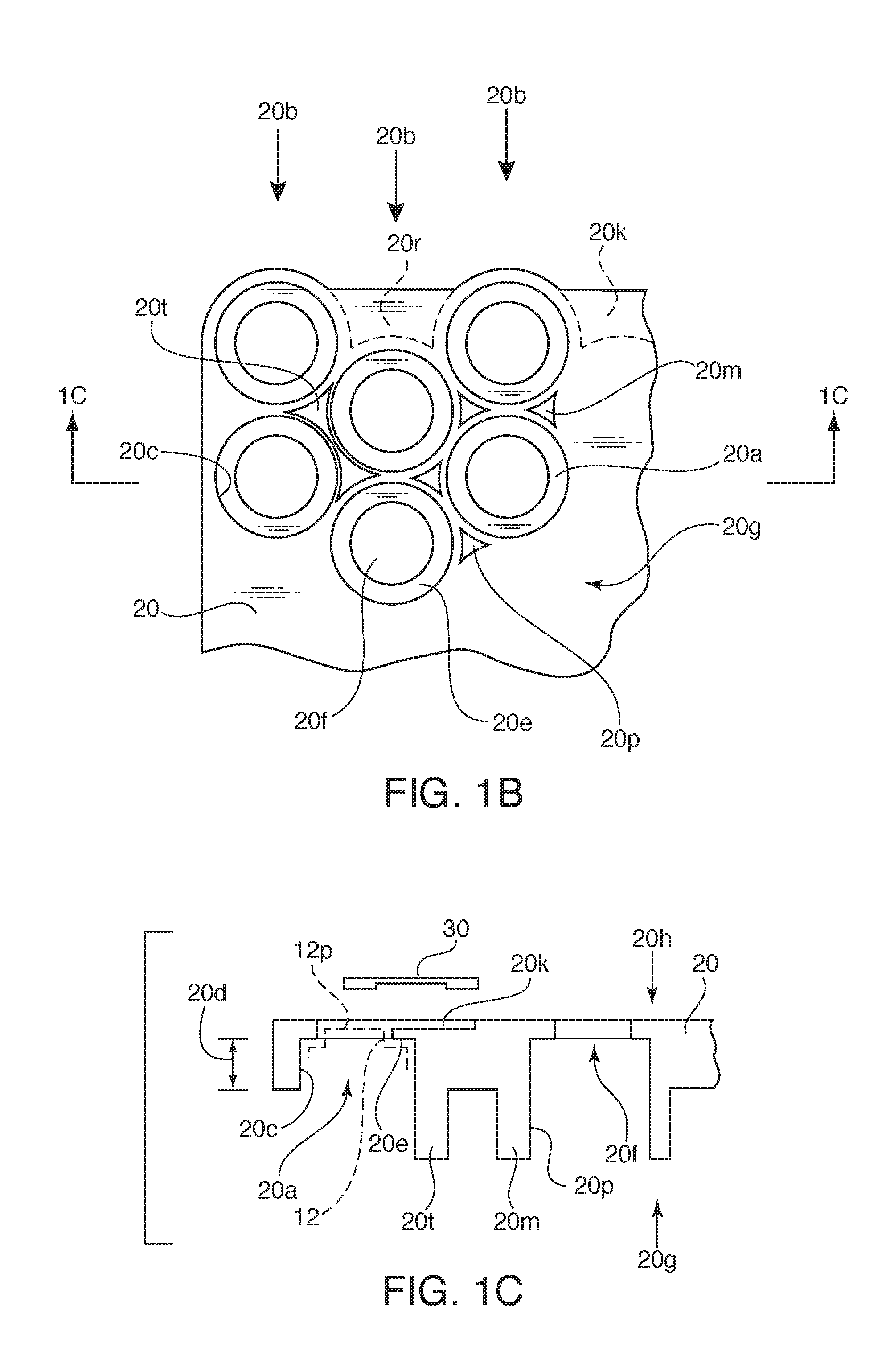
[0051]The 18650 cells are arranged into six cell packs. Two cell packs 24 are shown, in a first row, where two additional rows may by added behind the two cell packs shown. The cell packs are then tied in parallel with substantial bus bars. The construction of the cell packs uses two symmetrical honeycomb shaped parts to hold each end of the cylindrical cells (49 cells for 24v ...
PUM
 Login to View More
 Abstract
Description
Claims
Application Information
 Login to View More