
Doped bismuth silicate crystals via devitrification of glass forming liquids
a technology of glass forming liquid and bismuth silicate, which is applied in the direction of chemistry apparatus and processes, and compositions of light, can solve the problems of limited use of germanium, high energy consumption, and significant yield of by-products, and achieves the effects of increasing the solubility of dopants (alien cations), high crystal conversion rate, and high yield of crystal production
- Summary
- Abstract
- Description
- Claims
- Application Information
AI Technical Summary
Benefits of technology
Problems solved by technology
Method used
Image

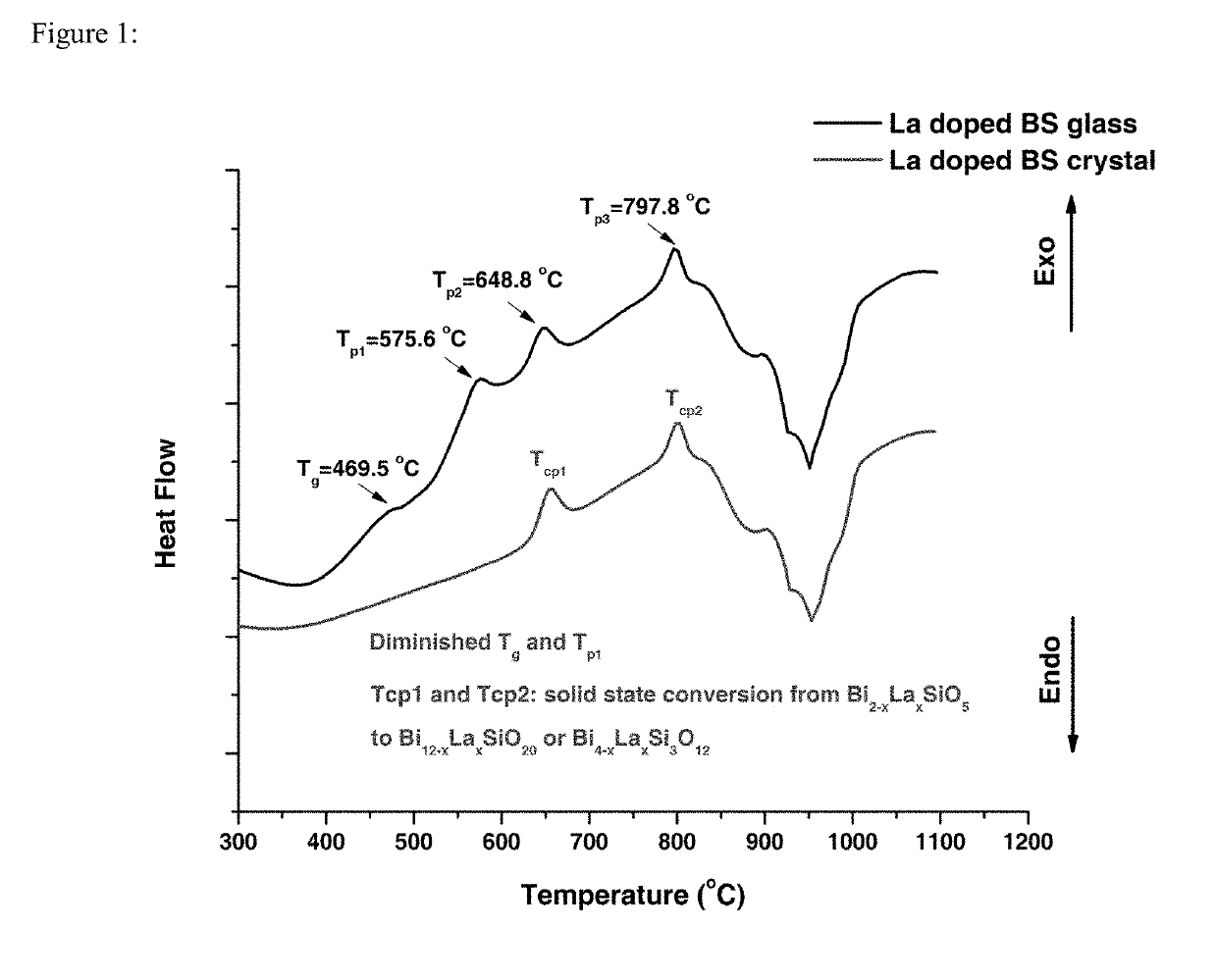
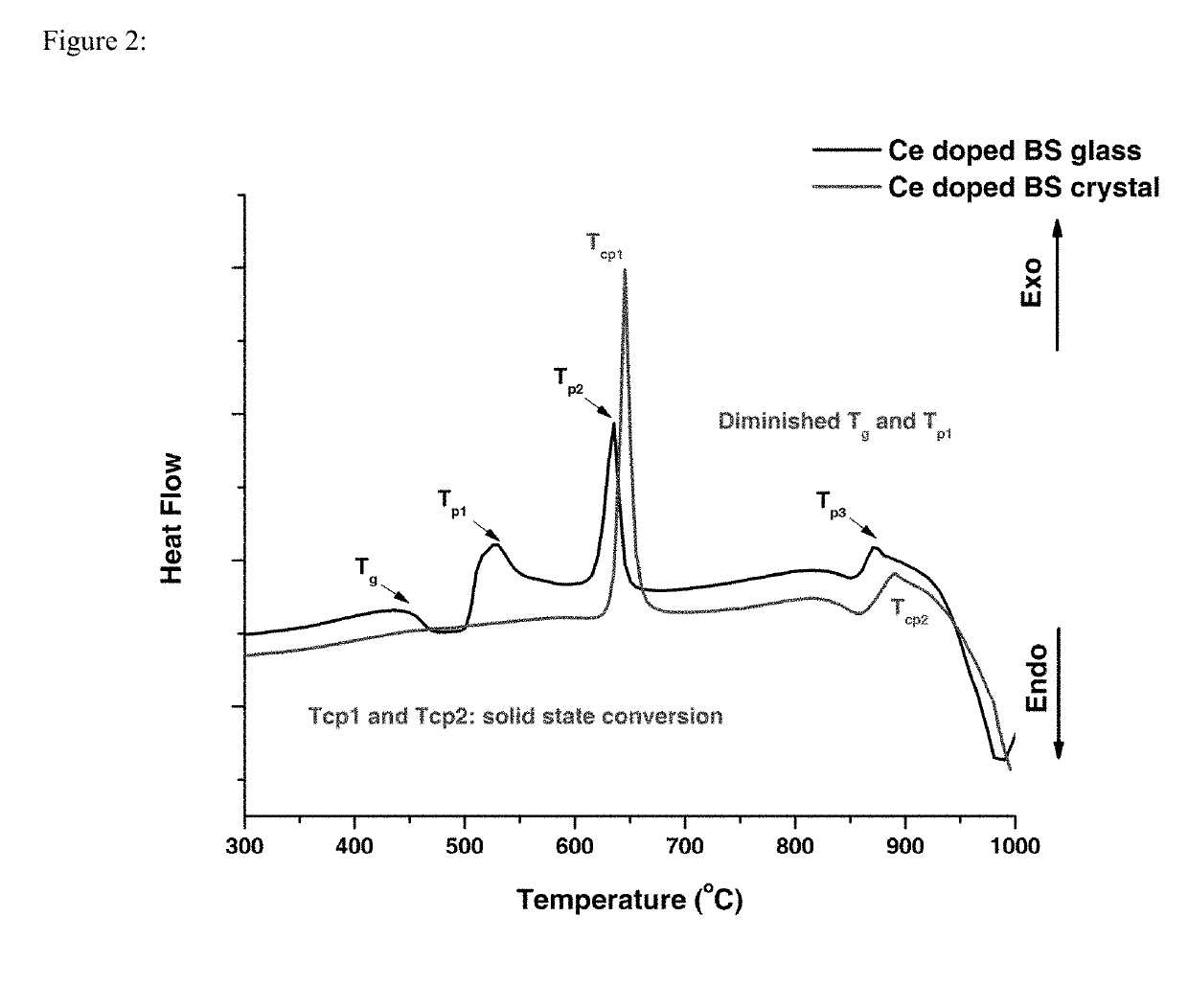
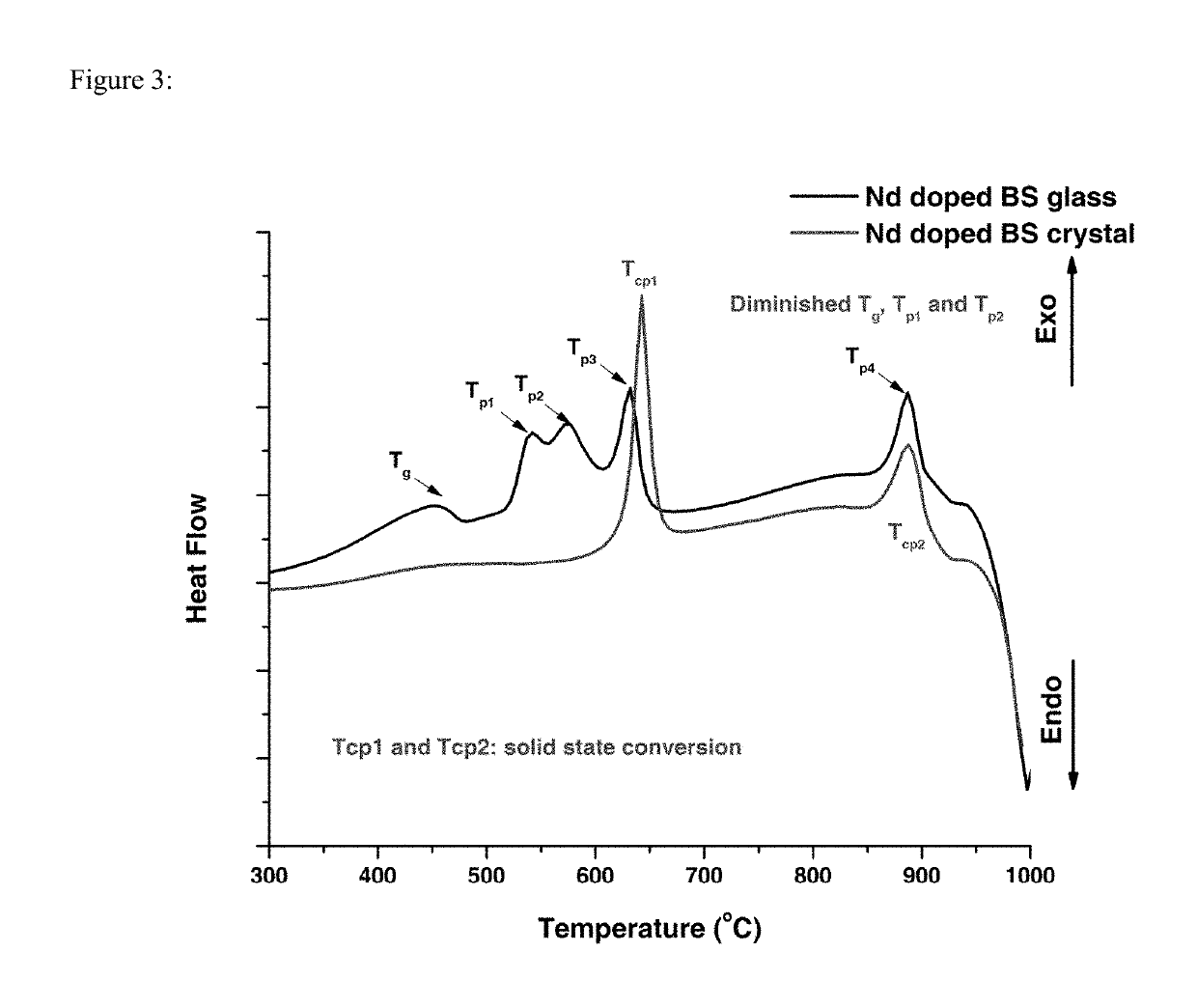
Examples
Embodiment Construction
[0013]Unless defined otherwise, all technical and scientific terms used herein have the same meanings as commonly understood by one of ordinary skill in the art to which this invention belongs. Although any methods and materials similar or equivalent to those described herein can be used in the practice or testing of the present invention, the preferred methods, devices, and materials are now described. All references, publications, patents, patent applications, and commercial materials mentioned herein are incorporated herein by reference for all purposes including for describing and disclosing the methodologies which are reported in the publications which might be used in connection with the invention. Nothing herein is to be construed as an admission that the invention is not entitled to antedate such disclosure by virtue of prior invention.
[0014]This present technology comprises a mixture of lanthanum carbonate, neodymium oxide, praseodymium oxide, cerium oxide, samarium oxide, ...
PUM
| Property | Measurement | Unit |
|---|---|---|
| Temperature | aaaaa | aaaaa |
| Temperature | aaaaa | aaaaa |
| Temperature | aaaaa | aaaaa |
Abstract
Description
Claims
Application Information
 Login to View More