Transportation of
petroleum products, such as
crude oil, on the open seas poses a risk to the environment as well as the potential for economic loss in the case of a breach of the hull of the vehicle with resulting spillage of the vehicle's cargo.
There are several drawbacks associated with a double hull construction of a vessel such as an
oil tanker.
First, double hulled vessels are expensive to manufacture as well as to operate.
Construction in the form of
retrofitting additional hulls inside vessels which are in service is very difficult, as well as expensive.
Furthermore, due to the double
hull structure, it is difficult to inspect and / or perform repairs within spaces between an outer hull and an inner hull in the event such action becomes necessary.
However, the Lee et al. patent fails to address the issues pertaining to the
structural integrity of the
inflatable bags against the forces acting across a large hull breach.
Accordingly, the gas inflated bags may provide sufficient strength for a smaller size vehicle as well as a minor breach, however, when applying this apparatus to a tanker vessel, such a mitigating apparatus may not be sufficient to withstand the forces associated with a significant breach of the hull.
However, the disclosure does not appear to account for significant pressure applied to a vessel hull in the event of a breach.
Although such a disclosure may be sufficient to withstand a breach of the hull in a smaller size vessel, the
mechanics of the structure cannot be retrofitted to a storage vessel such as a conventional
oil tanker or supertanker.
The force of the water bearing against the hull in the event of a breach is enormous, and the sheets and pillows disclosed in the Elijah patent do not have the strength to withstand the pressure associated with such a breach.
Accordingly, such a disclosure does not provide a means for sealing the breach and holding the seal for an extended period of time until such rupture may be cured.
However, the Perkins patent does not teach a
liquid polymer for sealing the compartment in the event of a breach, nor does it disclose a foam comprising strength and
buoyancy to seal the breach without compromising the integrity of the hull as aqueous foam does not provide such properties.
Accordingly, the Perkins patent neither provides the structure nor the materials for sealing a compartment of the hull of a vehicle which has been ruptured.
In view of all of the disclosures which provide means for filling hull compartments with gas inflated bags or foam material for preventing
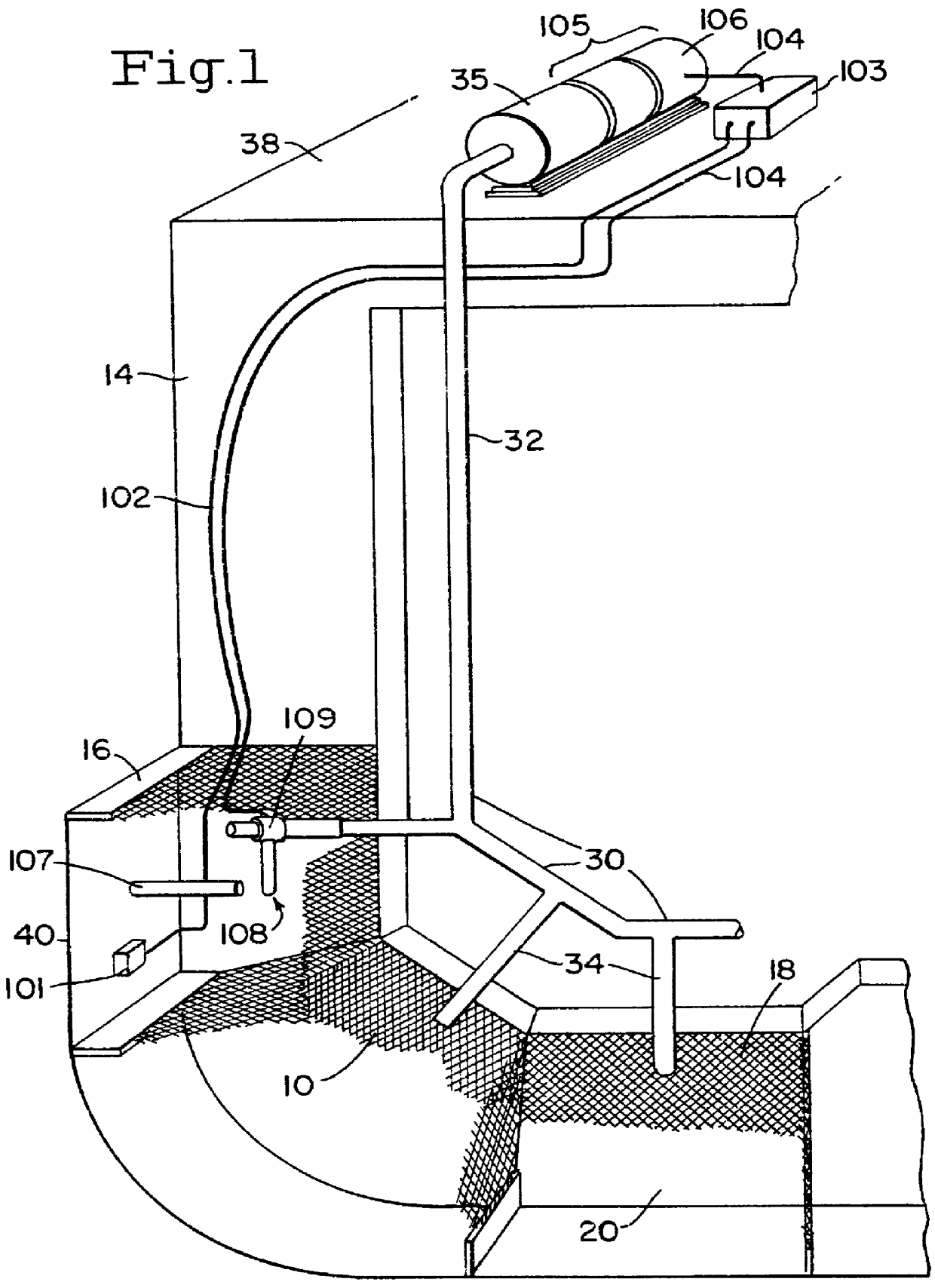
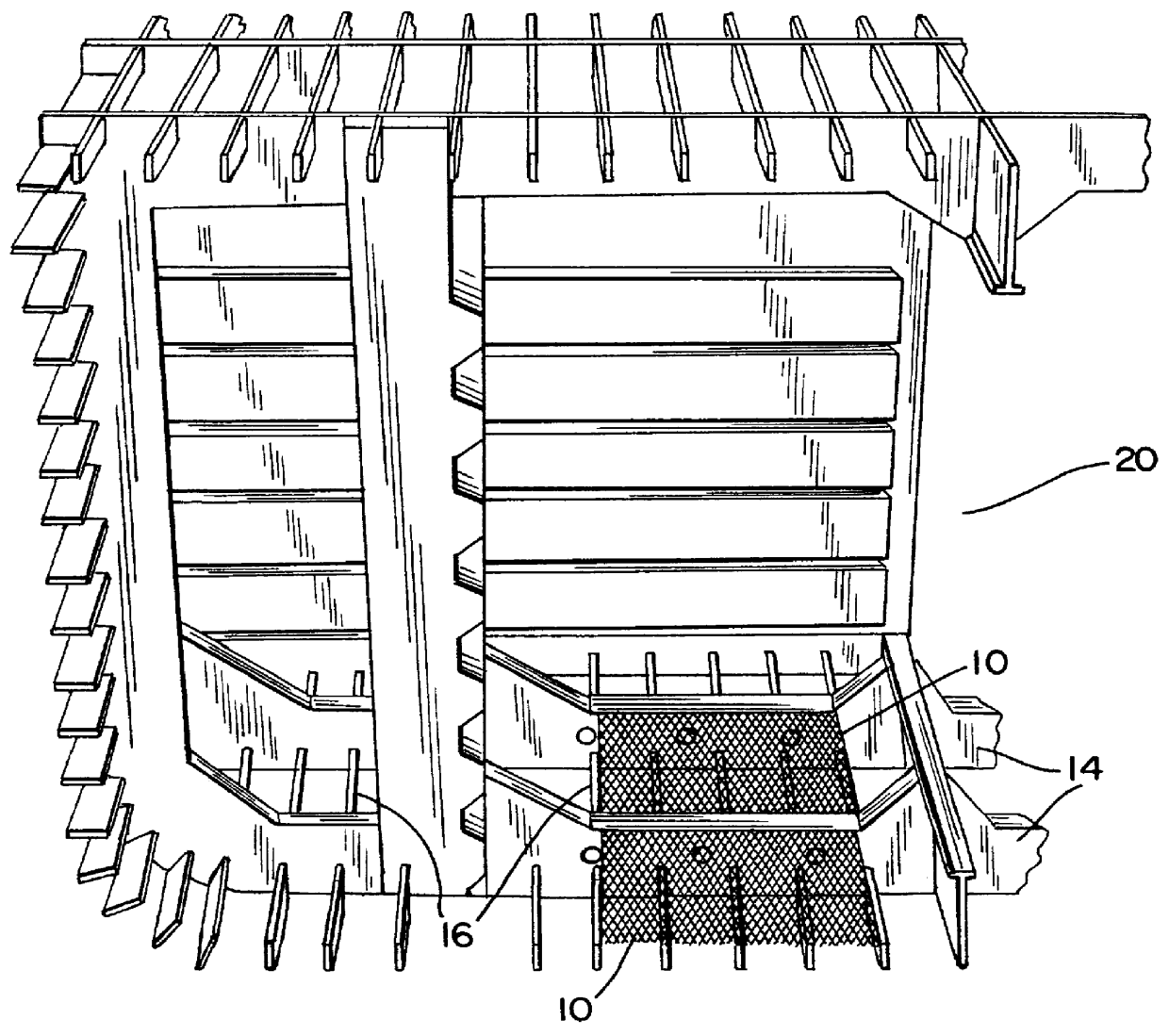
evaporation of vapors, none provide a compact apparatus for directing a foamable cast-cure plastic material to the site of the hull breach, wherein such
polymer seals the breach and comprises sufficient strength to withstand the pressure of the external water applied to the area of the breach.


 Login to View More