
Titania fiber, method for producing the fiber and method for using the fiber
a technology of titanium oxide and fiber, which is applied in the field of titanium fiber, method for producing fiber and method for using fiber, can solve the problems of insufficient mechanical strength of fibers, inability to achieve the above conventional forms of titanium oxide, and difficulty in achieving the effect of titanium oxid
- Summary
- Abstract
- Description
- Claims
- Application Information
AI Technical Summary
Benefits of technology
Problems solved by technology
Method used
Image

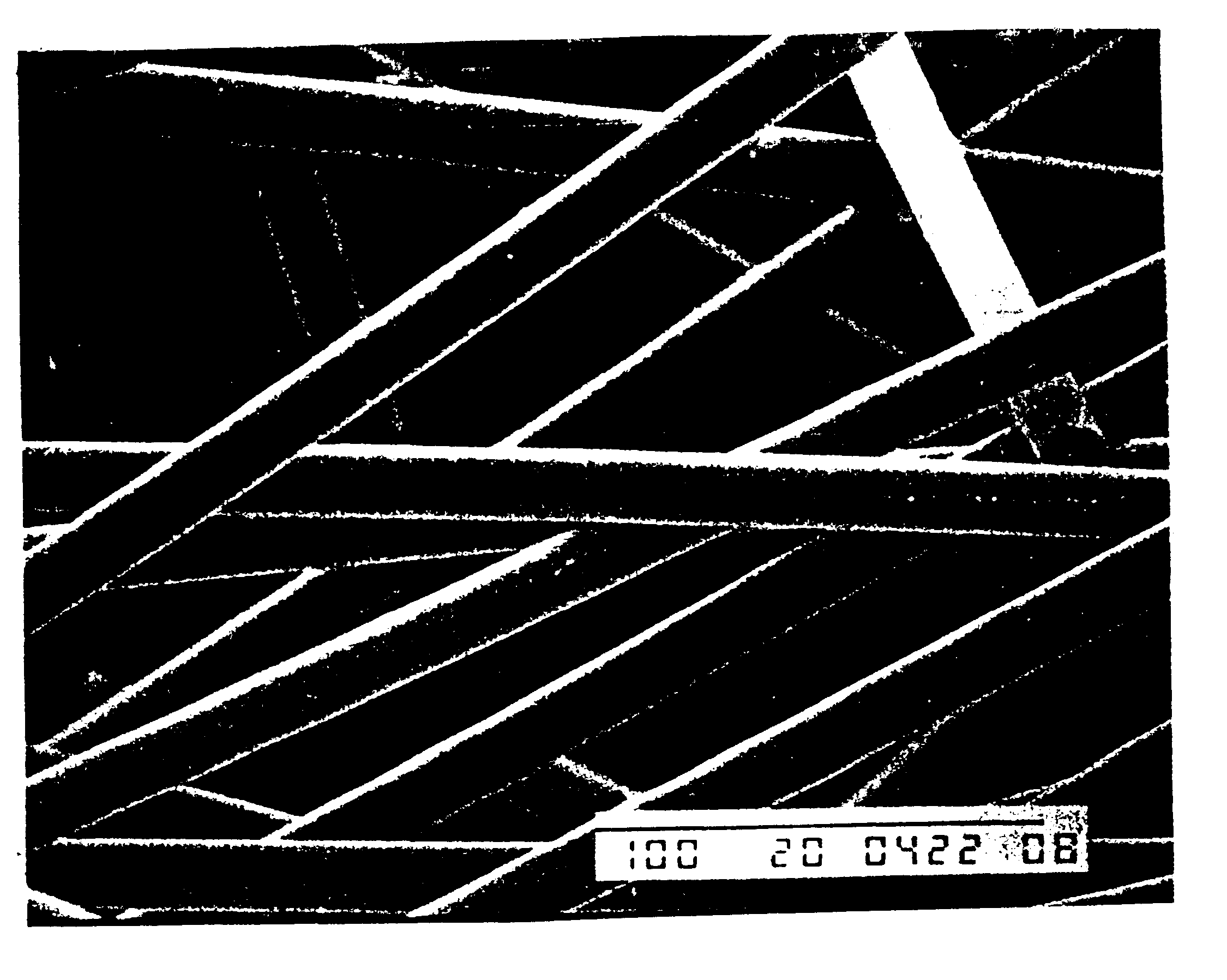
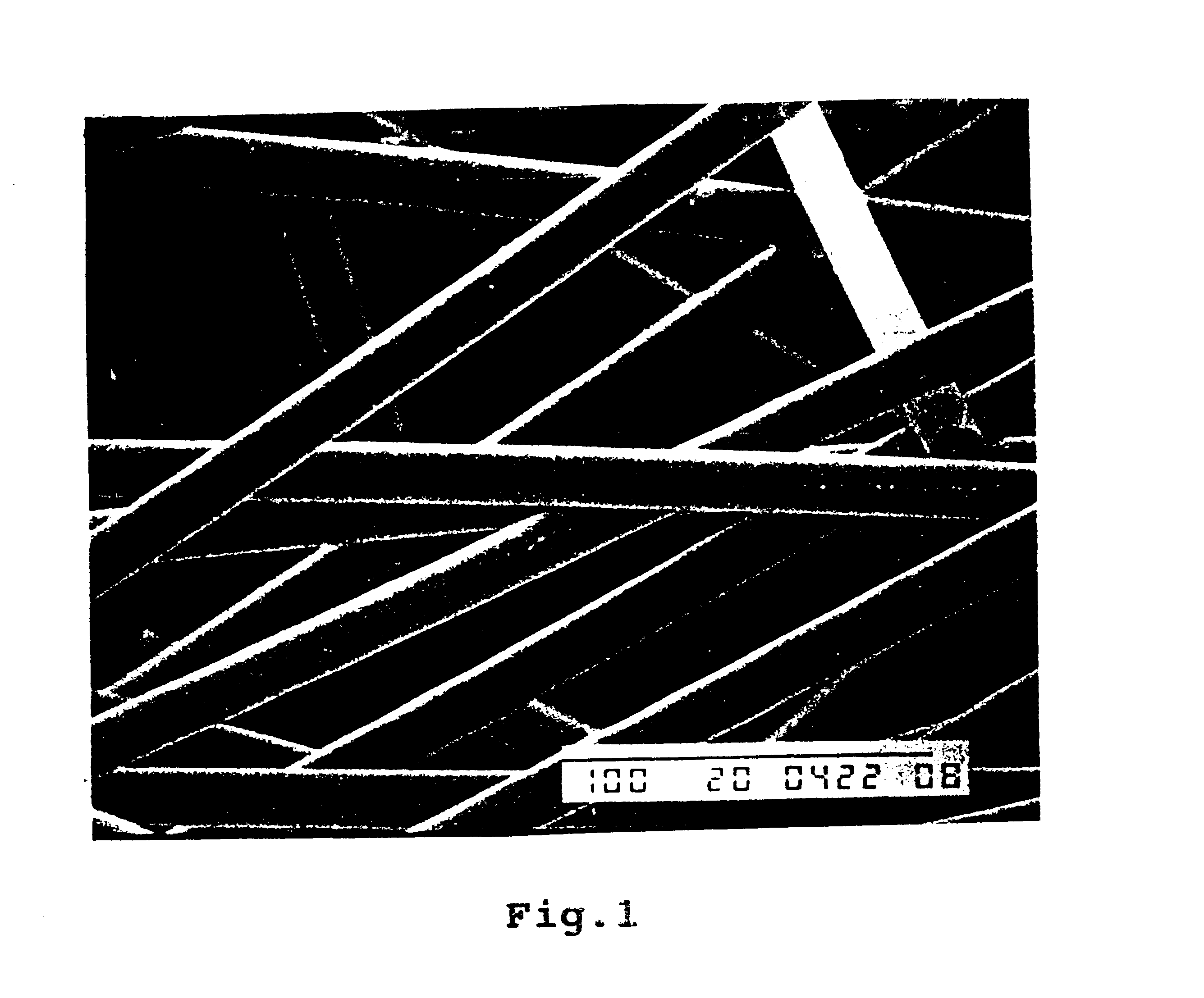
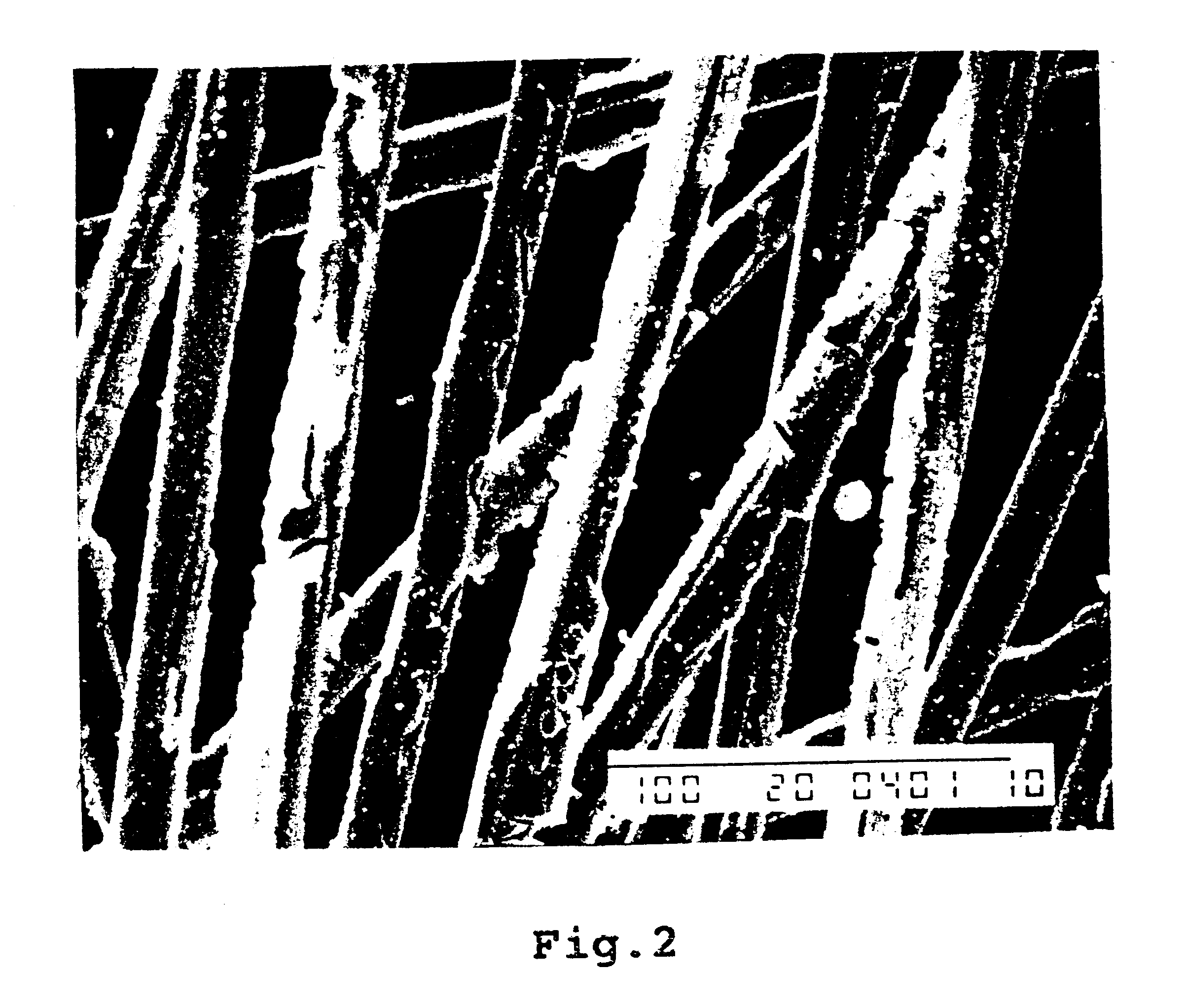
Examples
example 1
Titanium isopropoxide (1st grade reagent, manufactured by Wako Pure Pharmaceuticals Co., Ltd.) (300.0 g) and ethyl acetoacetate (extra pure reagent, manufactured by Wako Pure Pharmaceuticals Co., Ltd.) (54.9 g) were dissolved in isopropyl alcohol (extra pure reagent, manufactured by Wako Pure Pharmaceuticals Co., Ltd.) (700.0 g) and the solution was refluxed under a nitrogen atmosphere for 1 hour to prepare an alcohol solution of titanium isopropoxide. At this time, a molar ratio of ethyl acetoacetate to titanium isopropoxide is 0.40. Separately, pure water (51.0 g) was mixed with isopropyl alcohol (460.2 g) to prepare an alcohol solution having a water concentration of 10% by weight. An amount of water in the solution is 2.7 mole ratio based on titanium isopropoxide used.
The alcohol solution of titanium isopropoxide was heated in a nitrogen atmosphere and refluxed under boiling and the alcohol solution of water was added into the solution of titanium isopropoxide with distilling th...
example 2
According to the same manner as that described in Example 1 except for changing the calcination temperature after the water vapor treatment to 1100.degree. C., a titania fiber was obtained.
The resulting titania fiber had an average diameter of 15 .mu.m per a monofilament and a high average tensile strength of 1.1 Gpa per a monofilament. According to the XRD analysis, the fiber was rutile-form titanium oxide and only a peak of a rutile-form crystal was recognized.
example 3
Titanium isopropoxide (300.0 g) and ethyl acetoacetate (54.9 g) were dissolved in isopropyl alcohol (128.6 g) and the solution was refluxed under a nitrogen atmosphere for 1 hour to prepare an alcohol solution of titanium isopropoxide. Separately, pure water (51.0 g) was mixed with isopropyl alcohol (1653.3 g) to prepare an alcohol solution having a water concentration of 3% by weight.
The alcohol solution of titanium isopropoxide was heated in a nitrogen atmosphere and refluxed under boiling and the alcohol solution of water was added into the solution of titanium isopropoxide with distilling the alcohol under stirring. A distillation rate of the alcohol was adjusted to a rate which is almost the same as an addition rate of the alcohol solution of water. An addition period of time of the alcohol solution of water was adjusted to 140 min. When the total amount of water was added, the solution was in slurry state.
After the slurry was refluxed for 1 hour, the alcohol in the slurry was ...
PUM
| Property | Measurement | Unit |
|---|---|---|
| length | aaaaa | aaaaa |
| tensile strength | aaaaa | aaaaa |
| average diameter | aaaaa | aaaaa |
Abstract
Description
Claims
Application Information
 Login to View More