
Neutron tubes
a technology of neutron tubes and tubes, which is applied in the field of neutron tubes, can solve the problems of limited neutron production, limited neutron yield, and limited neutron yield, and achieve the effects of reducing energy loading, increasing neutron flux, and increasing surface area
- Summary
- Abstract
- Description
- Claims
- Application Information
AI Technical Summary
Benefits of technology
Problems solved by technology
Method used
Image

Examples
Embodiment Construction
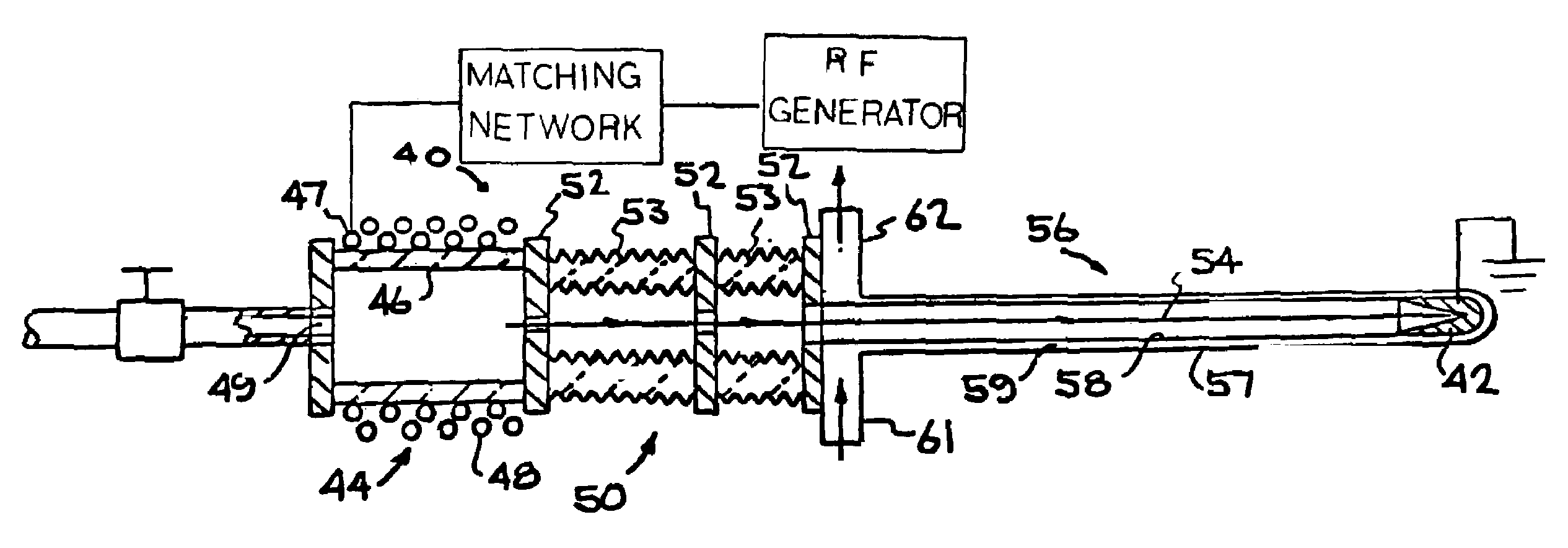
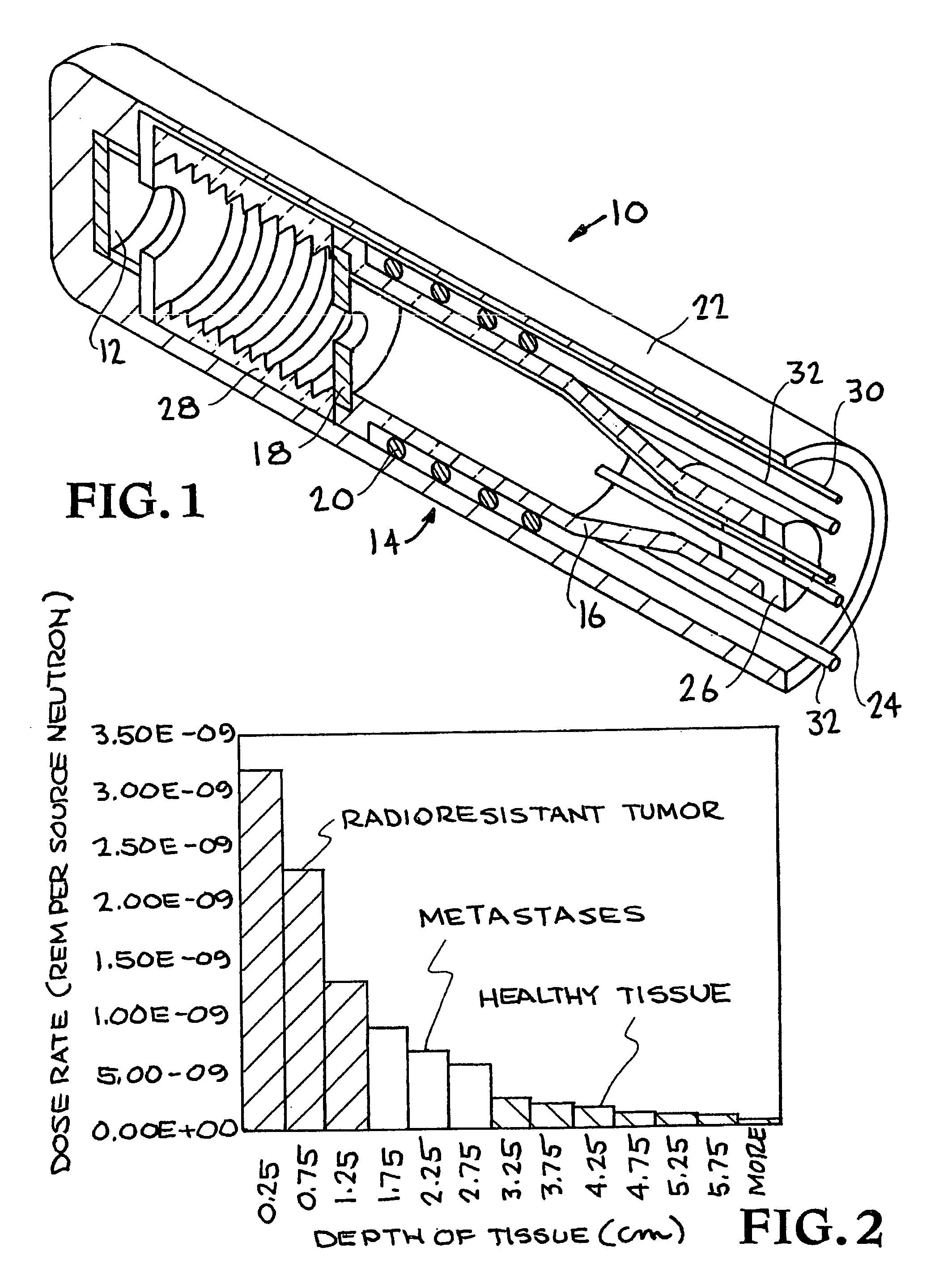
[0021]FIG. 1 shows a miniaturized implantable neutron generator or “mini-neutron-tube”10 of the invention, which has a small neutron generating target (electrode) 12 closely spaced apart from a small plasma ion source 14. Plasma ion source 14 is formed of a quartz (or other material) plasma chamber 16. Ion source 14 and target 12 are mounted in neutron generator housing 22.
[0022]The general principles of plasma ion sources are well known in the art. Ion source 14 includes an RF antenna (induction coil) 20 surrounding (outside) plasma chamber 16 for producing an ion plasma from a gas, typically deuterium, which is introduced into chamber 16 through an inlet 24 which passes through a vacuum plug 26 at an inlet end of chamber 16. Antenna 20 is connected to an external RF power source (not shown) through conductors 32 which pass through the end of generator housing 22. For neutron generation for brachytherapy applications, the plasma produced in ion source 14 is preferably a deuterium i...
PUM
 Login to View More
 Abstract
Description
Claims
Application Information
 Login to View More