

Apparatuses for dissipating heat from semiconductor devices
a technology for semiconductor devices and apparatuses, applied in lighting and heating apparatus, semiconductor/solid-state device details, indirect heat exchangers, etc., can solve the problems of limited surface area available for cooling vapor, difficult machine, and high manufacturing cost of materials with better properties than aluminum. achieve the effect of improving the two-phase cooling efficiency and increasing the surface area of the vapor chamber
- Summary
- Abstract
- Description
- Claims
- Application Information
AI Technical Summary
Benefits of technology
Problems solved by technology
Method used
Image

Examples
Embodiment Construction
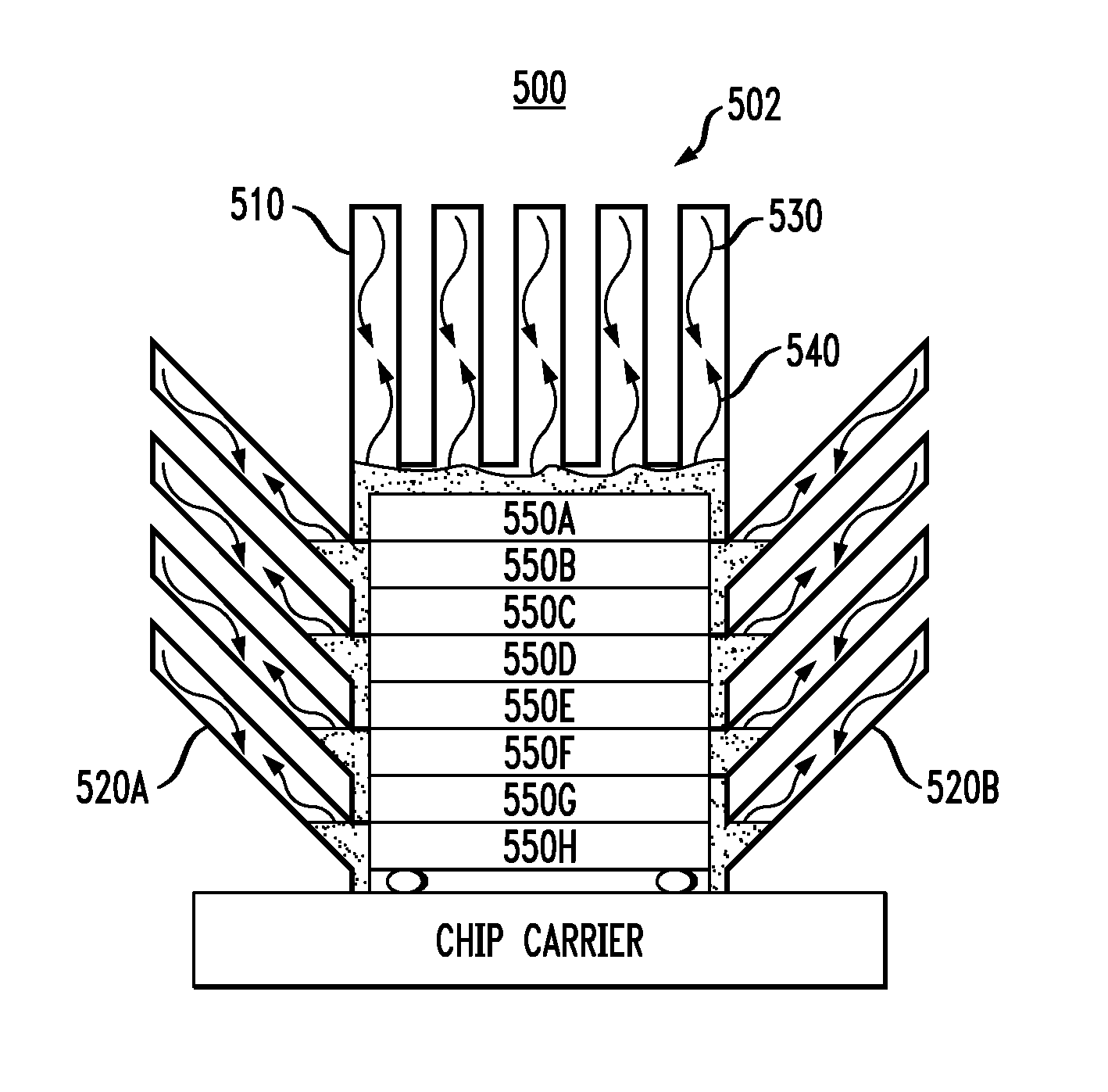
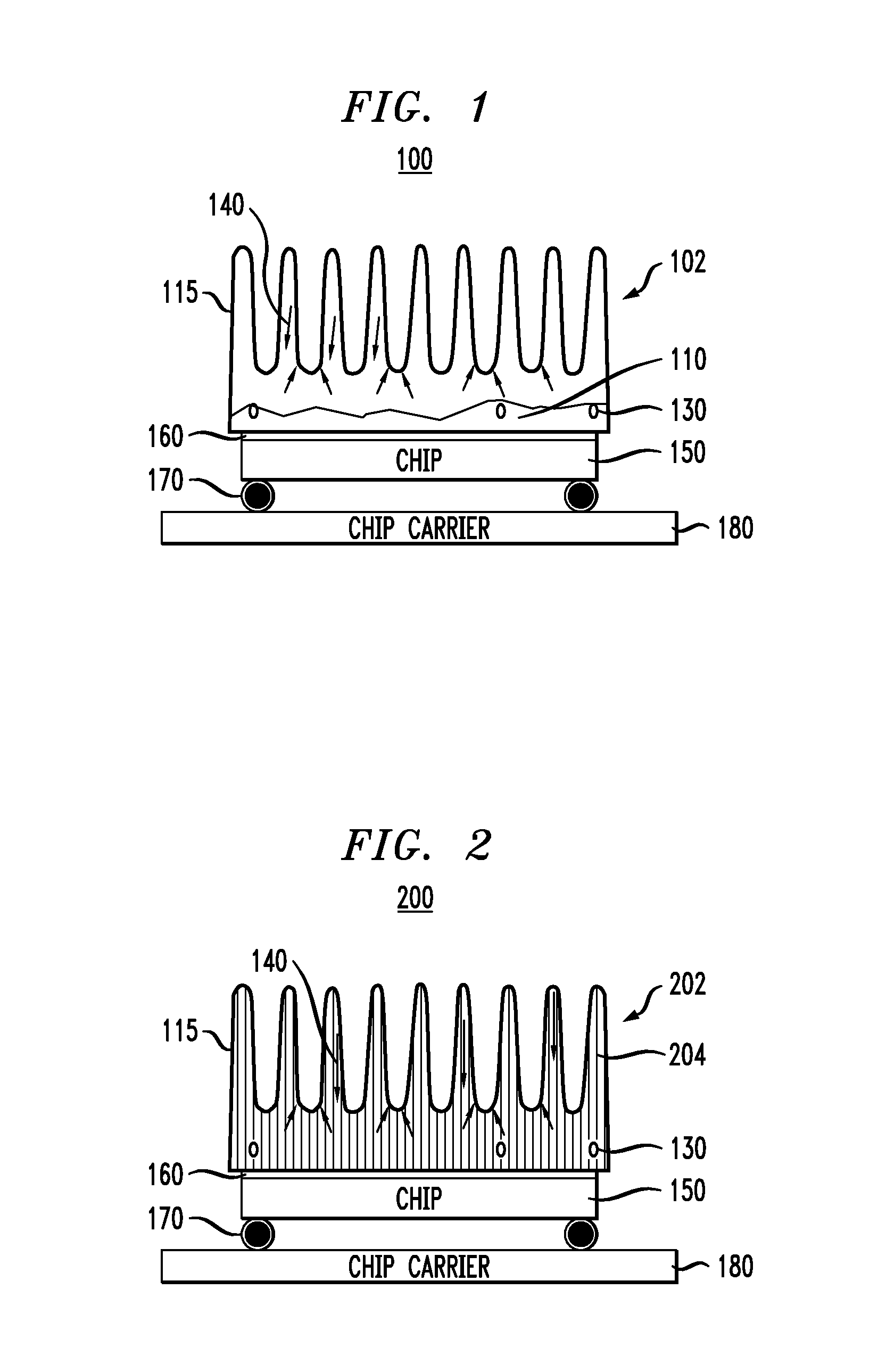
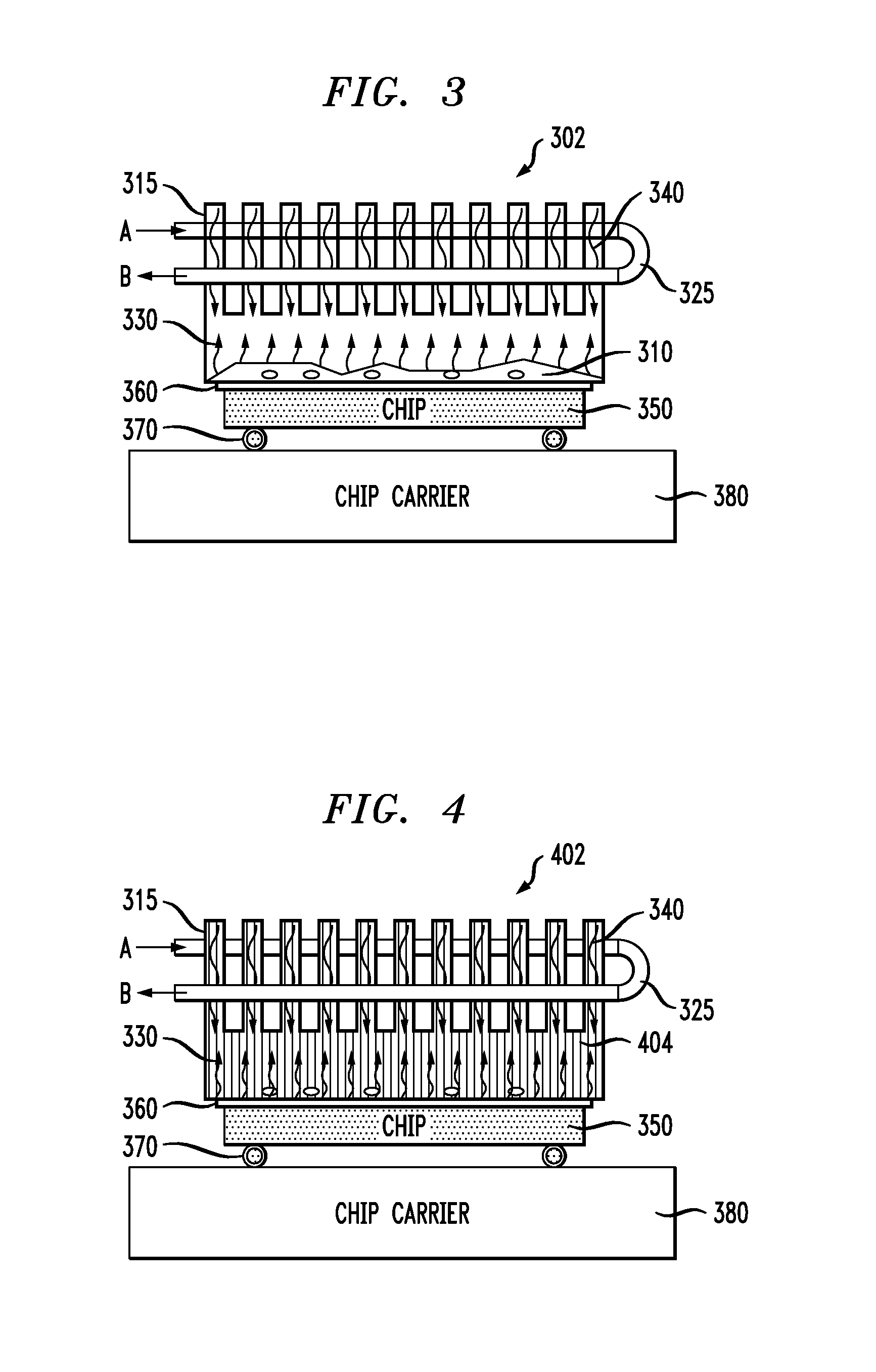
[0026]Referring to FIG. 1, there is shown a perspective view of a heat dissipation module 100. The module 100 includes an air-cooled fin-shaped hollow heat sink 102 that is partially filled with working fluid in accordance with an exemplary embodiment of the invention. The heat sink 102 has a base section in close proximity to a chip, a plurality of three-dimensional (3D) shaped members 115. In one exemplary embodiment, the 3D shaped members 115 can be in the form of fin-shaped members. Other 3D shapes can be used. The heat sink 102 includes a large surface area but with an enclosed cavity inside. The heat sink 102 is also referred herein as a vapor chamber that can be manufactured by using, for example, molding, welding, or other low-cost means to form an extrusion-type heat sink container with a large surface area. However, instead of using a solid fin structure, the fins 115 are constructed with a hollow chamber connected to a base chamber so that vapor carrying latent heat can r...
PUM
 Login to View More
 Abstract
Description
Claims
Application Information
 Login to View More