Check patentability & draft patents in minutes with Patsnap Eureka AI!

Method of synthesizing aluminum carbon nanotube materials for structural and conductor applications

a technology of aluminum carbon nanotubes and composite materials, which is applied in the manufacture of cage rotors, dynamo-electric components, transportation and packaging, etc., can solve the problems of ineffective cnt dispersion in metals, mechanical properties, and inability to develop metal matrix composites based on cnts, so as to promote desirable bonding and improve mechanical and electrical performance. , the effect of improving the bonding

Active Publication Date: 2018-05-15
GM GLOBAL TECH OPERATIONS LLC
View PDF3 Cites 0 Cited by
  • Summary
  • Abstract
  • Description
  • Claims
  • Application Information

AI Technical Summary

Benefits of technology

This method improves both mechanical strength and electrical conductivity of Al-CNT composites, overcoming the limitations of traditional approaches by achieving better CNT dispersion and bonding, leading to enhanced structural and electrical performance suitable for induction motor applications.

Problems solved by technology

Despite these advantages, the development of metal matrix composites based on CNTs has not been forthcoming, due at least in part to the difficulty of dispersing the CNTs in a manner analogous to polymer- and ceramic-based CNT composites.
Nevertheless, these approaches are not effective for CNT dispersion in metals because of the low controllability of the zeta potential of metal particles and the large density difference between the metal and CNTs.
Mechanical mixing and hot extrusion has been proposed as a way to overcome these issues; however, the mechanical properties of resulting the Al-CNTs composites (an ultimate tensile strength of 84 MPa with a 5% by volume addition of CNTs), are not significantly improved relative to pure aluminum (discussed below).
Another approach tried to mix CNTs with aluminum powders by highly efficient mixing using a tubular shaker-mixer and planetary mill; the difficulty of this approach was that the CNTs weren't adequately dispersed, causing electrical performance to suffer.
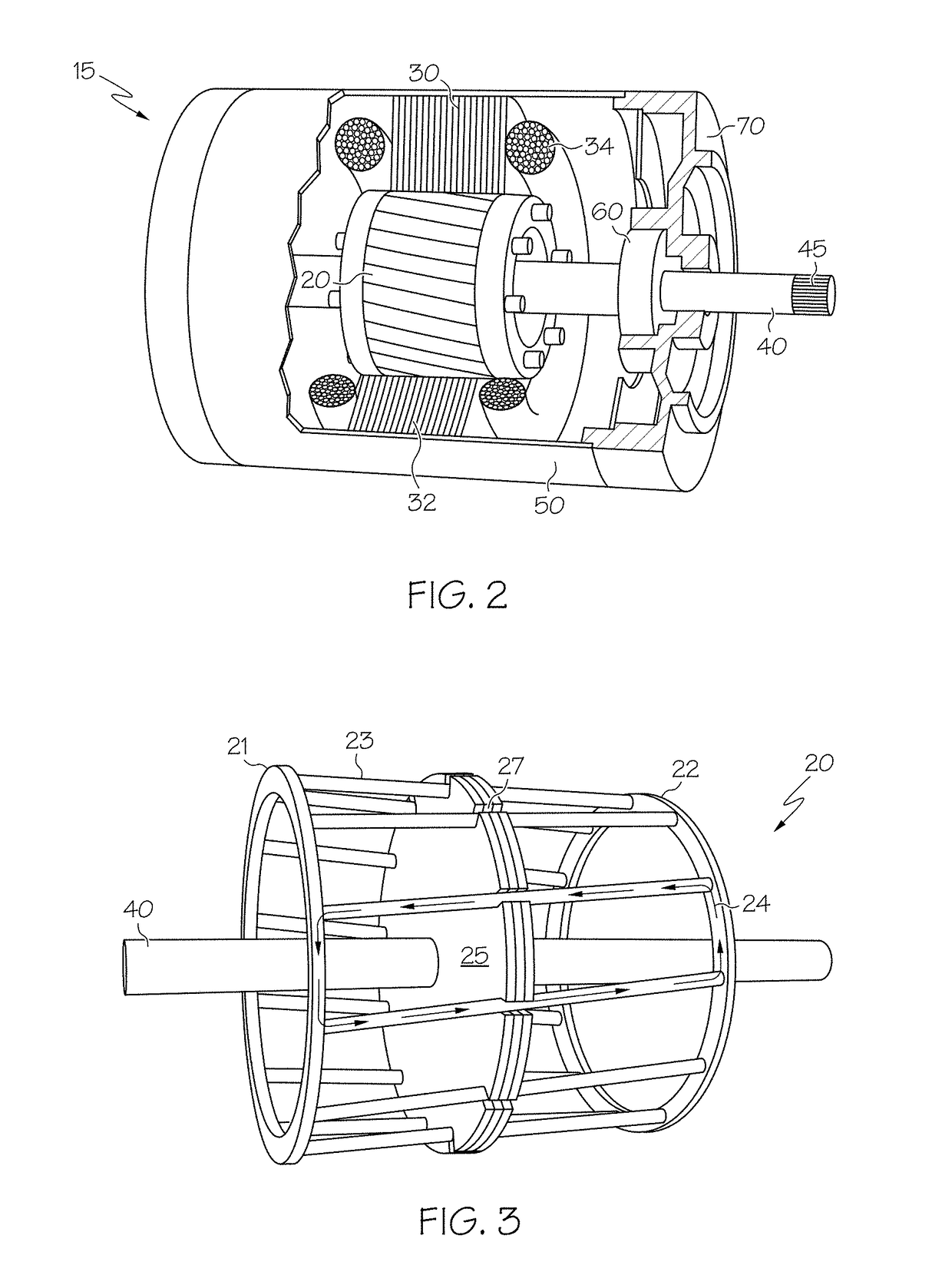
While such material has excellent electrical conductivity, its mechanical properties (as alluded to above) tend to be limited, thereby hampering its ability to meet durability requirements, especially in the harsh environments associated with automotive applications.
This problem is exacerbated by the bars' inherently high aspect ratio and attendant increased susceptibility to defects in casting and other conventional fabrication techniques.
While alloying elements can be added to the aluminum to improve its strength or related mechanical properties, electrical performance tends to become compromised through the lower conductivity.
Moreover, neither casting nor joining are able to produce bars or their resulting cages that simultaneously satisfy the stringent electrical and structural needs of an induction motor that is based on such bars and cages.

Method used

the structure of the environmentally friendly knitted fabric provided by the present invention; figure 2 Flow chart of the yarn wrapping machine for environmentally friendly knitted fabrics and storage devices; image 3 Is the parameter map of the yarn covering machine
View more

Image

Smart Image Click on the blue labels to locate them in the text.
Viewing Examples
Smart Image
  • Method of synthesizing aluminum carbon nanotube materials for structural and conductor applications
  • Method of synthesizing aluminum carbon nanotube materials for structural and conductor applications
  • Method of synthesizing aluminum carbon nanotube materials for structural and conductor applications

Examples

Experimental program
Comparison scheme
Effect test

Embodiment Construction

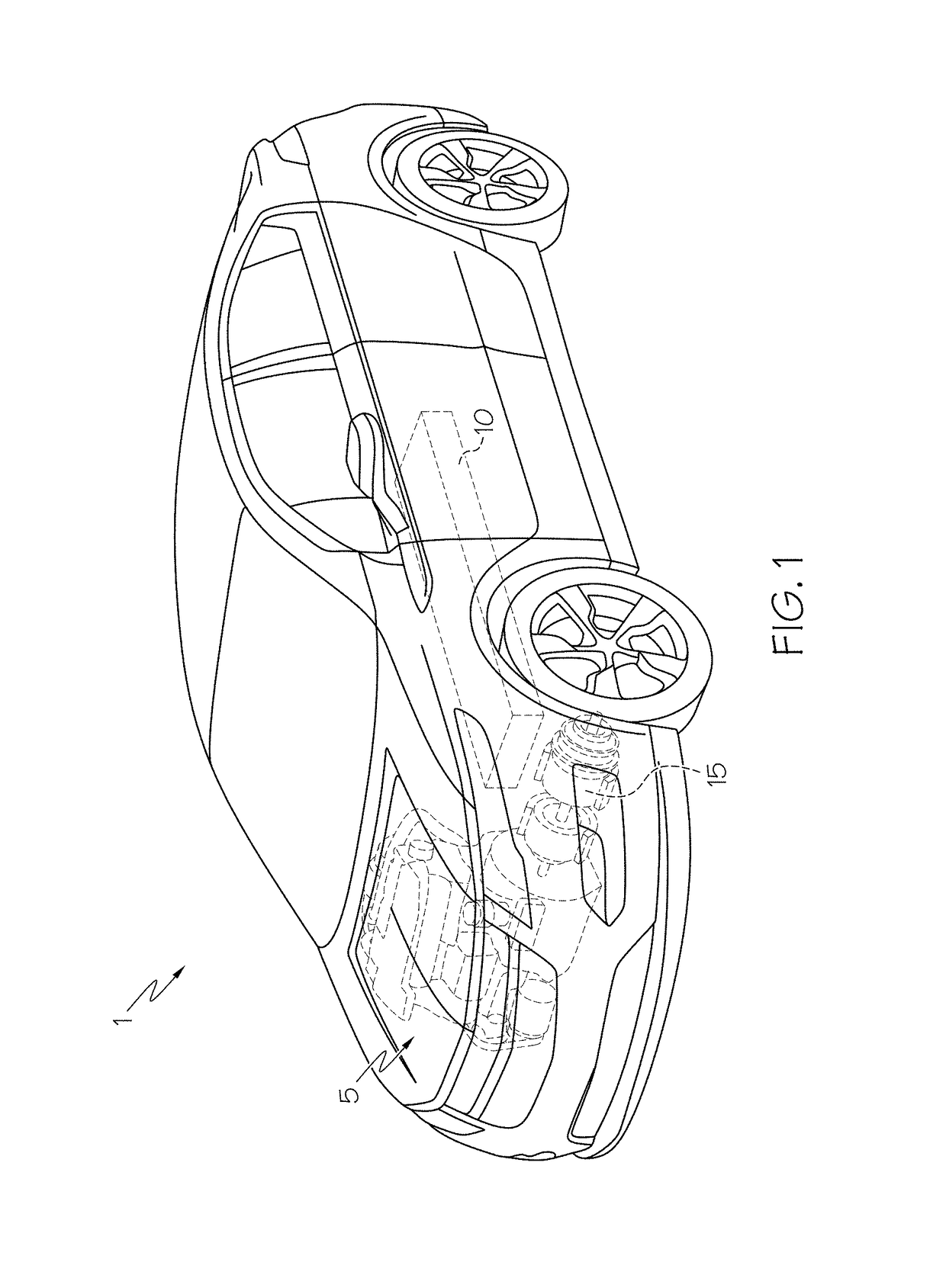
[0021]Referring first to FIG. 1, a vehicle 1 includes a hybrid propulsion system in the form of an electric power source made up of a conventional ICE 5 and a battery pack 10, both cooperative with an electric motor 15. Such a vehicle is known as a hybrid electric vehicle (HEV). It will be appreciated by those skilled in the art that vehicle 1 may not require an ICE 5, in such case, rather than being an HEV, it is an electric vehicle (EV); either form is within the scope of the present invention. Additional drivetrain components (none of which are shown) useful in providing propulsive power to one or more of the wheels and coupled to one or both of the battery pack 10 and ICE 5 are understood to include rotating shafts, axles, transmission, controllers or the like. While vehicle 1 is presently shown as a car, the applicability of the hybrid propulsion system to other such automotive forms (including trucks, buses, aircraft, watercraft, spacecraft and motorcycles) is deemed to be wit...

the structure of the environmentally friendly knitted fabric provided by the present invention; figure 2 Flow chart of the yarn wrapping machine for environmentally friendly knitted fabrics and storage devices; image 3 Is the parameter map of the yarn covering machine
Login to View More

PUM

PropertyMeasurementUnit
temperatureaaaaaaaaaa
Login to View More

Abstract

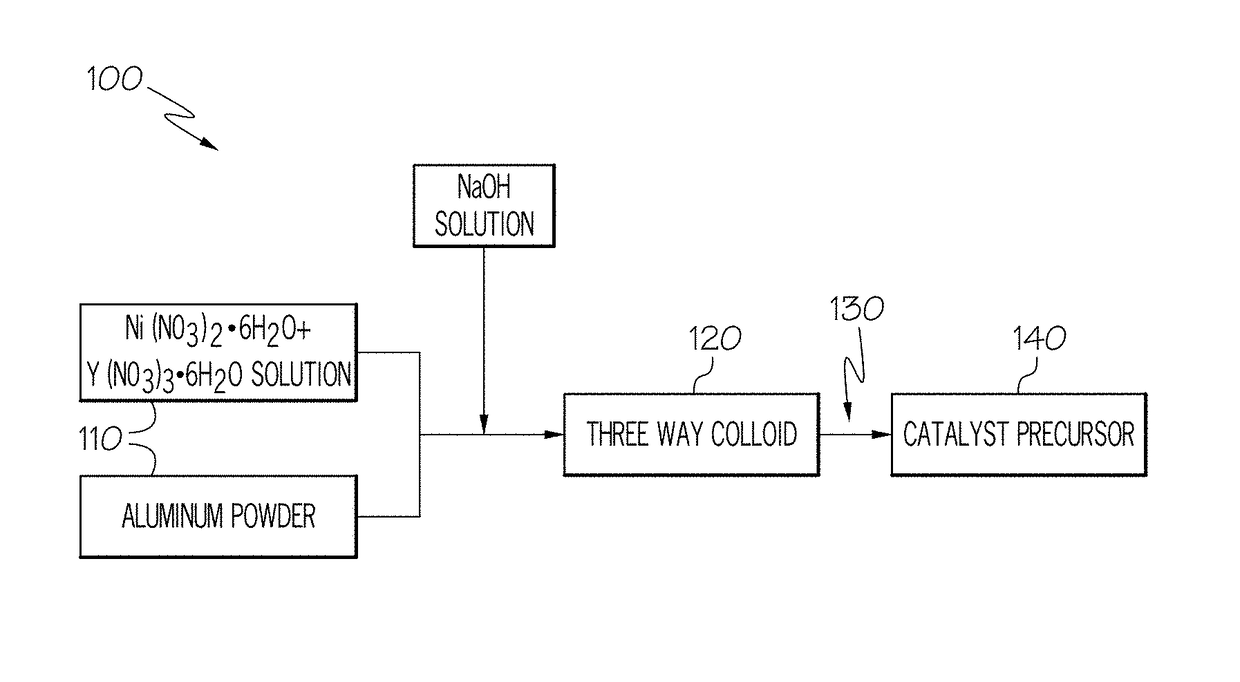
A method of in situ formation of an aluminum carbon nanotube composite material and an induction motor component produced with such composite. The method includes forming an aluminum-based matrix by mixing a catalyst precursor with an aluminum powder such that a colloidal compound is formed that is subsequently sintered to leave a catalytically-active material formed on the surface of the aluminum powder. A carbon-containing gas is introduced to the composite catalyst that includes aluminum and the catalytic metal so that carbon nanotube reinforcements are grown on the aluminum-based matrix with the assistance of the catalytically-active metal. Additional mechanical processing steps may also include pressurizing, sintering and cold-rolling the aluminum carbon nanotube composite material.

Description

BACKGROUND OF THE INVENTION[0001]This invention is related to manufacturing of Al-CNTs composites, in particular, a new technology of in situ synthesizing the Al-CNTs materials for structural and conductor applications.[0002]Carbon nanotubes (CNTs), first discovered in 1991, are now well known to possess extremely high strength, elastic modulus, electrical and thermal conductivity, all while being of low weight construction. They are shaped as elongated hollow cylinders with honeycomb-like nanostructured graphene walls (i.e., that are no more than one atom in thickness). Despite these advantages, the development of metal matrix composites based on CNTs has not been forthcoming, due at least in part to the difficulty of dispersing the CNTs in a manner analogous to polymer- and ceramic-based CNT composites. In the cases of polymer and ceramic matrix composites, some reports have demonstrated that agglomerated CNTs with a high cohesive force could be broken up and homogeneously mixed i...

Claims

the structure of the environmentally friendly knitted fabric provided by the present invention; figure 2 Flow chart of the yarn wrapping machine for environmentally friendly knitted fabrics and storage devices; image 3 Is the parameter map of the yarn covering machine
Login to View More

Application Information

Patent Timeline
no application Login to View More
Patent Type & Authority Patents(United States)
IPC IPC(8): B22F1/02H02K15/00H02K3/02C22C26/00H02K17/16B22F5/00B22F1/16
CPCH02K15/0012B22F1/02C22C26/00H02K3/02H02K17/165B22F5/00B22F2998/10C22C2026/002B22F3/02B22F3/10B22F3/18B22F1/16H02K17/168
Inventor WANG, QIGUILIU, XINKUAN
Owner GM GLOBAL TECH OPERATIONS LLC
Features
  • R&D
  • Intellectual Property
  • Life Sciences
  • Materials
  • Tech Scout
Why Patsnap Eureka
  • Unparalleled Data Quality
  • Higher Quality Content
  • 60% Fewer Hallucinations
Social media
Patsnap Eureka Blog
Learn More