
Method for treating heavy metal-containing acidic waste water and recycling heavy metal with biomass fixed bed
A technology of acid wastewater and fixed bed, which is applied in biological water/sewage treatment, chemical instruments and methods, water/sludge/sewage treatment, etc. High concentration and other problems, to achieve the effect of metal recovery, less loss and high porosity
- Summary
- Abstract
- Description
- Claims
- Application Information
AI Technical Summary
Problems solved by technology
Method used
Image

Examples
Embodiment 1
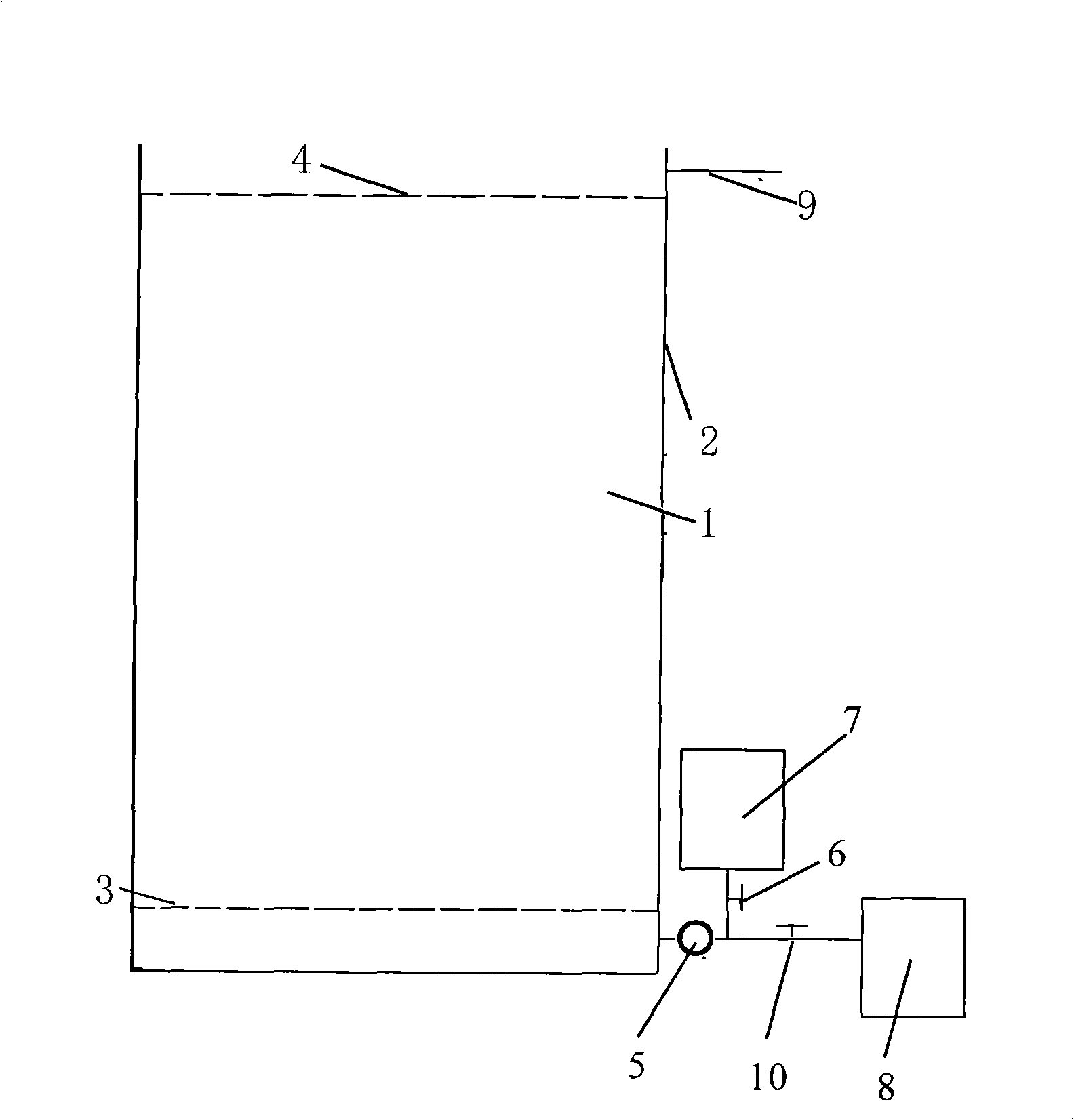
[0030] First, the harvested and dried rape straw is made into particles with a length of 20-30mm, and then the processed rape straw particles are filled into a container with a supporting layer and a water distribution device at the bottom to form a fixed-bed microbial reactor. The reactor is made of a PVC pipe with a diameter of 10 cm, a height of 200 cm, and an effective volume of 12 liters.
[0031] Put 1 liter of concentrated sludge from domestic sewage treatment plant into straw fixed-bed reactor, inoculate mixed flora containing sulfate-reducing bacteria as a source of microbial strains, and use ferrous sulfate aqueous solution with a sulfate concentration of 500mg / L as influent, Adjust the water outlet speed of the fixed-bed microbial reactor, keep the hydraulic retention time at 60 hours, cultivate and acclimatize until the oxidation-reduction potential of the outlet water is lower than -150mv.
[0032] Prepare acid drainage with a copper ion concentration of 5-30mg / L,...
Embodiment 2
[0036] Firstly, the dry rice straw is processed into particles with a length of 30-50mm by a shredder, and then the processed rice straw particles are filled into a container with a support layer and a water distribution device at the bottom to form a fixed-bed microbial reactor. The reactor is made of a PVC pipe with a diameter of 10 cm, a height of 200 cm, and an effective volume of 12 liters.
[0037] Add 1 liter of concentrated sludge from a domestic sewage treatment plant into a straw fixed-bed reactor, and inoculate a mixed flora containing sulfate-reducing bacteria as a source of microbial strains.
[0038] Prepare acid drainage with a copper ion concentration of 5-30mg / L, a sulfate radical concentration of 500-1000mg / L, and a pH value of 3, and use a peristaltic pump to feed the prepared acidic water containing heavy metals into the upper part of the fixed-bed microbial reactor in a downflow manner Deal with acidic water. Adjust the flow rate of the peristaltic pump, ...
Embodiment 3
[0044] First, the harvested and dried rape straw is processed into particles with a length of 20-40mm by a shredder, and then the processed rape straw particles are filled into a container with a supporting layer and a water distribution device at the bottom to form a fixed bed of microorganisms reactor. The reactor is made of a PVC pipe with a diameter of 10 cm, a height of 200 cm, and an effective volume of 12 liters.
[0045] Add 1 liter of concentrated sludge from a domestic sewage treatment plant into a straw fixed-bed reactor, and inoculate a mixed flora containing sulfate-reducing bacteria as a source of microbial strains.
[0046] Use the leaching water from the weathering and oxidation of Xinqiao pyrite sulfide ore as the acid drainage water source (copper ion concentration 50-30mg / L, zinc ion concentration 10-15mg / L, cadmium ion concentration 3-10mg / L, iron ion concentration 100 -300mg / L, sulfate radical concentration 1000-2000mg / L, pH value 3-4), use a peristaltic ...
PUM
| Property | Measurement | Unit |
|---|---|---|
| particle diameter | aaaaa | aaaaa |
| length | aaaaa | aaaaa |
| length | aaaaa | aaaaa |
Abstract
Description
Claims
Application Information
 Login to View More