
Method for preparing ZnS mischcrystal photocatalyst
A photocatalyst and solid solution technology, applied in chemical instruments and methods, physical/chemical process catalysts, hydrogen production, etc., can solve the problems of low hydrogen production rate, achieve low cost, high utilization efficiency of visible light, and simple preparation process Effect
- Summary
- Abstract
- Description
- Claims
- Application Information
AI Technical Summary
Problems solved by technology
Method used
Image

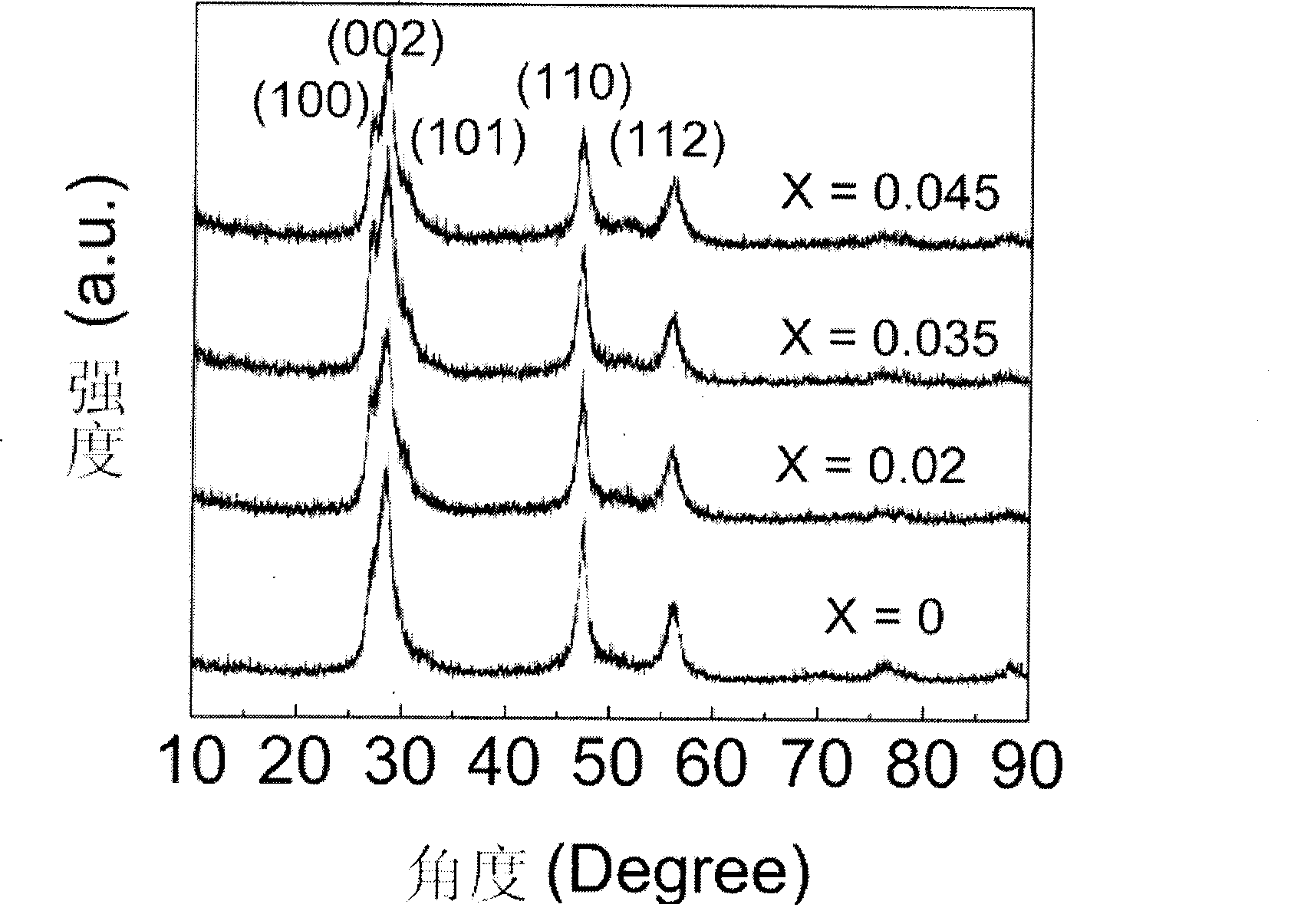
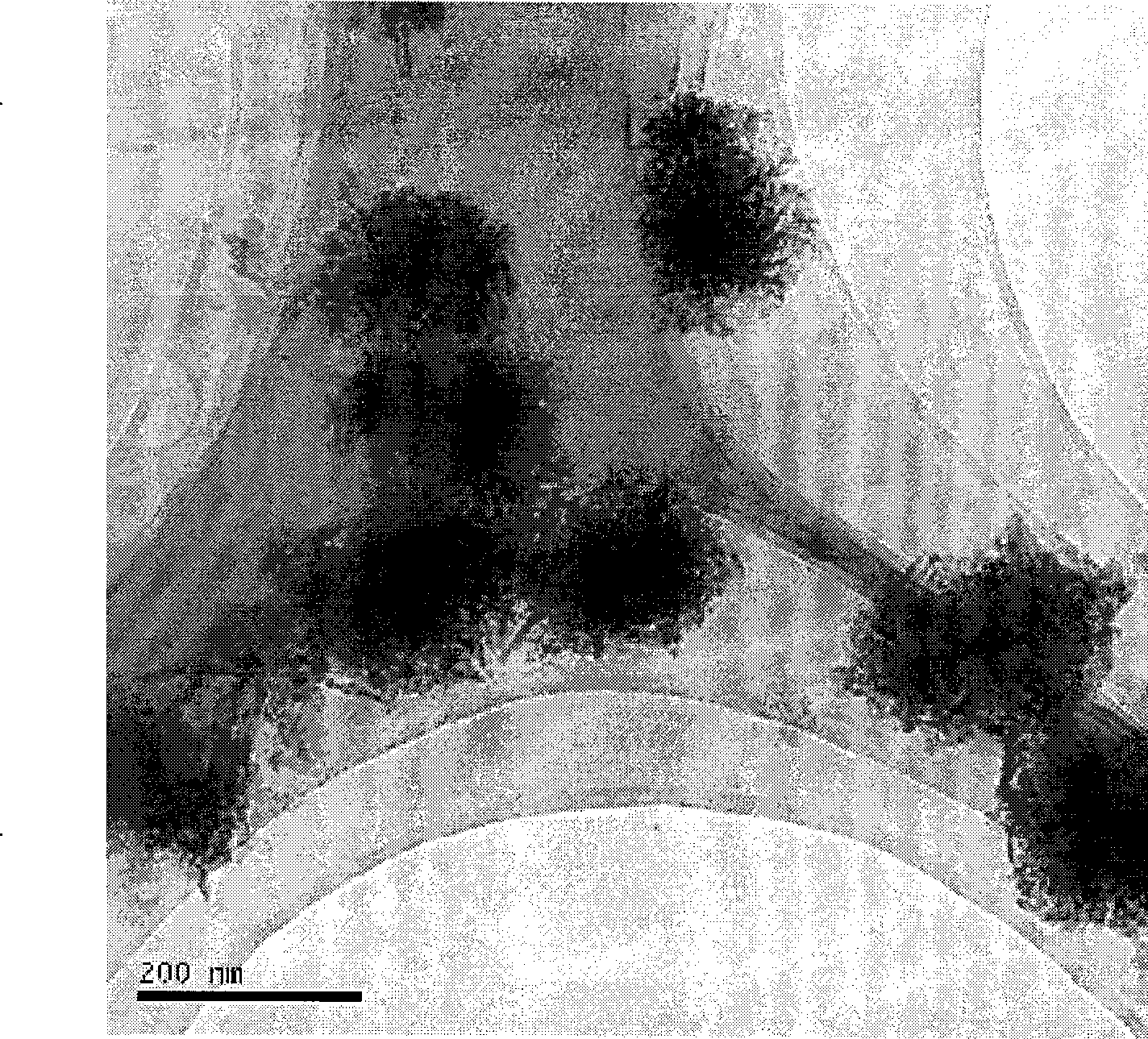
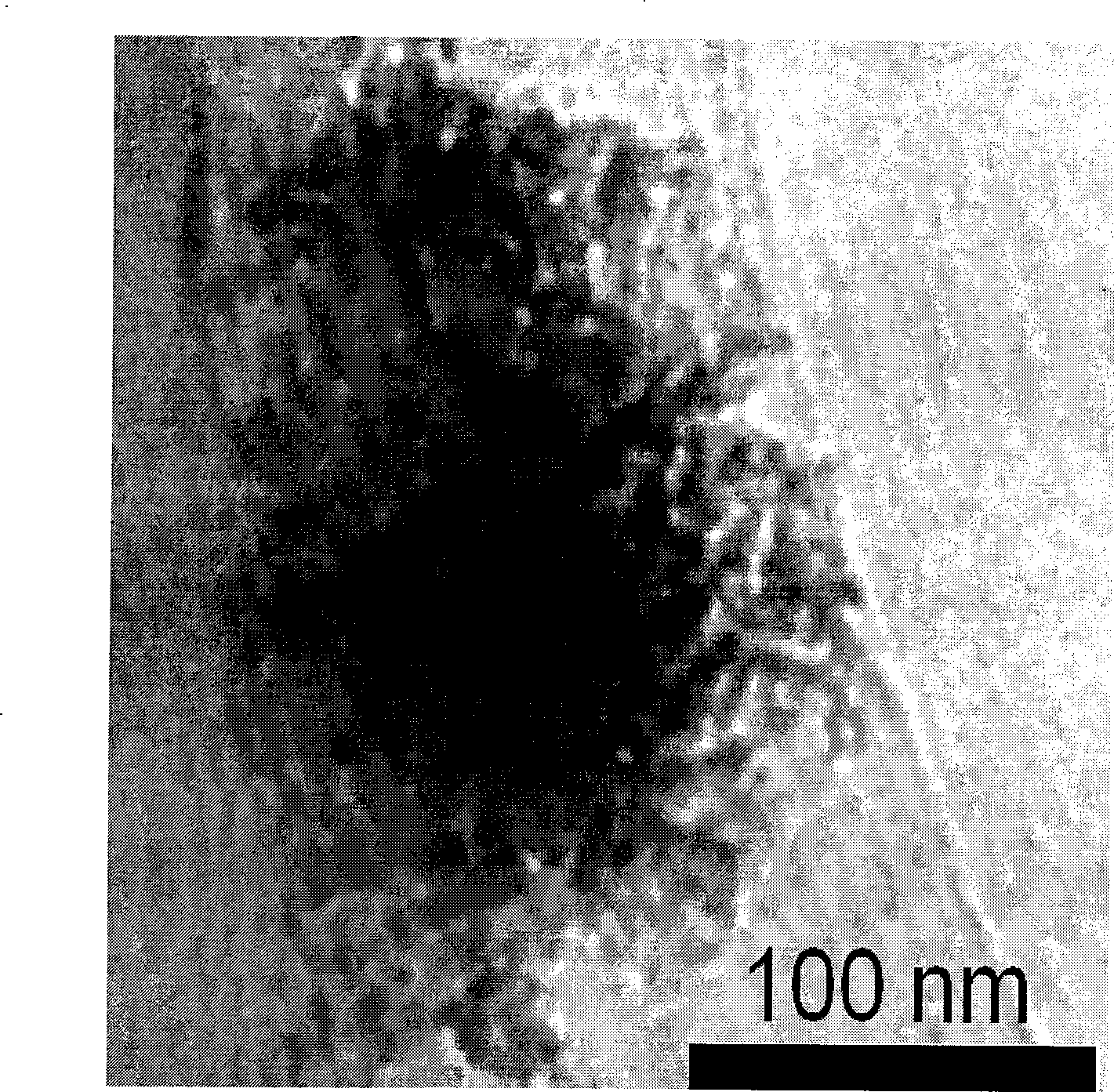
Examples
specific Embodiment approach 1
[0008] Specific embodiment one: the preparation method of the ZnS solid solution photocatalyst of the present embodiment is realized according to the following steps: one, the Zn(AC) of 0.8~2.1mmol 2 2H 2 O and 0.1 to 0.7 mmol of the third main group compound were added to 20 to 30 mL of pyridine, and stirred for 1 to 2 hours; 2. Add 5.4 to 32.4 mmol of thioacetamide to the mixed solution prepared in step 1, and then stirred for 10 to 30min; 3. Under stirring conditions, add 0.3-4.8mL transition metal salt pyridine solution with a molar concentration of 0.04mol / L dropwise to the mixed solution prepared in step 2; 4. Pour the mixed solution prepared in step 3 into the reaction kettle , react at 120-240°C for 8-48h, then cool to room temperature, wash with absolute ethanol for 3-5 times, and then dry at 50°C for 0.5-3h to obtain a ZnS solid solution photocatalyst; The three main group compounds are InCl 3 4H 2 O or GaCl 3 ; The transition metal salt in step three is AgNO 3 ...
specific Embodiment approach 2
[0010] Embodiment 2: The difference between this embodiment and Embodiment 1 is that the stirring time in Step 1 is 1 h. Other steps and parameters are the same as those in Embodiment 1.
specific Embodiment approach 3
[0011] Embodiment 3: The difference between this embodiment and Embodiment 1 is that the stirring time in Step 1 is 2 hours. Other steps and parameters are the same as those in Embodiment 1.
PUM
| Property | Measurement | Unit |
|---|---|---|
| Particle size | aaaaa | aaaaa |
| Particle size | aaaaa | aaaaa |
Abstract
Description
Claims
Application Information
 Login to View More