
Method for preparing polyacrylonitrile spinning solution
A technology of polyacrylonitrile spinning and acrylonitrile is applied in the direction of single-component synthetic polymer rayon, textile and papermaking, fiber chemical characteristics, etc. Achieving good technical effect and convenient material discharge
- Summary
- Abstract
- Description
- Claims
- Application Information
AI Technical Summary
Problems solved by technology
Method used
Image

Examples
Embodiment 1
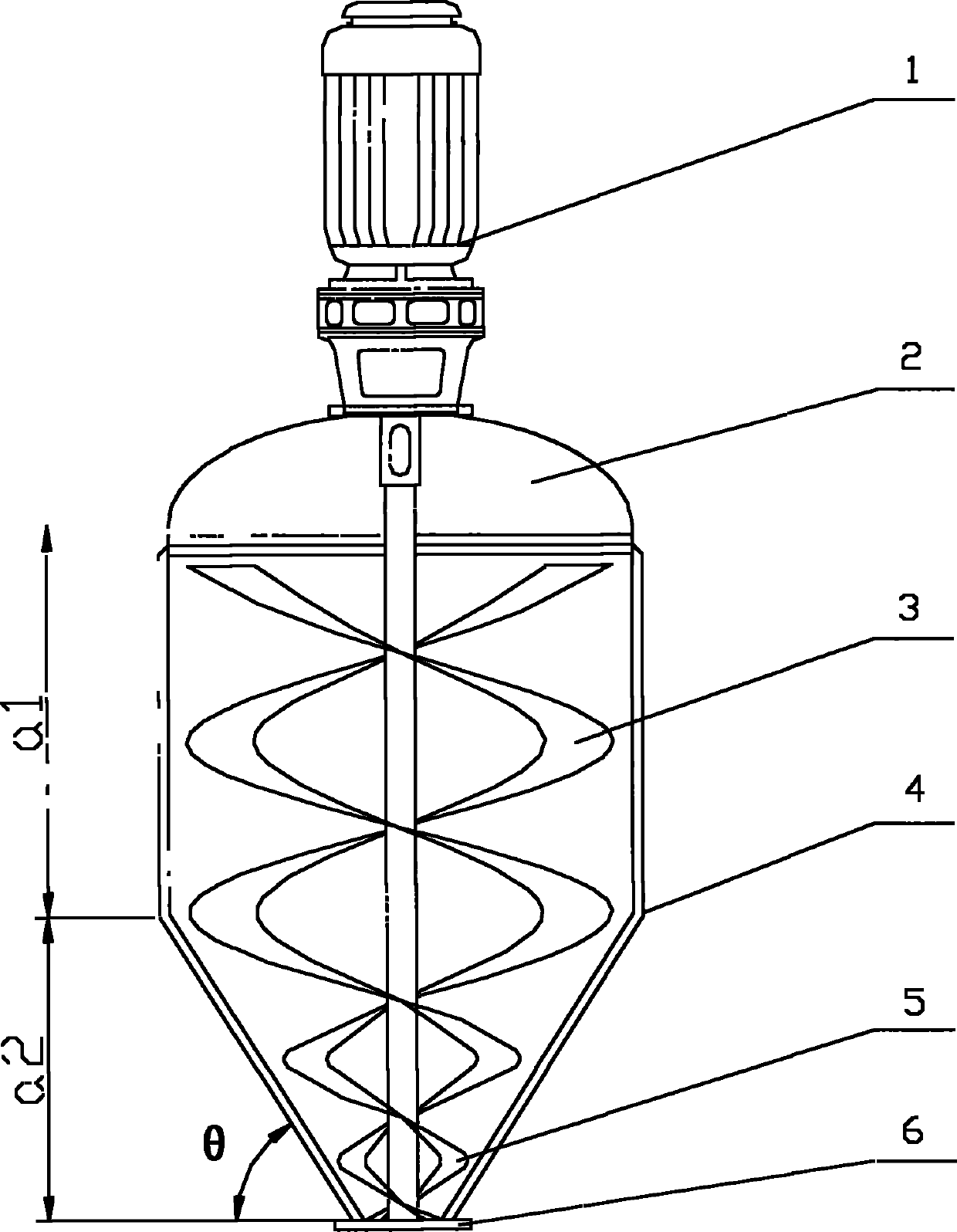
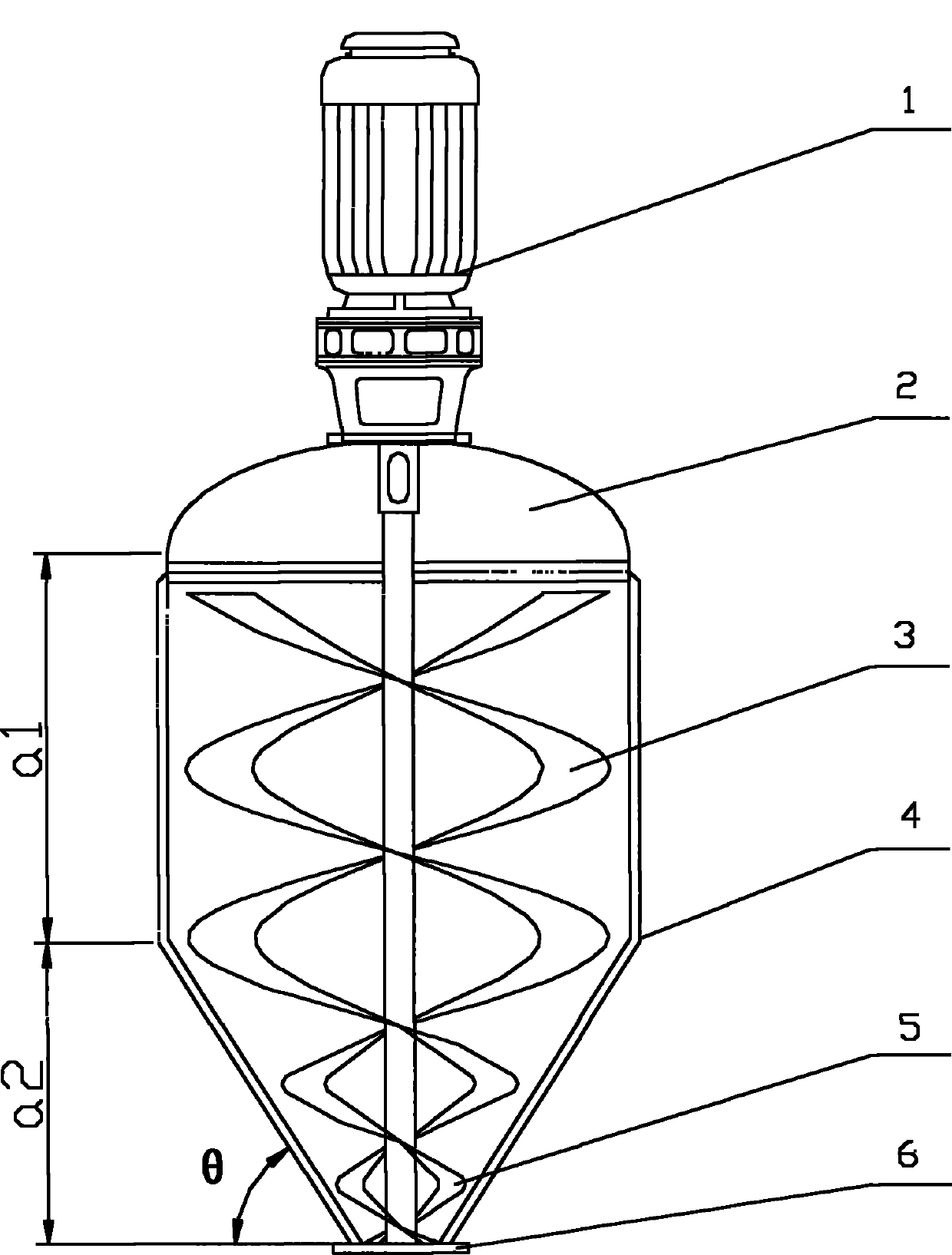
[0017] use figure 1 Described 10 liters of mechanically stirred tanks (the height of the round table part accounts for about 33% of the total tank height, the volume accounts for 30% of the total tank volume, and the inclination angle θ is 50 °, wherein the outer edge of the double-screw ribbon stirring blade and the inner wall of the reactor The distance is 10 millimeters), dimethyl sulfoxide (DMSO), acrylonitrile (AN), itaconic acid (IA), initiator azobisisobutyronitrile altogether 5 kilograms add in the reactor successively, and wherein ratio is dimethyl Base sulfoxide: acrylonitrile: itaconic acid=80: 19.6: 0.4, and the initiator consumption is 0.55% of the monomer. Stir until it becomes a uniform solution, first vacuumize the system with a vacuum pump, then protect it with nitrogen, slowly heat up to the target temperature, the initial solution is colorless and transparent, stir and react at 150 rpm, as the reaction time prolongs , the viscosity of the system increases g...
Embodiment 2
[0019] use figure 1 Described 10 liters of mechanically stirred tank (the height of the round table part accounts for about 40% of the total tank height, the volume accounts for about 35% of the total tank volume, and the inclination angle θ is 60°, wherein the outer edge of the double-screw ribbon agitator and the inner wall of the reactor The distance is 8 millimeters), dimethyl sulfoxide (DMSO), acrylonitrile (AN), itaconic acid (IA), methyl acrylate (MA), and initiator azobisisobutyronitrile in turn for a total of 5 kg Add it into the reaction kettle, wherein the ratio is dimethyl sulfoxide: acrylonitrile: itaconic acid: methyl acrylate = 80: 19.6: 0.2: 0.2, and the amount of the initiator is 0.6% of the monomer. Stir until it becomes a uniform solution, first vacuumize the system with a vacuum pump, then protect it with nitrogen, slowly heat up to the target temperature, the initial solution is colorless and transparent, stir and react at 150 rpm, as the reaction time pro...
Embodiment 3
[0021] use figure 1Described 10 liters of mechanically stirred tank (the height of the round table part accounts for about 25% of the total tank height, the volume accounts for about 28% of the total tank volume, and the inclination angle θ is 40°, wherein the outer edge of the double-screw ribbon agitator and the inner wall of the reactor The distance is 6 millimeters), dimethylsulfoxide (DMSO), acrylonitrile (AN), itaconic acid (IA), initiator azobisisoheptanonitrile total 5 kilograms are added in the reactor successively, and wherein ratio is Dimethyl sulfoxide: acrylonitrile: itaconic acid=82:17.6:0.4, the amount of initiator is 0.5% of the monomer. Stir until it becomes a uniform solution, first vacuumize the system with a vacuum pump, then protect it with nitrogen, slowly heat up to the target temperature, the initial solution is colorless and transparent, stir and react at 150 rpm, as the reaction time prolongs , the viscosity of the system rises gradually, the torque ...
PUM
 Login to View More
 Abstract
Description
Claims
Application Information
 Login to View More