
Rhodamine structure based Cu<2+> fluorescent probe and preparation method thereof
A fluorescent probe, structural formula technology, applied in fluorescence/phosphorescence, chemical instruments and methods, luminescent materials, etc., can solve the problems of poor anti-interference, insufficient solvent applicability, etc., to achieve enhanced anti-interference, improved solvent applicability, Open loop easy effect
- Summary
- Abstract
- Description
- Claims
- Application Information
AI Technical Summary
Problems solved by technology
Method used
Image

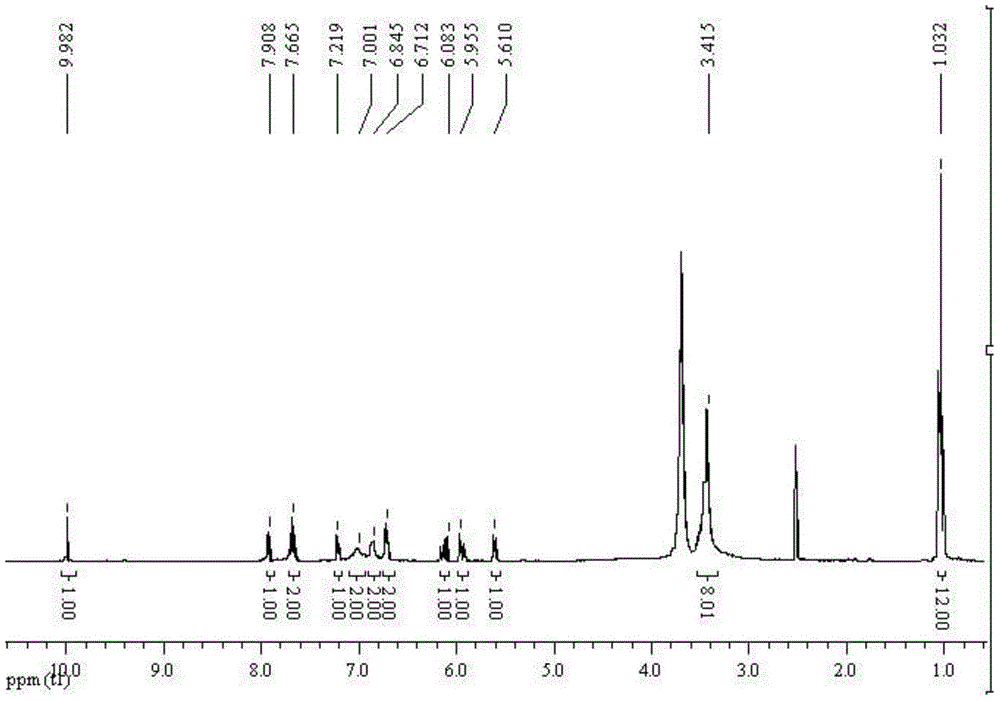
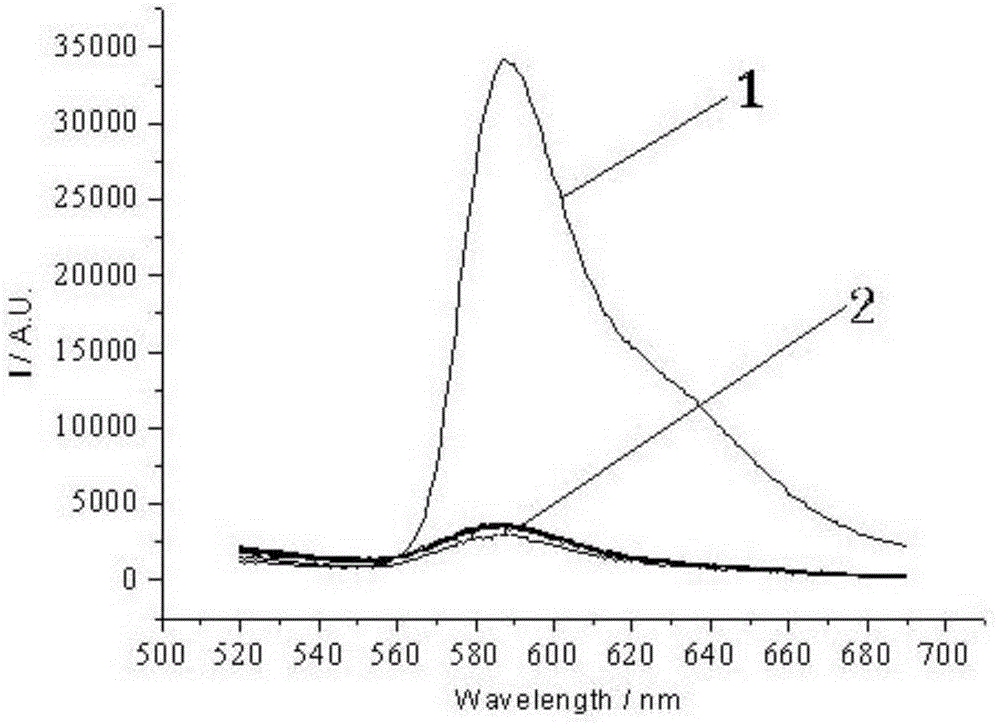
Examples
Embodiment 1
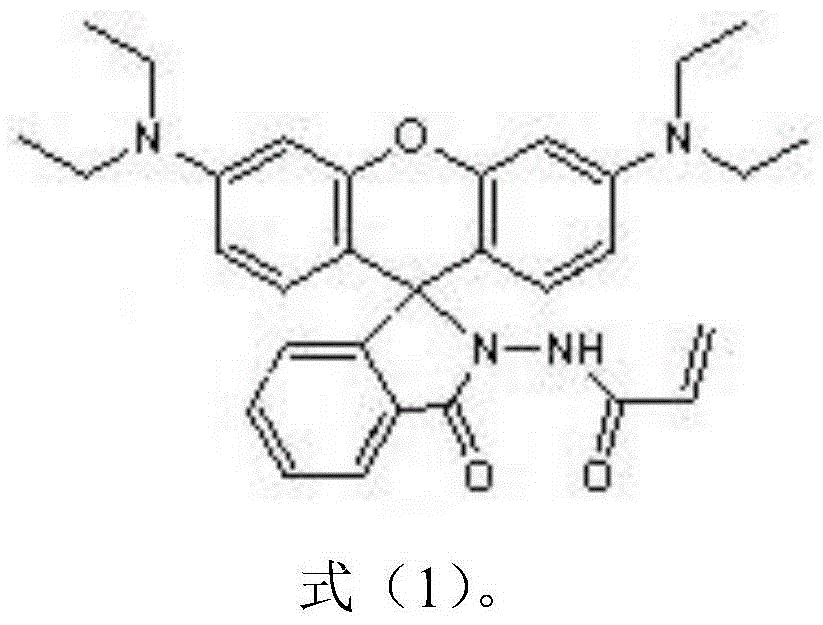
[0033] A kind of Cu based on rhodamine structure 2+ Fluorescent probe, its structural formula is as shown in formula (1):
[0034]
[0035] In this embodiment, the xanthene ring at the top of the above formula (1) is further provided with a hydrocarbon substituent.
[0036] The present embodiment also provides Cu based on the rhodamine structure of the above structural formula 2+ The preparation method of fluorescent probe, its synthetic route is as follows:
[0037]
[0038] According to the above synthetic route, the Cu based on rhodamine structure 2+ The preparation method of fluorescent probe comprises the following process steps:
[0039] (1) Preparation of rhodamine B hydrazide: rhodamine B hydrazide is prepared by using rhodamine B to obtain rhodamine B hydrazide;
[0040] (2) Preparation of rhodamine B hydrazide suspension: add 2.28 g of rhodamine B hydrazide obtained in step (1) and 3.6 ml of tetrahydrofuran into a reaction vessel, grind for 8 minutes and co...
Embodiment 2
[0045] This embodiment is basically the same as Embodiment 1, and there are differences in the preparation method between the two, as follows:
[0046] According to the above synthetic route, the Cu based on rhodamine structure 2+ The preparation method of fluorescent probe comprises the following process steps:
[0047] (1) Preparation of rhodamine B hydrazide: rhodamine B hydrazide is prepared by using rhodamine B to obtain rhodamine B hydrazide;
[0048] (2) Preparation of rhodamine B hydrazide suspension: add 2.28 g of rhodamine B hydrazide obtained in step (1) and 4 ml of tetrahydrofuran into a reaction vessel, grind for 5 minutes and cool to 0°C to obtain rhodamine B hydrazide suspension;
[0049] (3) Preparation of acryloyl chloride suspension: 0.5ml of acryloyl chloride was dissolved in 2ml of tetrahydrofuran to obtain acryloyl chloride suspension;
[0050] (4)Cu 2+ Fluorescent probe preparation: add the acryloyl chloride suspension prepared in step (3) to the rhod...
Embodiment 3
[0053] This embodiment is basically the same as Embodiment 1, and there are differences in the preparation method between the two, as follows:
[0054] According to the above synthetic route, the Cu based on rhodamine structure 2+ The preparation method of fluorescent probe comprises the following process steps:
[0055] (1) Preparation of rhodamine B hydrazide: rhodamine B hydrazide is prepared by using rhodamine B to obtain rhodamine B hydrazide;
[0056] (2) Preparation of rhodamine B hydrazide suspension: add 2.28 g of rhodamine B hydrazide obtained in step (1) and 4.4 ml of tetrahydrofuran into a reaction vessel, grind for 4 minutes and cool to 0°C to obtain rhodamine B hydrazide Hydrazine suspension;
[0057] (3) Preparation of acryloyl chloride suspension: 0.55ml of acryloyl chloride was dissolved in 2.2ml of tetrahydrofuran to obtain acryloyl chloride suspension;
[0058] (4)Cu 2+ Fluorescent probe preparation: add the acryloyl chloride suspension prepared in step ...
PUM
| Property | Measurement | Unit |
|---|---|---|
| wavelength | aaaaa | aaaaa |
Abstract
Description
Claims
Application Information
 Login to View More