
Foam concrete
The technology of foam concrete and foam stabilizer is applied in the field of foam concrete to achieve the effects of good plasticity, reduced hydrothermalization and low price
- Summary
- Abstract
- Description
- Claims
- Application Information
AI Technical Summary
Problems solved by technology
Method used
Image

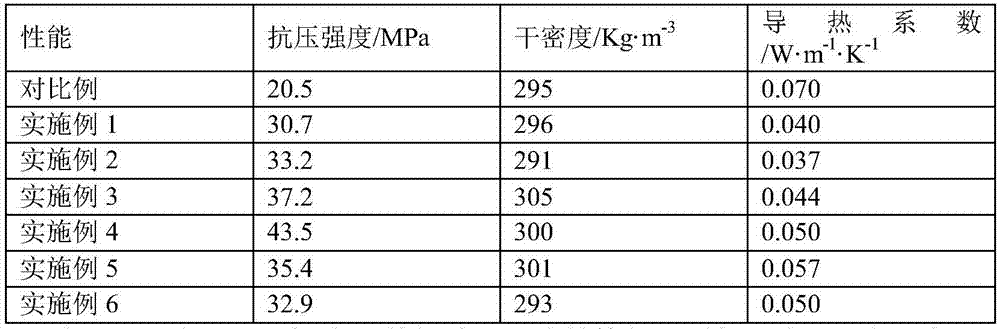
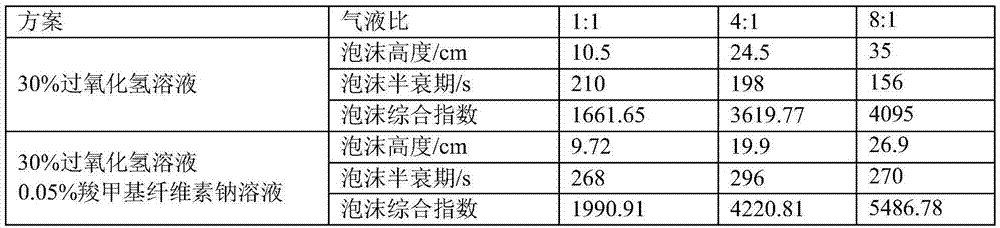
Examples
Embodiment 1
[0049] In the mixing station, first add 285g of cement, 1.8g of polypropylene fiber, 15g of superfine slag powder, and 153g of water to stir in parts by mass, then add 1.2g of polycarboxylic acid superplasticizer, 5.1g of sodium chloride, and calcium chloride 2.1g and stir, and finally add 16g of hydrogen peroxide and stir evenly to obtain Experimental Sample 1.
Embodiment 2
[0051] In the mixing station, first add 270g of cement, 1.8g of polypropylene fiber, 30g of superfine slag powder, and 150g of water to stir in parts by mass, then add 1.2g of polycarboxylate superplasticizer, 5.1g of sodium chloride, and calcium chloride 2.1g was stirred, and finally 16g of hydrogen peroxide was added and stirred evenly to obtain Experimental Sample 2.
Embodiment 3
[0053] In the mixing station, first add 255g of cement, 1.8g of polypropylene fiber, 45g of superfine slag powder, and 147g of water to stir in parts by mass, then add 1.2g of polycarboxylate superplasticizer, 5.3g of sodium sulfate, and 2.3g of calcium sulfate Stir, and finally add 16g of hydrogen peroxide and stir evenly to obtain Experimental Sample 3.
PUM
 Login to View More
 Abstract
Description
Claims
Application Information
 Login to View More