
CPU cooling method and apparatus
一种散热方法、散热装置的技术,应用在通过传导传热进行修饰、冷却/通风/加热改造、仪器等方向,能够解决散热罩沸腾性能不够好、降低芯片核温、增加沸腾面积和汽化核心等问题
- Summary
- Abstract
- Description
- Claims
- Application Information
AI Technical Summary
Problems solved by technology
Method used
Image

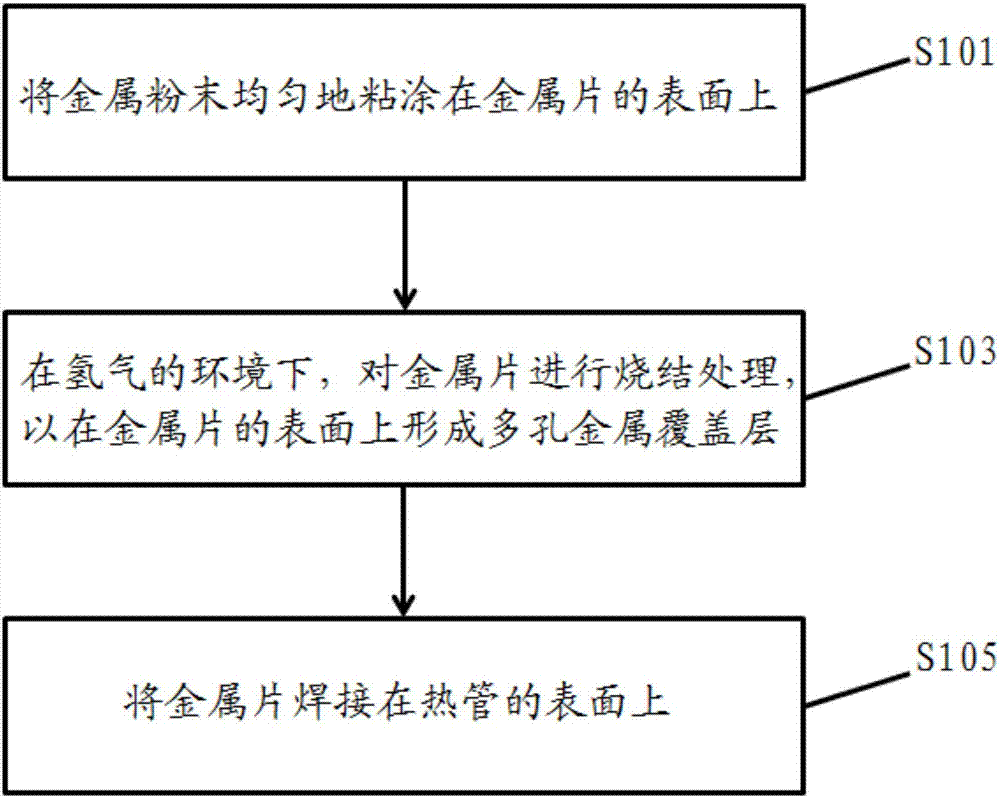
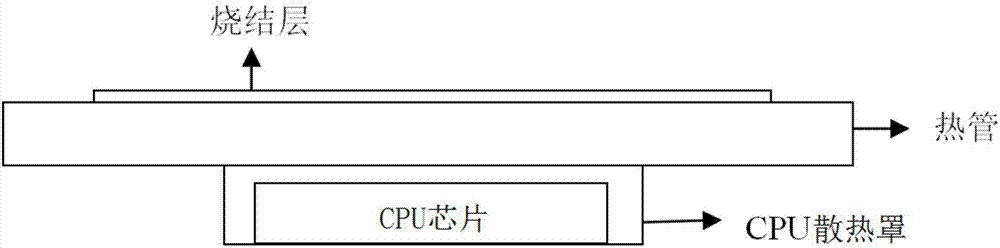
Examples
Embodiment Construction
[0027] The following will clearly and completely describe the technical solutions in the embodiments of the present invention with reference to the accompanying drawings in the embodiments of the present invention. Obviously, the described embodiments are only some, not all, embodiments of the present invention. All other embodiments obtained by persons of ordinary skill in the art based on the embodiments of the present invention belong to the protection scope of the present invention.
[0028] In order to better understand the present invention, common words in this field are introduced below.
[0029] Sintering refers to the transformation of powdery materials into dense bodies. After the powder is shaped, the dense body obtained by sintering is a polycrystalline material, and its microstructure is composed of crystals, glass bodies and pores. At the same time, the sintering process directly affects the grain size, pore size, and grain boundary shape and distribution in the...
PUM
| Property | Measurement | Unit |
|---|---|---|
| porosity | aaaaa | aaaaa |
Abstract
Description
Claims
Application Information
 Login to View More