
Black-phosphorus quantum-dot photocatalyst with adjustable band gaps, preparation method and application thereof
A photocatalyst and quantum dot technology, which is applied in the direction of catalyst activation/preparation, chemical instruments and methods, physical/chemical process catalysts, etc., can solve the problems of high cost, strong toxicity, complex preparation process, etc., and achieve an adjustable bandgap Effect
- Summary
- Abstract
- Description
- Claims
- Application Information
AI Technical Summary
Problems solved by technology
Method used
Image

Examples
Embodiment 1-1
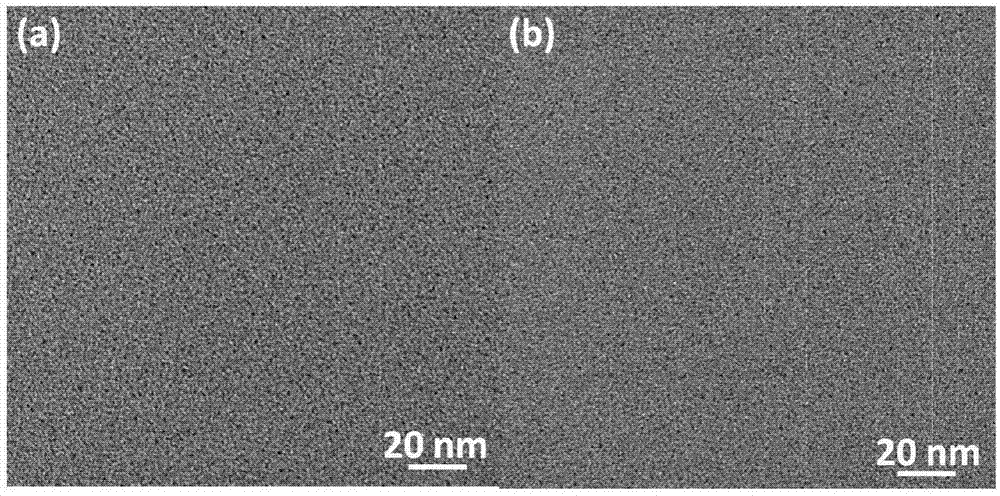
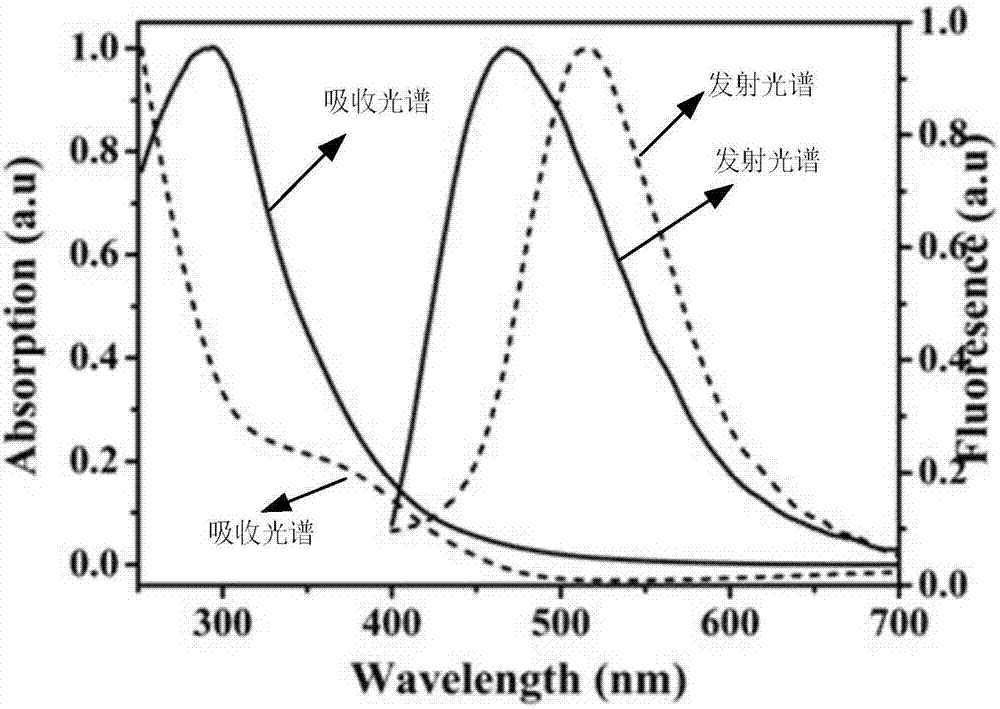
[0025] Add 10mg of black phosphorus crystal powder to 100ml of N-methylpyrrolidone-oleic acid (v / v, 3 / 2) mixed solution, and react at 150℃ for 6h after ultrasonication for 20 minutes. After the reaction solution was cooled to room temperature, the unreacted black phosphorus powder was removed by centrifugation at 7000 rpm / min, and the centrifuged solution was collected to obtain a brown black phosphorus quantum dot solution. The average size of black phosphorus quantum dots is 2.9nm, such as figure 1 shown. Black phosphorus quantum dots have strong absorption in visible light, and emit blue light when excited at 345nm, such as figure 2 shown.
Embodiment 1-2
[0027] Add 10mg of black phosphorus crystal powder to 100ml of N-methylpyrrolidone solution, and react at 150℃ for 6h after ultrasonication for 20 minutes. After the reaction solution was cooled to room temperature, the unreacted black phosphorus powder was removed by centrifugation at 7000 rpm / min, and the centrifuged solution was collected to obtain a green black phosphorus quantum dot solution. The average size of black phosphorus quantum dots is 2.2nm, such as figure 1 shown. Black phosphorus quantum dots have weak absorption in visible light, and emit green light when excited at 345nm, such as figure 2 shown.
Embodiment 1
[0028] Examples 1-3 to 1-10 As shown in Table 1, black phosphorus quantum dot catalysts with different sizes and band gaps were prepared on the basis of changing the solvent, heating temperature, and reaction time of Example 1.
[0029] Table 1
[0030]
[0031]
PUM
| Property | Measurement | Unit |
|---|---|---|
| size | aaaaa | aaaaa |
Abstract
Description
Claims
Application Information
 Login to View More