Efficient automatic de-icing system

A de-icing and automatic technology, which is applied in ice making, ice making, ice storage/distribution, etc., can solve the problems of exhaust waste heat evaporator cooling waste, affecting unit efficiency, unstable system operation, etc., to avoid refrigerant The state is unstable, the system is stable, and the cooling effect is improved

CN108072216APending Publication Date: 2018-05-25广州冰泉制冷设备有限责任公司
0 Cites 5 Cited by

Patent Information

Authority / Receiving Office
CN · China
Patent Type
Applications(China)
Current Assignee / Owner
Publication Date
2018-05-25

Smart Images

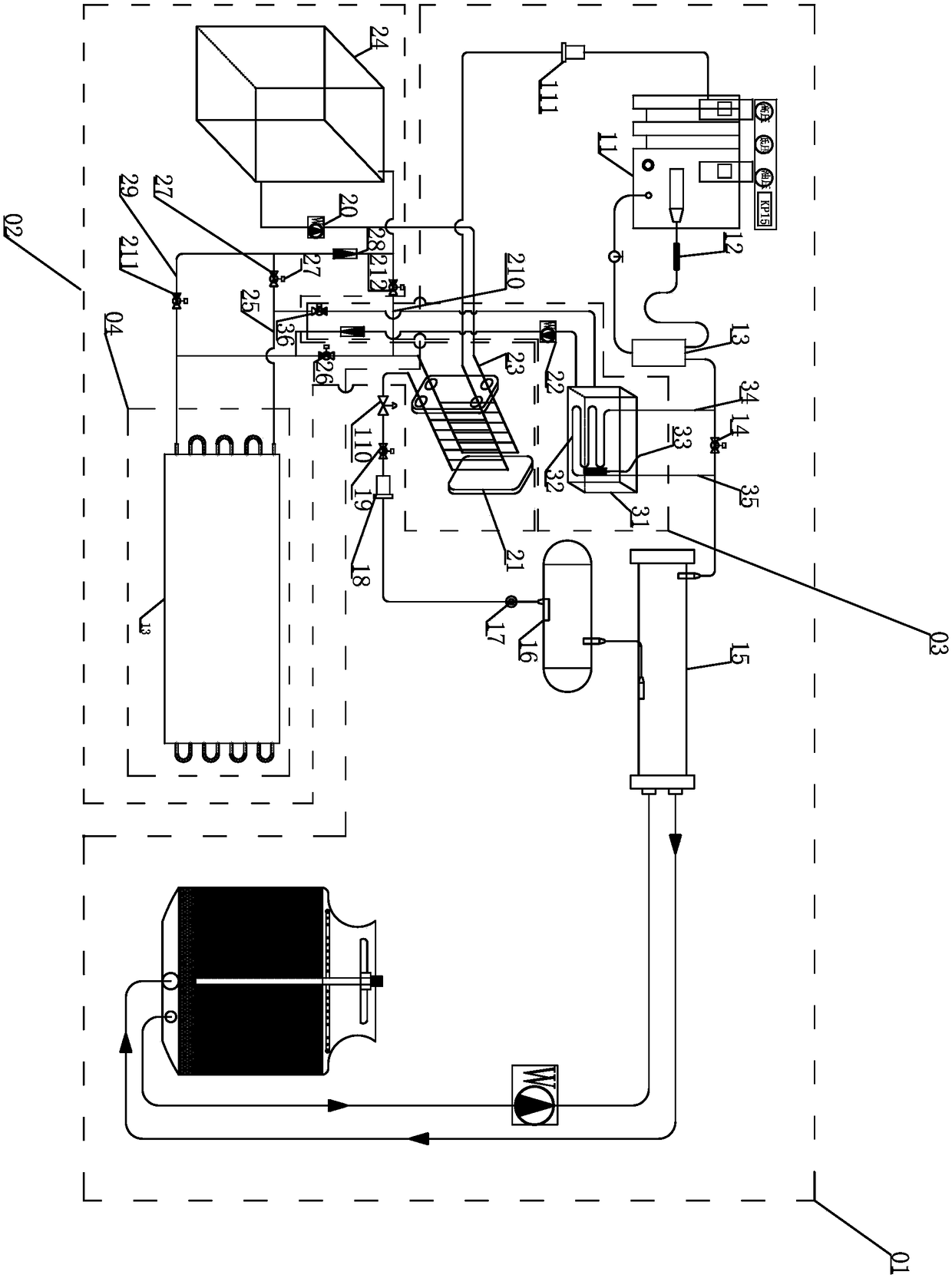
  • Figure 1
    Figure 1
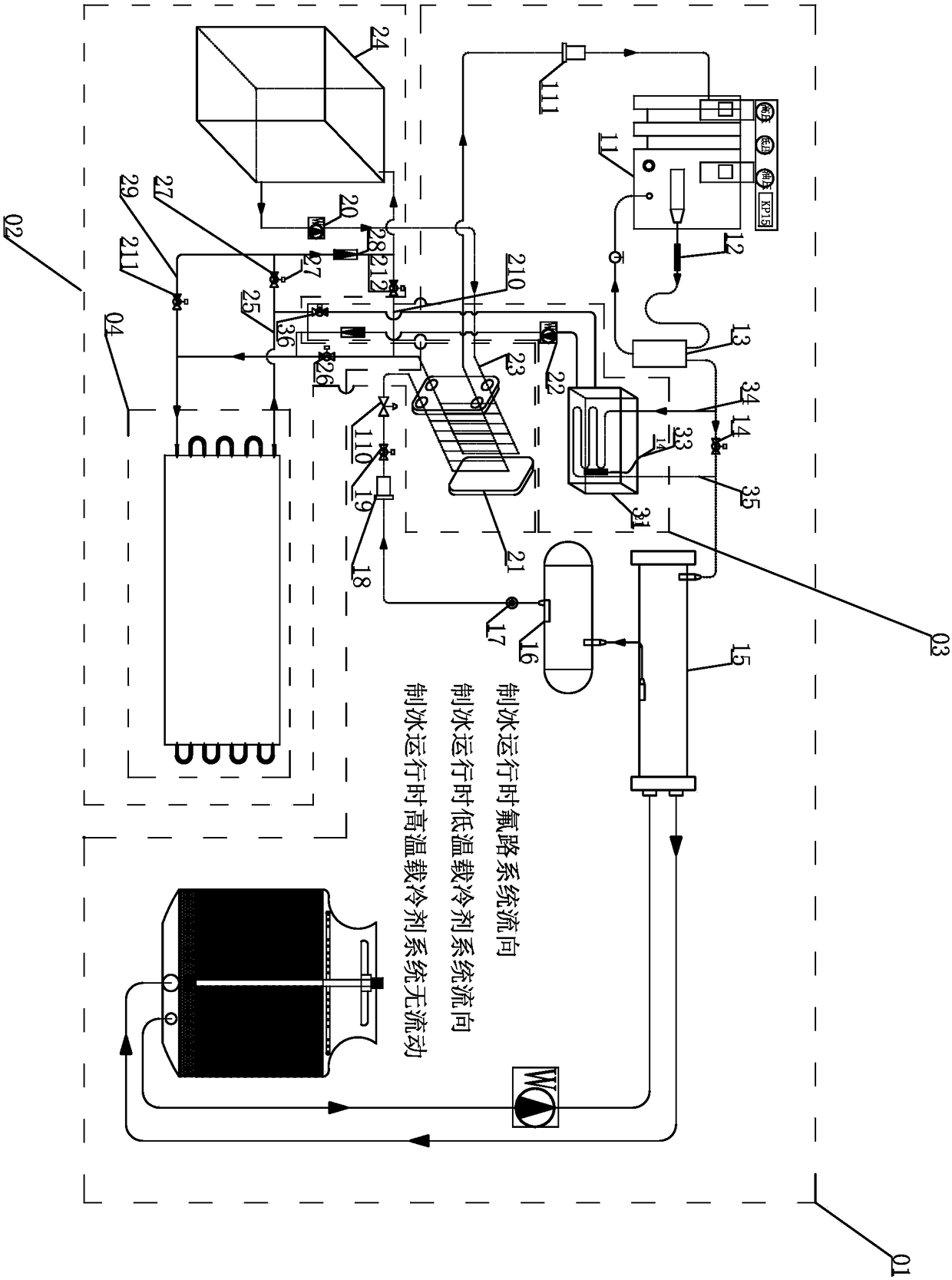
  • Figure 2
    Figure 2
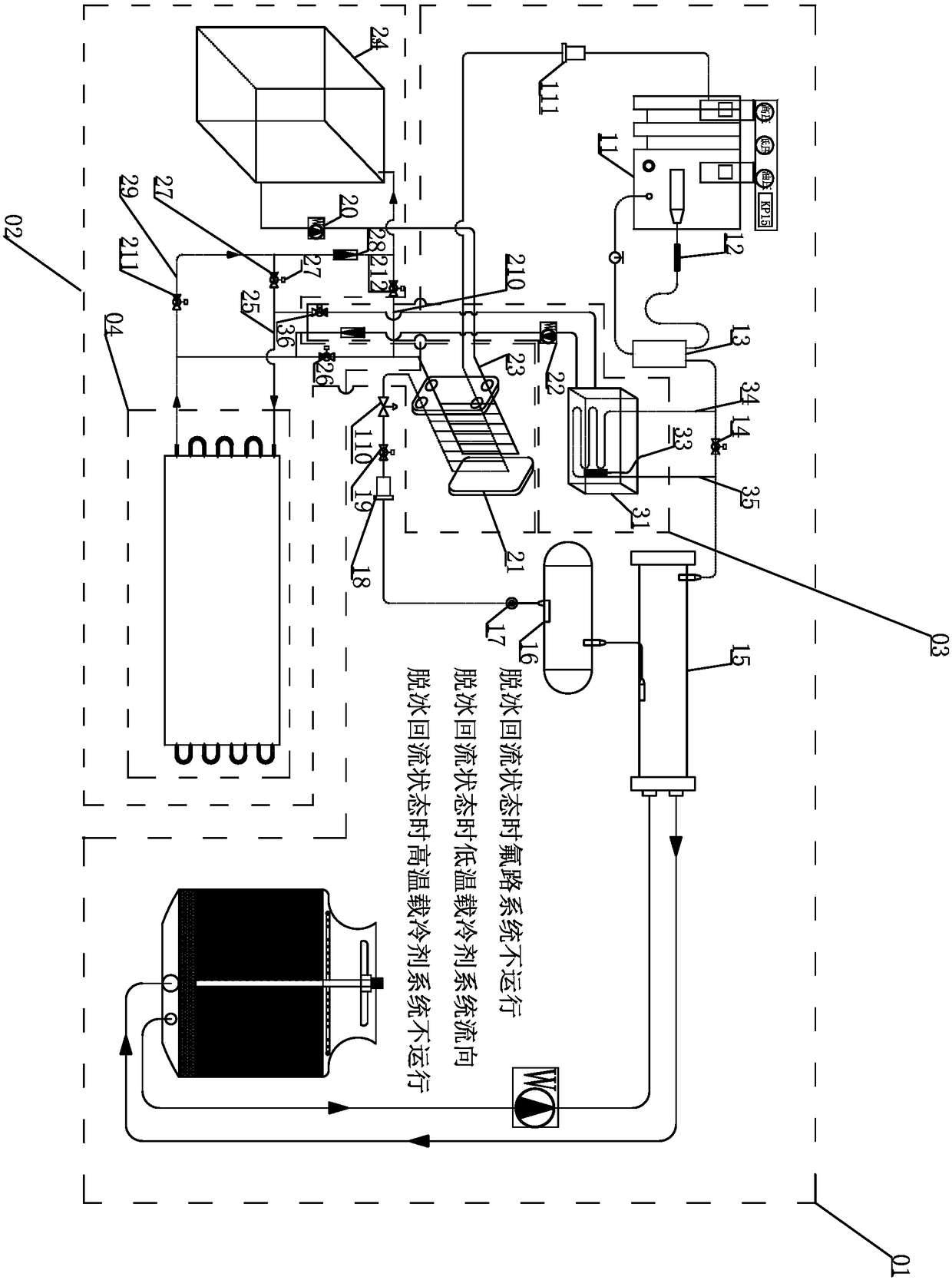
  • Figure 3
    Figure 3
Patent Text Reader

Abstract

The invention discloses an efficient automatic de-icing system. The system comprises an ice making mechanism, a low-temperature secondary refrigerant mechanism, a high-temperature secondary refrigerant mechanism and an ice-making and de-icing mechanism, wherein the ice making mechanism can provide cooling capacity and heat for the low-temperature secondary refrigerant mechanism and the high-temperature secondary refrigerant mechanism so as to carry out ice making or de-icing, the low-temperature secondary refrigerant mechanism and the high-temperature secondary refrigerant mechanism are used for supplying cooling capacity and heat generated by heat exchange to the ice-making and de-icing mechanism for ice making or de-icing through a secondary refrigerant, and the ice making mechanism comprises a compressor, a shock absorbing pipe, an oil extractor, a condenser, a refrigerant flowing-into liquid storage tank, a drying filter, a liquid tube electromagnetic valve, an expansion valve andan air return filter, wherein the drying filter, the liquid tube electromagnetic valve and the expansion valve communicate with the refrigerant flowing-into liquid storage tank in sequence, and the air return filter is connected with the compressor. The efficient automatic de-icing system has the beneficial effects that a sealing strip is long in service life and good in sealing, the thickness ofmade ice is uniform, system operation is stable, no liquid impact and no oil throwing exist in de-icing and secondary ice making, energy consumption is reduced, assembling is convenient, and the costis saved.
Need to check novelty before this filing date? Find Prior Art

Description

technical field

[0001] The invention belongs to the field of ice making equipment, in particular to an efficient automatic deicing system. Background technique

[0002] At present, the automatic deicing machines on the market mainly have the following problems in the production process, the water sealing effect of the aluminum ice mold is poor, and the service life is not long; moreover, the ice made by the aluminum ice mold has uneven ice thickness in different parts , the system is unstable. During the de-icing process and the second ice-making process, the unit is prone to liquid shock and oil throwing. The above-mentioned "liquid hammer" phenomenon mainly occurs in the compressor, because the refrigerant liquid (or lubricating oil) is sucked by the compressor, when the liquid refrigerant (or lubricating oil) is sucked through the suction valve plate, due to the flow of the liquid The kinetic energy is greater than the kinetic energy of gas, so the impact force of the s...

Examples

Embodiment Construction

[0027] Below in conjunction with accompanying drawing, invention is described in further detail.

[0028] Such as Figure 1-7 As shown, a high-efficiency automatic deicing system includes an ice-making mechanism 01, a low-temperature brine mechanism 02 and a high-temperature brine mechanism 03 that perform heat exchange with the ice-making mechanism 01, and a low-temperature brine mechanism 02 and a high-temperature brine mechanism. The high-temperature brine mechanism 03 communicates with the ice-making and de-icing mechanism 04. The ice-making mechanism 01 can provide cooling capacity and heat to the low-temperature brine mechanism 02 and the high-temperature brine mechanism 03 for ice-making or de-icing, and the cold brine mechanism 02 and the high-temperature brine mechanism 03 generate cold The amount and heat are supplied to the ice-making and de-icing mechanism 04 to make ice or de-ice through the brine. The ice-making mechanism 01 includes a compressor 11, a shock ab...