

A method for obtaining retinal-like tissue rich in cones and rods by using human induced pluripotent stem cells
A technology of pluripotent stem cells and rod cells, applied in the field of stem cell regenerative biology, can solve the problems that are difficult to meet the needs of clinical treatment, and achieve the effect of stable and controllable activity and short digestion time
- Summary
- Abstract
- Description
- Claims
- Application Information
AI Technical Summary
Problems solved by technology
Method used
Image

Examples
Embodiment 1
[0025] 1. Maintenance culture of hiPSCs
[0026] 1. hiPSCs cells: human induced pluripotent stem cells derived from urine, cell line UE017
[0027] 2. Reagents and consumables:
[0028] 1) mTeSR1 medium: STEM CELL, #05851, 4°C
[0029] 2) EDTA: Invitrogen, 15575-038, room temperature
[0030] 3) dispase, sigma, D4693, normal temperature
[0031] 4) PBS (1X): Gino Biomedical Technology Co., Ltd., 14111202, room temperature
[0032] 5) Matrigel: Corning, 354277, -20°C
[0033] 6) Six-hole plate: FALCON, 353046
[0034] 7) Centrifuge tube: BD FALCON, 352096
[0035] 3. Instrument
[0036] 1) CO 2 Incubator: SANYO, MCO-20A1C
[0037] 2) Inverted microscope: Nikon, TS100
[0038] 4. Steps:
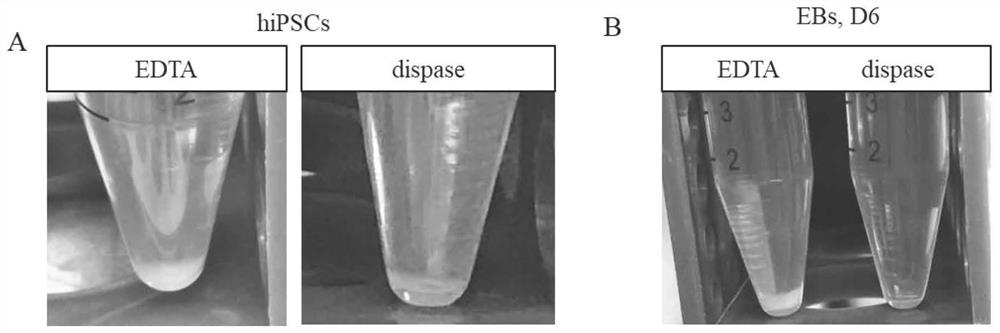
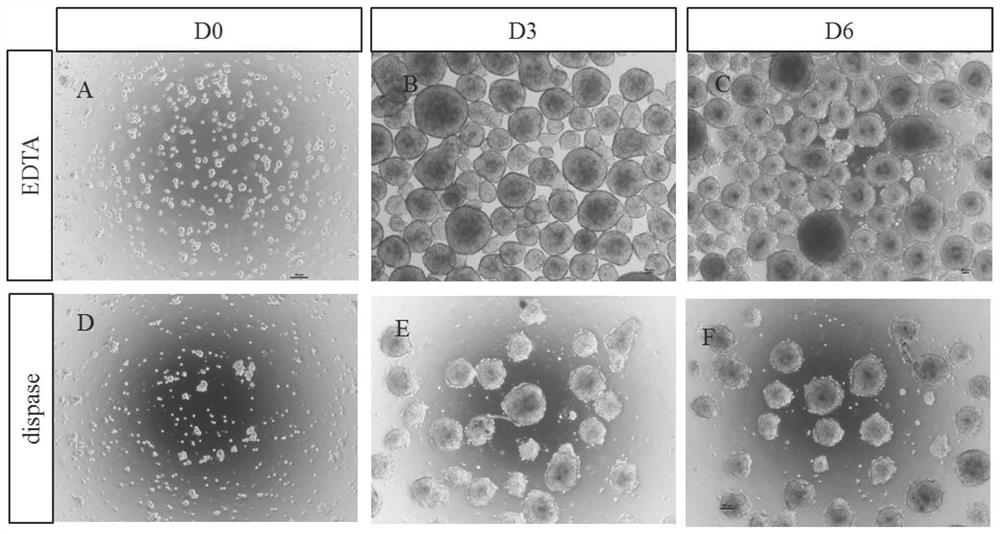
[0039] hiPSCs were maintained in mTeSR1 medium, and passaged when the density reached about 80%-90% of the bottom area (about 4-5 days), digested with 0.5mM EDTA or 1mg / mL dispase, the digested cells Seed on Matrigel-coated culture plates.
[0040] 2. The effect of the digestion mo...
PUM
 Login to View More
 Abstract
Description
Claims
Application Information
 Login to View More