
Laser overlaying method for engine valve conical surfaces
A technology of engine valve and laser surfacing welding, applied in the field of laser surfacing welding, which can solve the problems of low utilization rate of surfacing welding powder, increased heat input, high operating cost, etc., achieve stable characteristics, prevent pores from forming, and eliminate slag inclusions Effect
- Summary
- Abstract
- Description
- Claims
- Application Information
AI Technical Summary
Problems solved by technology
Method used
Image

Examples
Embodiment Construction
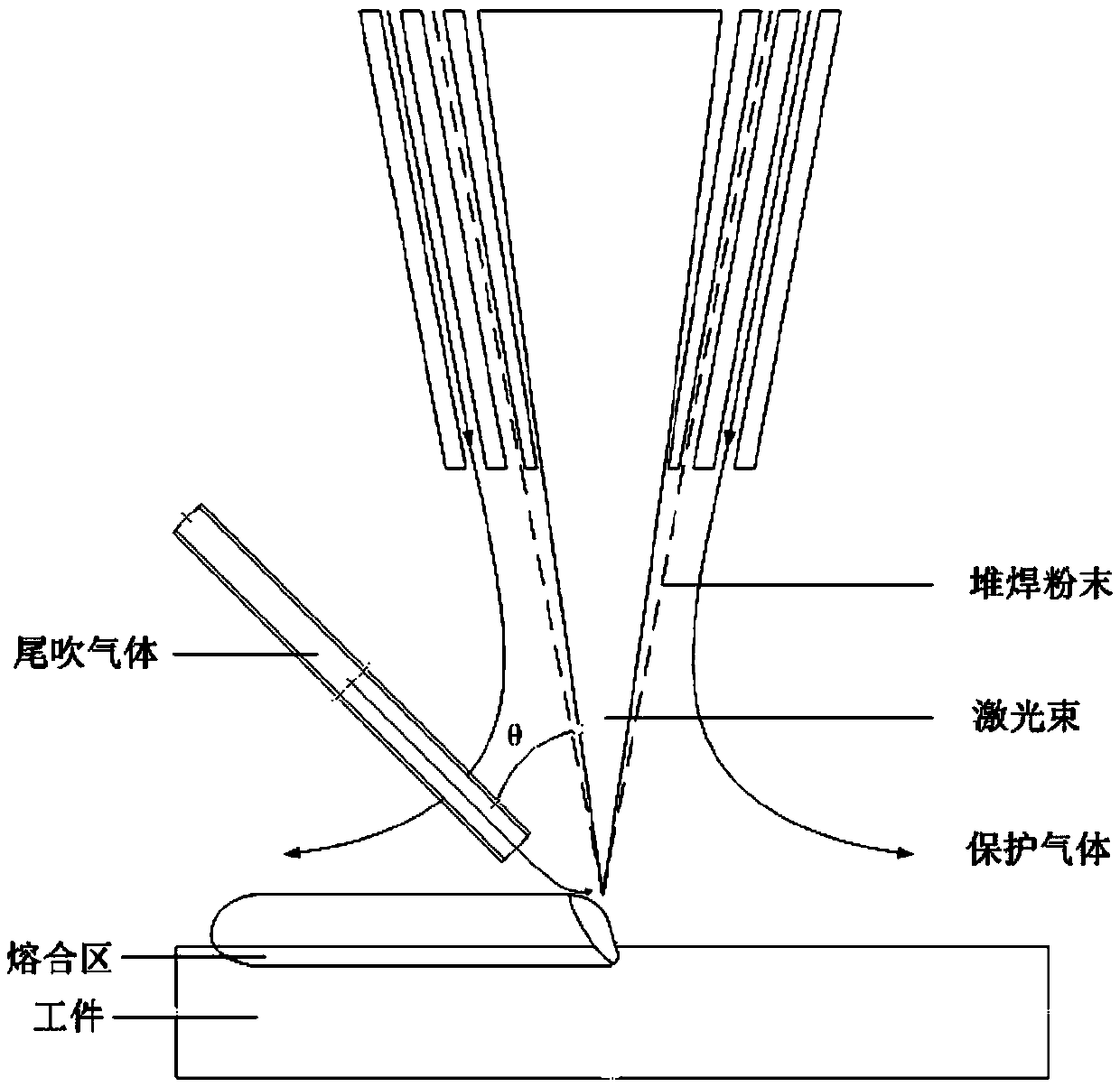
[0038] The preferred embodiments of the present invention will be described below in conjunction with the accompanying drawings. It should be understood that the preferred embodiments described here are only used to illustrate and explain the present invention, and are not intended to limit the present invention.
[0039] In the description of the present invention, it should be noted that the terms "center", "upper", "lower", "left", "right", "vertical", "horizontal", "inner", "outer" etc. The indicated orientation or positional relationship is based on the orientation or positional relationship shown in the drawings, and is only for the convenience of describing the present invention and simplifying the description, rather than indicating or implying that the referred device or element must have a specific orientation, or in a specific orientation. construction and operation, therefore, should not be construed as limiting the invention. In addition, the terms "first", "secon...
PUM
 Login to View More
 Abstract
Description
Claims
Application Information
 Login to View More