
Polyester polyol as well as preparation method and application
A polyester polyol and polyol technology, applied in the field of polyurethane materials, can solve the problems of long synthesis steps, product flexibility, low temperature resistance and mechanical properties, and increase the difficulty of synthesis process control, so as to improve hardness and synthesis Simple method, convenient and efficient synthetic route
- Summary
- Abstract
- Description
- Claims
- Application Information
AI Technical Summary
Problems solved by technology
Method used
Image

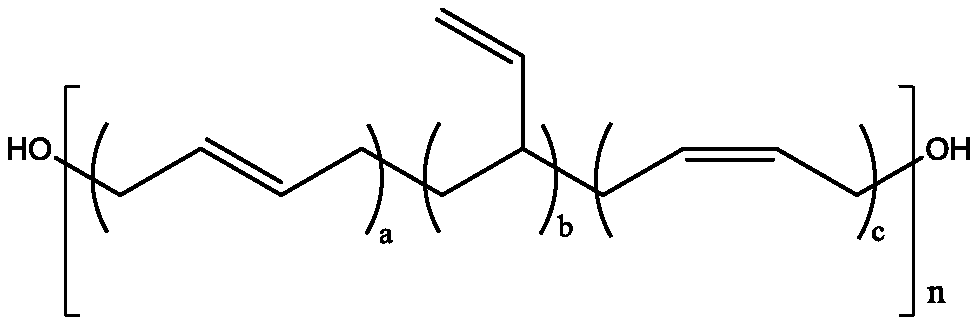
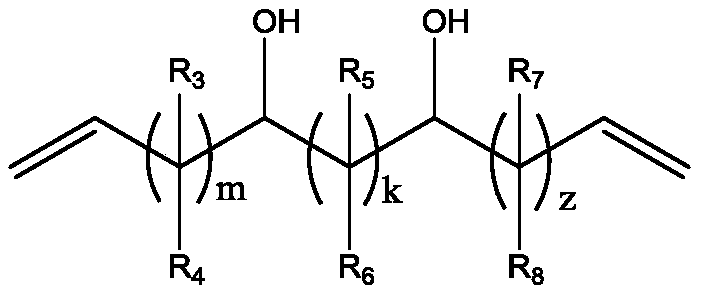
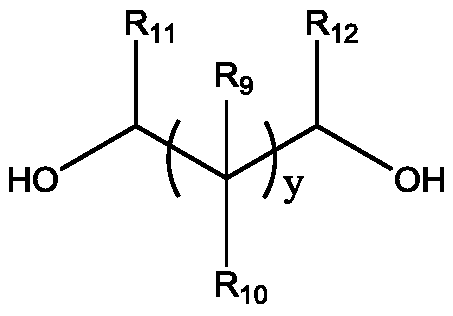
Examples
Embodiment 1-12
[0052] A kind of preparation method of polyester polyol, the raw material that adopts and proportioning reference table 1;
[0053] The overall preparation process is: in a 5L stainless steel reaction kettle equipped with heating jacket, stirring, nitrogen stripping, rectification tower, vacuum gauge, and alcohol recovery tank, according to Table 1, components A, B, C and polymerization inhibition agent. Heat up to 145°C to melt and start the reaction. As the reaction progresses, the by-product water is continuously separated from the system, and the reaction stage lasts for 1 hour. Subsequently, the temperature was further raised to 250° C. for 3 hours. After 1 hour of heat preservation at 250°C, the reaction water gradually slowed down. At this time, tetra-n-butyl titanate was added, and the vacuum degree was increased to 0.09MPa within 1 hour to continue the reaction. The reaction stops when the value reaches the set value. Cool down to 150°C, discharge and pack. The ob...
PUM
| Property | Measurement | Unit |
|---|---|---|
| hydroxyl value | aaaaa | aaaaa |
| acid value | aaaaa | aaaaa |
| acid value | aaaaa | aaaaa |
Abstract
Description
Claims
Application Information
 Login to View More