
Multigene construct for immune-modulatory protein expression and methods of use
A technology for expressing vectors and amino acids, applied in chemical instruments and methods, biochemical equipment and methods, growth factors/growth regulators, etc., can solve the problems of insufficient production of immune regulatory proteins
- Summary
- Abstract
- Description
- Claims
- Application Information
AI Technical Summary
Problems solved by technology
Method used
Image

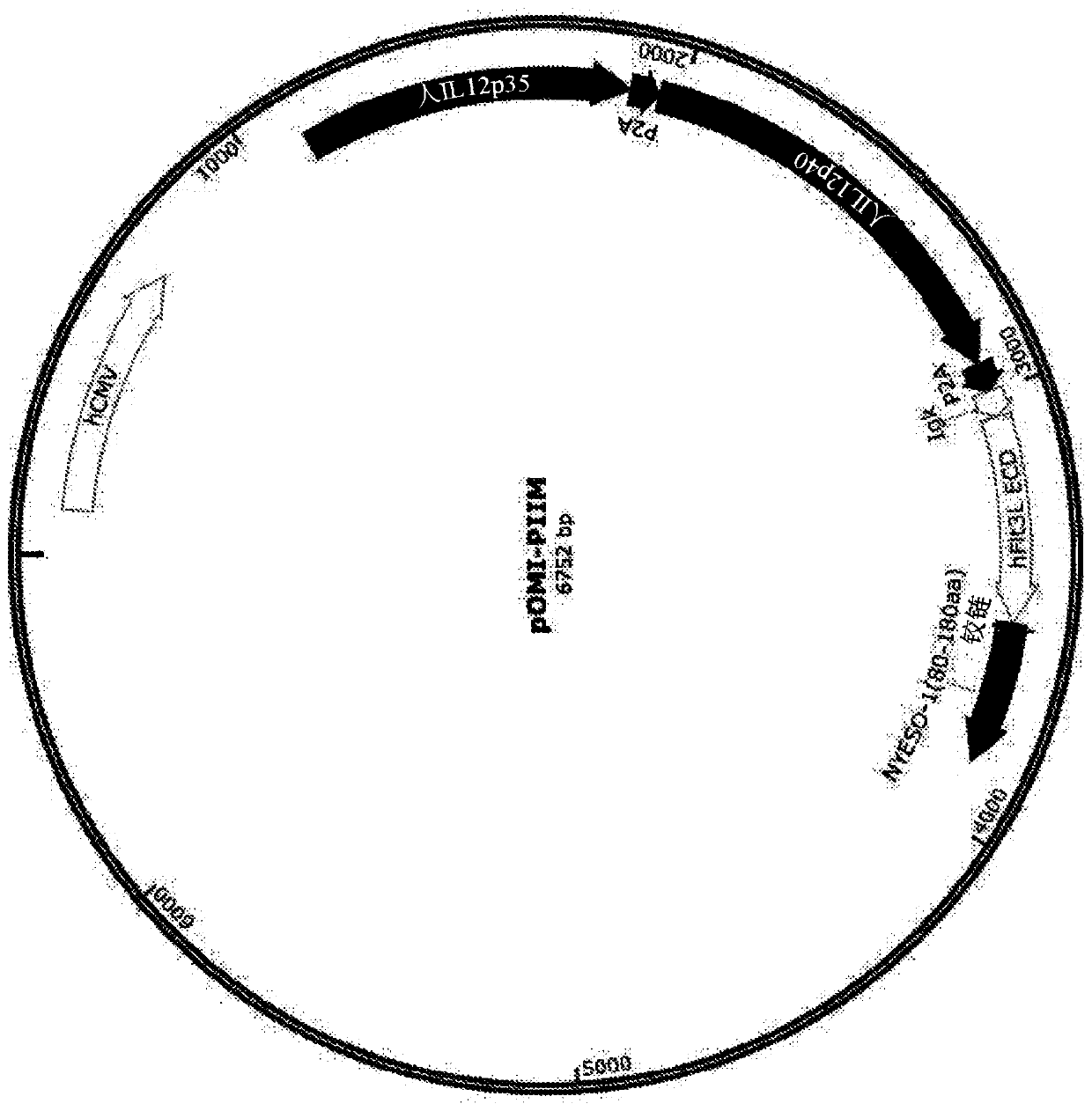
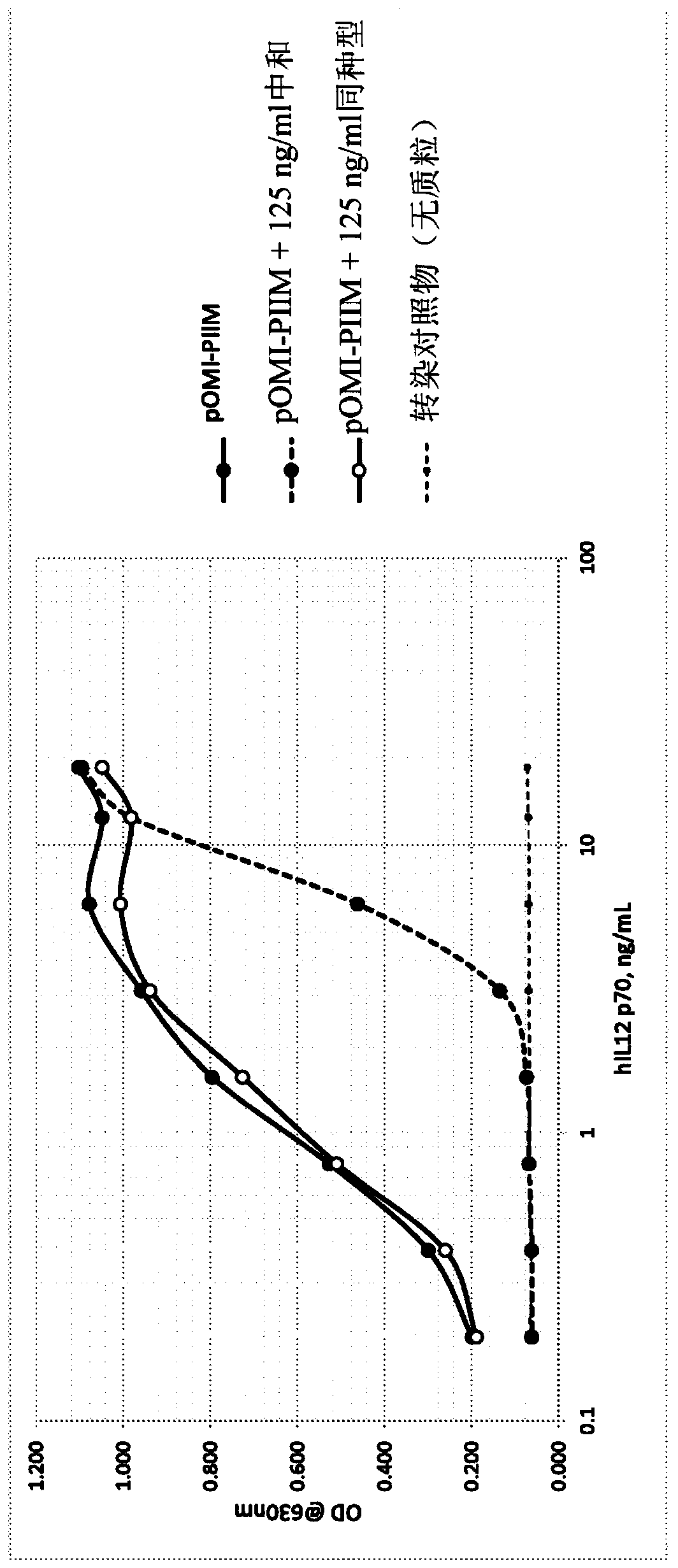
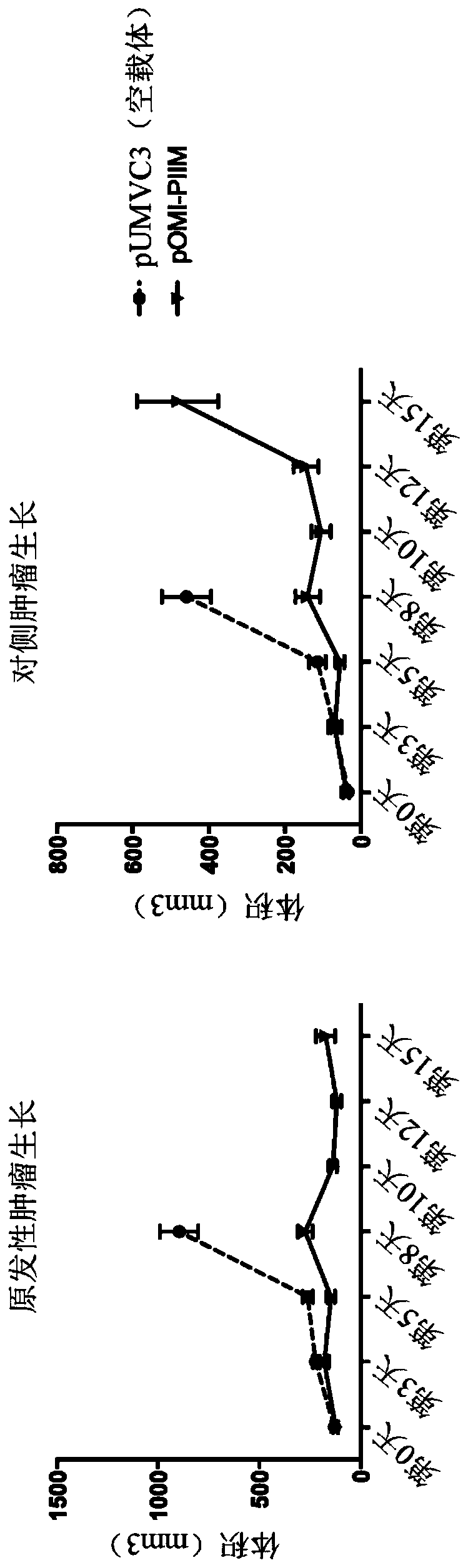
Examples
Embodiment
[0129] List of examples
[0130] The subject matter disclosed herein includes but is not limited to the following examples.
[0131] 1. An expression vector comprising the nucleic acid sequence of SEQ ID NO:1.
[0132] 2. An expression vector comprising a nucleic acid encoding a polypeptide comprising amino acids at least 70% identical to the amino acid sequence of SEQ ID NO:9.
[0133] 3. The expression vector according to embodiment 2, wherein the polypeptide comprises the amino acid sequence of SEQ ID NO:9.
[0134] 4. The expression vector of embodiment 2 or 3, wherein the nucleic acid comprises a nucleotide sequence having at least 70% identity to the nucleotide sequence of SEQ ID NO:8.
[0135] 5. The expression vector according to embodiment 4, wherein the nucleic acid comprises the nucleotide sequence of SEQ ID NO:8.
[0136] 6. The expression vector of embodiment 4 or 5, wherein said nucleic acid is operably linked to a nucleic acid encoding a P2A translational mod...
example
[0210] I. General approach
[0211] Standard methods in molecular biology are described. Maniatis et al., Molecular Cloning, A Laboratory Manual (1982), Cold Spring Harbor Laboratory Press, Cold Spring Harbor, NY; Sambrook and Russell, Molecular Cloning ( 2001), 3rd ed., Cold Spring Harbor Laboratory Press, Cold Spring Harbor, NY; Wu, Recombinant DNA (1993), vol. 217, Academic Press, San Diego, CA. Standard methods are also described in: Ausbel et al., "Current Protocols in Molecular Biology" (2001), Volumes 1 to 4, John Wiley and Sons, Inc. Inc.), New York, NY, which describes cloning of bacterial cells and DNA mutagenesis (vol. 1), cloning of mammalian cells and yeast (vol. 2), glycoconjugates, and protein expression (vol. 3) and Bioinformatics (Volume 4).
[0212]Methods for protein purification are described, including immunoprecipitation, chromatography, electrophoresis, centrifugation and crystallization. Coligan et al., Current Protocols in Protein Science (2000), V...
PUM
 Login to View More
 Abstract
Description
Claims
Application Information
 Login to View More