
Retina image parallel processing method and device
A processing method and retinal technology, applied in the field of image processing, can solve the problems of unguaranteed model generalization performance and poor retinal image processing effect, etc.
- Summary
- Abstract
- Description
- Claims
- Application Information
AI Technical Summary
Problems solved by technology
Method used
Image

Examples
Embodiment Construction
[0075] The present invention will be further explained below in conjunction with accompanying drawing and specific embodiment:
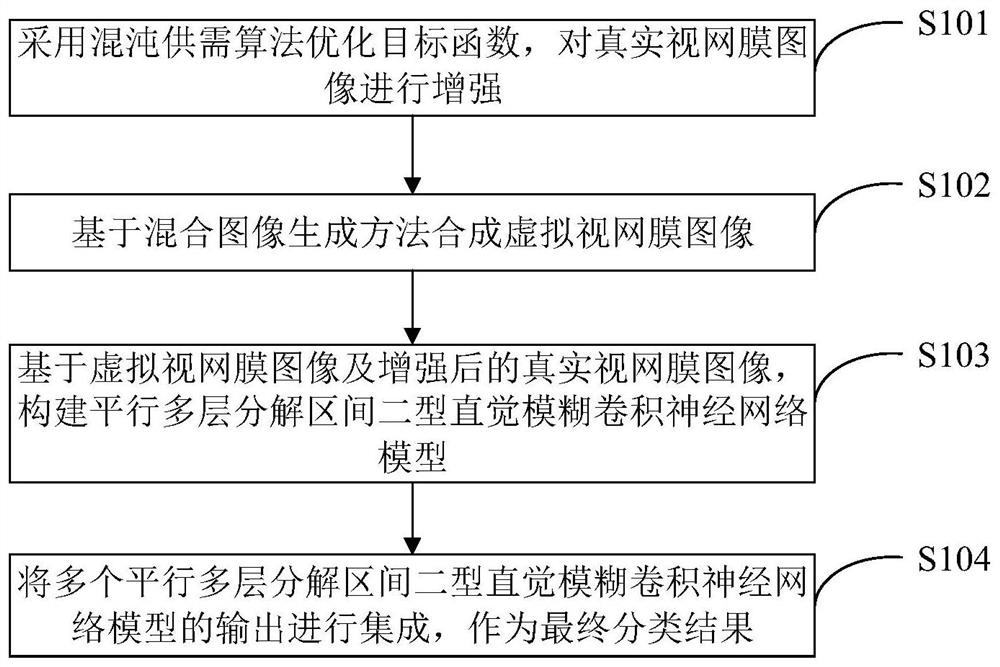
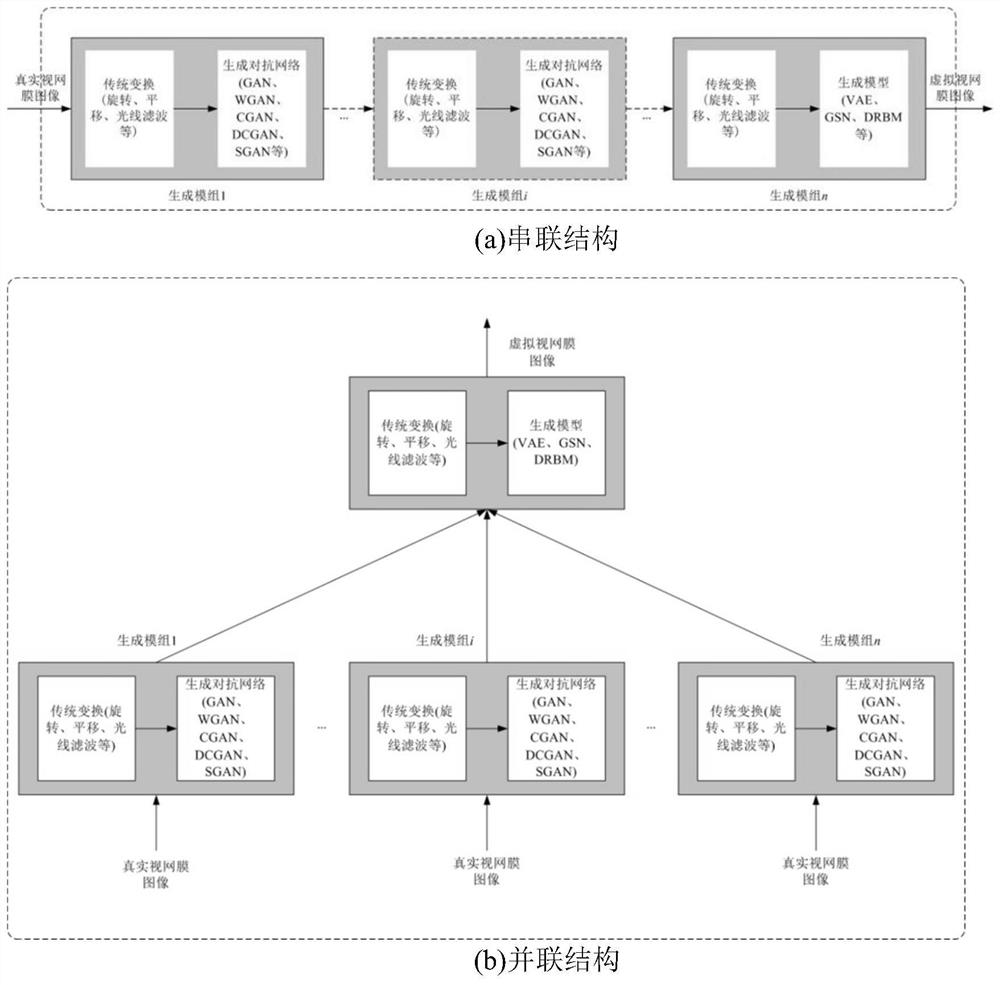
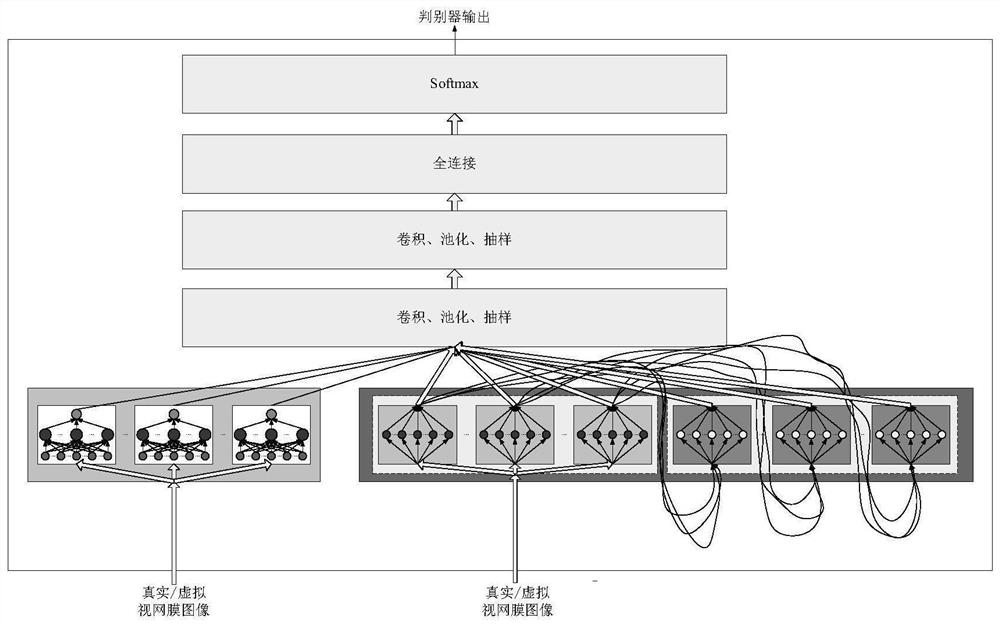
[0076] The present invention first adopts the chaotic supply and demand algorithm to optimize the objective function (determined according to the specific requirements of image enhancement) to determine the undetermined parameters of the transformation function so as to enhance the collected retinal images; then perform traditional transformation on the enhanced retinal images according to an appropriate order (rotate, flip, increase contrast, translate, etc.), and then use the generated confrontation network and its variants to synthesize the image through confrontation training with the previous retinal image as the real image, and then use the above image as the real image input to generate the multi-layered model and virtual-real interaction Decompose the joint training model composed of interval-type two intuitionistic fuzzy convolutional neural ...
PUM
 Login to View More
 Abstract
Description
Claims
Application Information
 Login to View More