
Heavy oil deep processing method and device
A technology for deep processing and heavy oil, applied in the field of heavy oil deep processing methods and devices, can solve the problems of easy cracking of high-temperature catalysts, low gasoline and diesel content, large sewage discharge, etc., to improve product distribution, reduce sewage discharge, and facilitate operation. Effect
- Summary
- Abstract
- Description
- Claims
- Application Information
AI Technical Summary
Problems solved by technology
Method used
Image

Examples
Embodiment 1
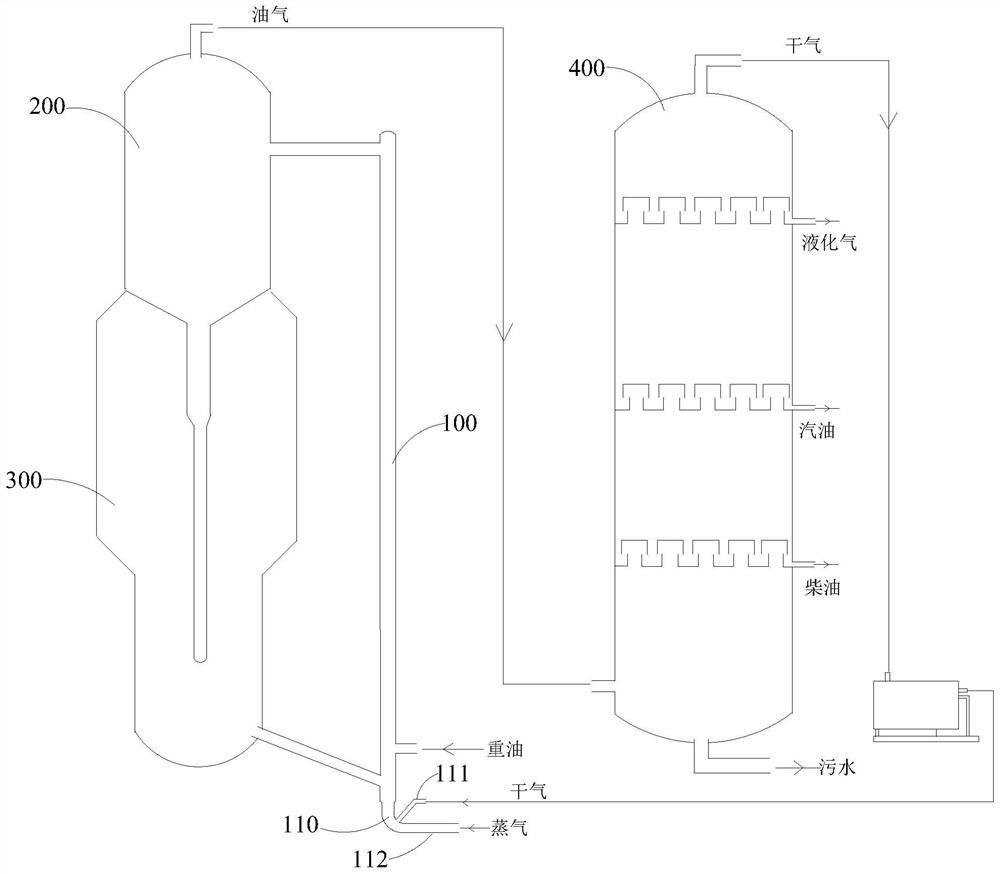
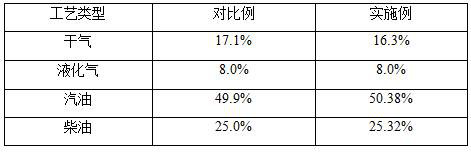
[0035] The pre-lift gas is passed into the pre-lift gas feed pipe 110 at the bottom of the riser reactor 100, and the amount of the pre-lift gas added is 1.5 t / h, wherein the dry gas is 0.15 t / h, and the steam is 1.35 t / h. The heavy oil is passed into the riser reactor 100 from the heavy oil inlet pipe, and the amount of heavy oil added is 22.8 t / h. At the same time, the catalyst enters the riser reactor 100 from the outlet of the regenerator 300 and flows upwards driven by the pre-lift gas. When the catalyst After contacting the heavy oil, the catalytic cracking reaction is carried out in the riser reactor 100. The reaction conditions in the reaction zone of the riser reactor 100 are: reaction temperature 505°C, reaction pressure 0.1MPa, and the generated oil gas enters the settler 200 together with the catalyst to realize gas solid separation, the catalyst enters the regenerator 300 from the outlet of the settler 200 for regeneration, and the regenerated catalyst flows out fr...
Embodiment 2
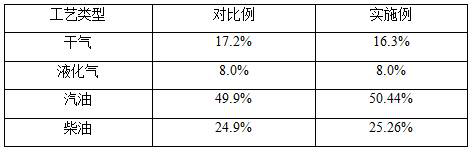
[0042]The pre-lift gas is passed into the pre-lift gas feed pipe 110 at the bottom of the riser reactor 100, and the amount of the pre-lift gas added is 1.5 t / h, of which the dry gas is 0.22 t / h, and the steam is 1.28 t / h. The heavy oil is passed into the riser reactor 100 from the heavy oil inlet pipe, and the amount of heavy oil added is 22.8 t / h. At the same time, the catalyst enters the riser reactor 100 from the outlet of the regenerator 300 and flows upwards driven by the pre-lift gas. When the catalyst After contacting the heavy oil, the catalytic cracking reaction is carried out in the riser reactor 100. The reaction conditions in the reaction zone of the riser reactor 100 are: reaction temperature 505°C, reaction pressure 0.1MPa, and the generated oil gas enters the settler 200 together with the catalyst to realize gas solid separation, the catalyst enters the regenerator 300 from the outlet of the settler 200 for regeneration, and the regenerated catalyst flows out fr...
Embodiment 3
[0049] The pre-lift gas is passed into the pre-lift gas feed pipe 110 at the bottom of the riser reactor 100, and the amount of the pre-lift gas added is 1.5 t / h, of which the dry gas is 0.27 t / h, and the steam is 1.23 t / h. The heavy oil is passed into the riser reactor 100 from the heavy oil inlet pipe, and the amount of heavy oil added is 22.8 t / h. At the same time, the catalyst enters the riser reactor 100 from the outlet of the regenerator 300 and flows upwards driven by the pre-lift gas. When the catalyst After contacting the heavy oil, the catalytic cracking reaction is carried out in the riser reactor 100. The reaction conditions in the reaction zone of the riser reactor 100 are: reaction temperature 505°C, reaction pressure 0.1MPa, and the generated oil gas enters the settler 200 together with the catalyst to realize gas solid separation, the catalyst enters the regenerator 300 from the outlet of the settler 200 for regeneration, and the regenerated catalyst flows out f...
PUM
 Login to View More
 Abstract
Description
Claims
Application Information
 Login to View More