
Biosensor
A biosensor, electrode technology, applied in the field of detection, can solve the problems of not covering the working electrode, wrong judgment, inaccurate detection results, etc.
- Summary
- Abstract
- Description
- Claims
- Application Information
AI Technical Summary
Problems solved by technology
Method used
Image

Examples
Embodiment 1
[0092] Example 1 Biosensor Error Reporting Accuracy Experiment for Insufficient Sample Volume
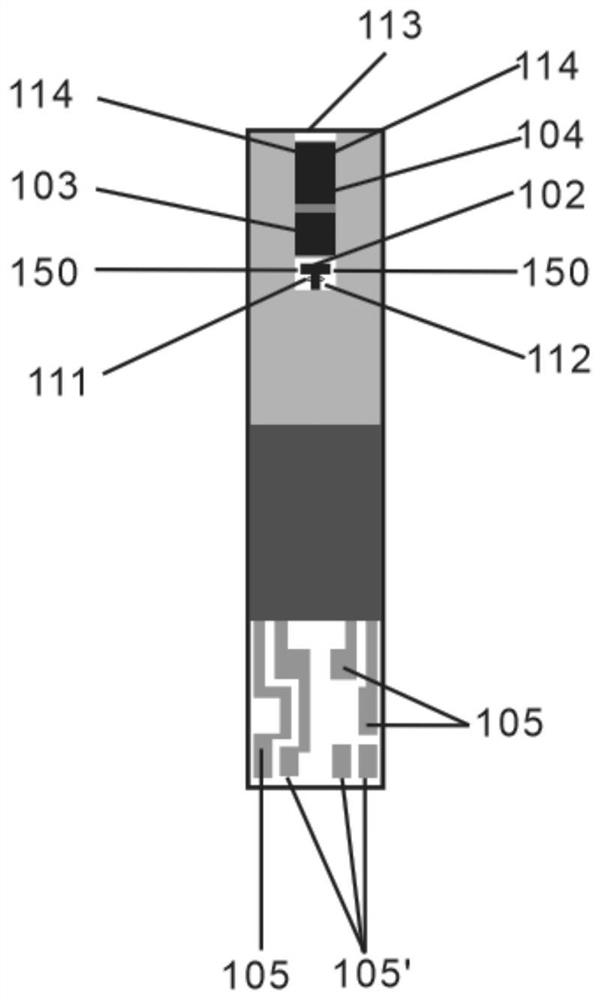
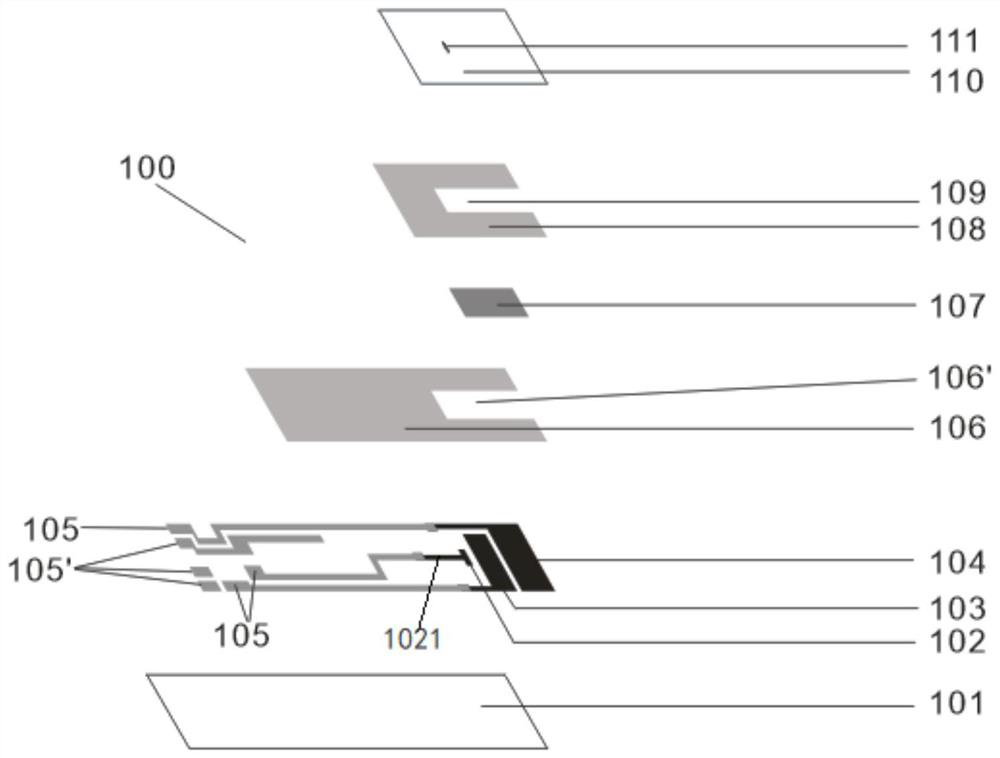
[0093] A biosensor for measuring uric acid content in blood, the biosensor adopts figure 1 and 2In the biosensor structure shown, the sample volume judging electrode does not touch the two sides of the sample injection channel, the length of the working electrode: 3.2mm, the length of the counter electrode: 2.2mm, the width of the sample volume judging electrode (L3): 1.6mm , length: 0.6mm, the width of the sampling channel is 2.3mm, the distance between the two ends of the sample addition judgment electrode and the inner side of the sampling passage is 0.35mm, and the distance between the counter electrode and the sample addition judgment electrode is 0.65mm mm. The reagents on the working electrode and the counter electrode include reagents such as buffer solutions, polymers, and mediators. The test instrument applies a 0.4V DC voltage between the working electrode and the samp...
Embodiment 2
[0104] Sample amount experiment of embodiment 2 different temperatures
[0105] Because the temperature also has a relatively obvious influence on the speed of the sample entering the sampling channel. Therefore this embodiment is on the basis of embodiment 1, to figure 1 biosensors and Figure 7 At different temperatures (2.5°C, 10.0°C, 21.0°C, 40.0°C, 47.5°C), samples with different hematocrit (10%, 42%, 70%) were added with the sample volume V2, namely 2.7 μL. To the test strip sample chamber, each condition was tested 100 times. The experimental results are shown in Table 4 and Table 5 below. Experiments have shown that at different temperatures, figure 1 The test accuracy of biosensors is significantly higher than Figure 7 biosensors. Even at different temperatures, the sample volume judgment electrode that is not in contact with the sample injection channel can greatly avoid the risk of instrument misjudgment due to insufficient sample volume.
[0106] Table four...
Embodiment 3
[0112] Embodiment 3 test accuracy experiment
[0113] use figure 1 The indicated biosensors were tested for accuracy experiments.
[0114] Blood samples containing uric acid concentrations of 250 μmol / L, 500 μmol / L, 700 μmol / L, and 1050 μmol / L were added to the present invention at ambient temperatures of 7.5°C, 21°C and 42.5°C. figure 1 The detection was carried out in the biosensor shown, and the sample volume required by the test strip was 3.0 μL. The results are shown in Table 6 below. Experiments show that the biosensor of the present invention has less deviation from the Mindray BS-350E automatic biochemical tester in each concentration range of the uric acid test, and has better test stability.
[0115] Table 6 Uric acid test accuracy experiment
[0116]
[0117]
PUM
| Property | Measurement | Unit |
|---|---|---|
| width | aaaaa | aaaaa |
| width | aaaaa | aaaaa |
| length | aaaaa | aaaaa |
Abstract
Description
Claims
Application Information
 Login to View More