

CFR-PEEK orthopedic implant, preparation method thereof and wireless sensing device
A technology for orthopedic implants and wireless sensing, applied in the field of wireless sensing devices, CFR-PEEK orthopedic implants and their preparation, can solve problems such as stiffness mismatch, difficulty affecting wireless sensing signals, and sensor sensitivity drop
Active Publication Date: 2022-05-06
TSINGHUA UNIV
View PDF6 Cites 8 Cited by
- Summary
- Abstract
- Description
- Claims
- Application Information
AI Technical Summary
Problems solved by technology
However, the method of attaching additional sensors to orthopedic implants to detect signals through external antennas has obvious shortcomings: the additionally pasted sensors are attached to the metal implants by glue. Yes, after working for a long time in the body, the viscosity of the adhesive layer (adhesive layer) will decrease, which will cause the sensor to be not firmly attached to the metal implant matrix, resulting in a stiffness mismatch problem, which will cause the capacitance C and inductance L of the entire system to decrease. drop, while the resonant frequency is calculated according to the formula When the capacitance and inductance decrease, the resonant frequency will increase, making the resonant response frequency of the sensor itself higher, which will affect the difficulty of in vitro detection and receiving wireless sensor signals. Real-time detection and continuous monitoring of
Method used
the structure of the environmentally friendly knitted fabric provided by the present invention; figure 2 Flow chart of the yarn wrapping machine for environmentally friendly knitted fabrics and storage devices; image 3 Is the parameter map of the yarn covering machine
View moreImage
Smart Image Click on the blue labels to locate them in the text.
Smart ImageViewing Examples

Examples
Experimental program
Comparison scheme
Effect test
Embodiment 1
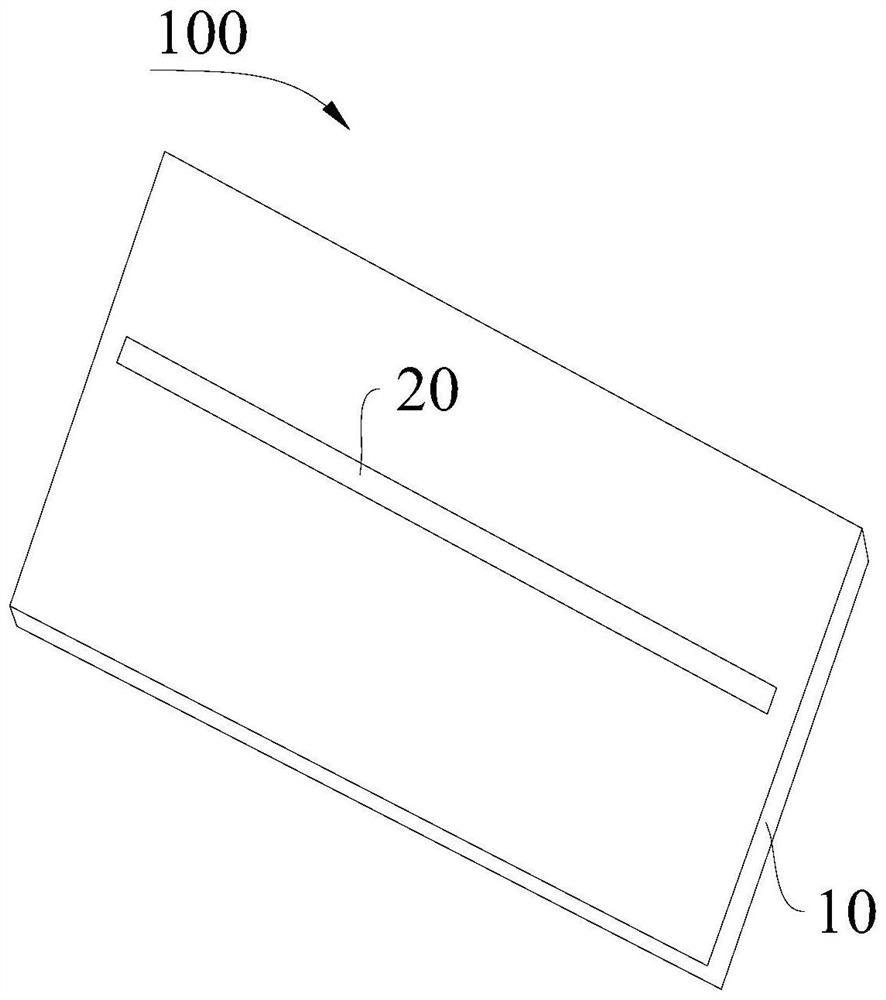
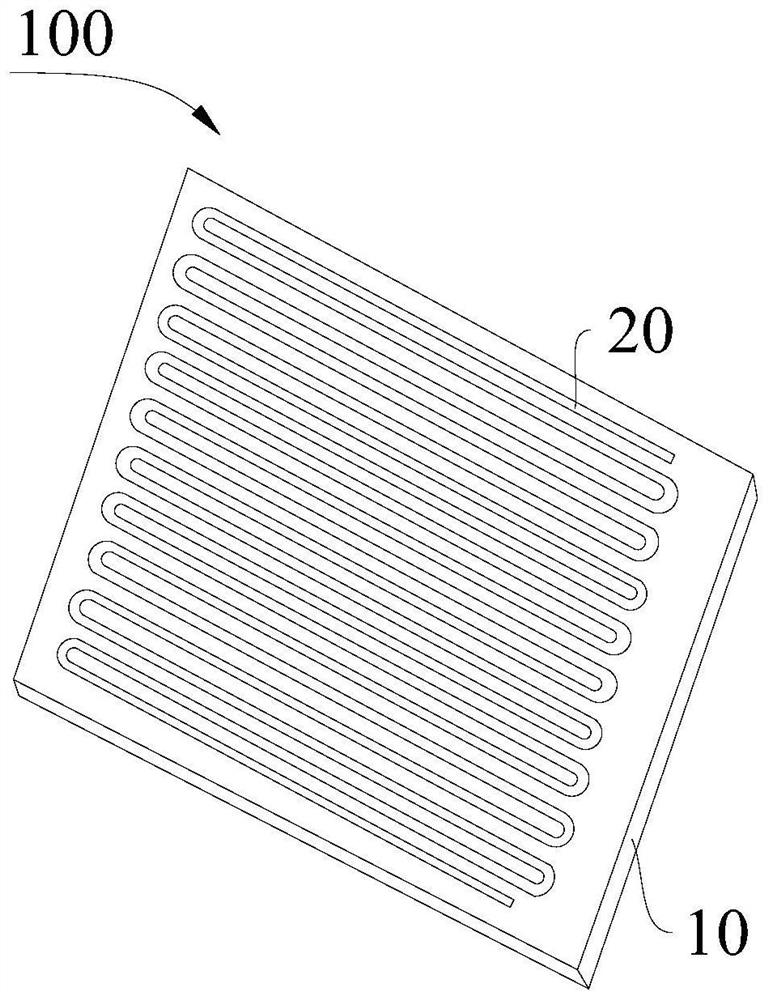
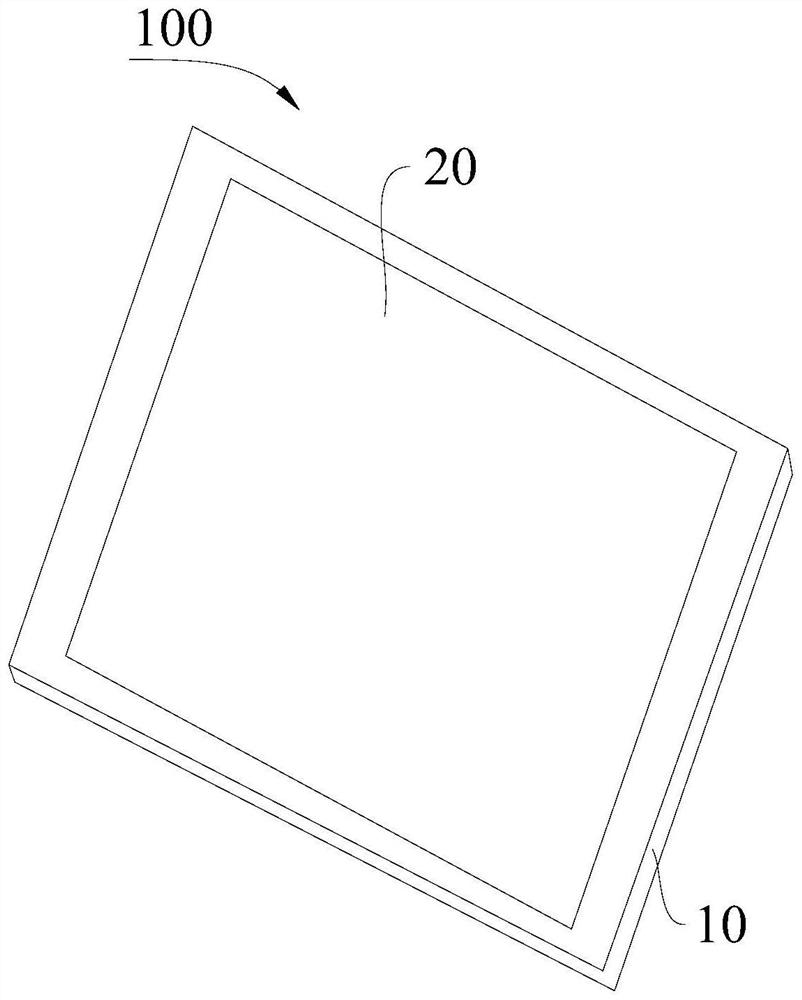
[0046] The surface of the carbon fiber reinforced polyetheretherketone (CFR-PEEK) matrix is irradiated with an ultraviolet nanosecond laser. The wavelength of the ultraviolet nanosecond laser used is 355nm, the pulse width is 25ns, and the output power of the laser is 5.5W. The repetition frequency was 40kHz, the scanning speed was 60mm / s, and the defocus amount was 2mm. A patterned carbonized layer was formed on the surface of the CFR-PEEK matrix to obtain a carbon fiber-reinforced polyetheretherketone orthopedic implant.
the structure of the environmentally friendly knitted fabric provided by the present invention; figure 2 Flow chart of the yarn wrapping machine for environmentally friendly knitted fabrics and storage devices; image 3 Is the parameter map of the yarn covering machine
Login to View More PUM
| Property | Measurement | Unit |
|---|---|---|
| Sensitivity | aaaaa | aaaaa |
Login to View More
Abstract
The invention discloses a CFR-PEEK orthopedic implant, a preparation method thereof and a wireless sensing device. The carbon fiber reinforced polyether-ether-ketone orthopedic implant comprises a carbon fiber reinforced polyether-ether-ketone matrix and a patterned carbonized layer, and the patterned carbonized layer is formed by performing in-situ carbonization on the carbon fiber reinforced polyether-ether-ketone matrix. Therefore, a mechanical signal, a temperature signal or a chemical signal can be sensed by utilizing the patterned carbonized layer formed on the carbon fiber reinforced polyether-ether-ketone matrix in situ, the healing condition of an injured part can be detected and monitored in real time by combining an in-vitro probe or an in-vivo signal transduction device, and complications can be found in time; and operations and postoperative rehabilitation can be better guided.
Description
technical field [0001] The present application relates to the field of wireless sensing, in particular to a CFR-PEEK orthopedic implant, a preparation method thereof, and a wireless sensing device. Background technique [0002] Postoperative healing monitoring in orthopedics has always been an important and difficult research topic. During postoperative rehabilitation, different load-bearing and activity modes will affect the force and micro-motion of the fracture site, thus playing a role in the healing of the site. irreversible effects. [0003] At present, the most commonly used postoperative observation method is X-ray plain film or CT (Computer Tomography, computer X-ray tomography). Due to the ionizing radiation of X-ray and the inconvenience of follow-up, the sampling frequency of this method is low and cannot reach The need for convenient monitoring at any time. [0004] Therefore, if real-time detection and continuous monitoring of orthopedic injuries can be carri...
Claims
the structure of the environmentally friendly knitted fabric provided by the present invention; figure 2 Flow chart of the yarn wrapping machine for environmentally friendly knitted fabrics and storage devices; image 3 Is the parameter map of the yarn covering machine
Login to View More Application Information
Patent Timeline
 Login to View More
 Patent Type & AuthorityApplications(China)
IPC IPC(8): A61L27/18A61L27/08A61L27/30A61L27/50A61B5/00
CPCA61B5/686A61B5/4504A61L27/18A61L27/08A61L27/303A61L27/50A61L2430/02
Inventor赵喆臧浠凝赵海燕胡行健黄金财
OwnerTSINGHUA UNIV