
Pealite like thermal treating steel rail and producing method thereof
A production method and pearlite technology, applied in heat treatment furnaces, heat treatment equipment, furnace types, etc., can solve problems such as difficult operation, fatigue cracking, and high carbon equivalent, and achieve broad application prospects, good wear resistance, and excellent weldability Effect
Patent Information
- Authority / Receiving Office
- CN · China
- Patent Type
- Applications(China)
- Current Assignee / Owner
- Publication Date
- 2006-06-28
Smart Images
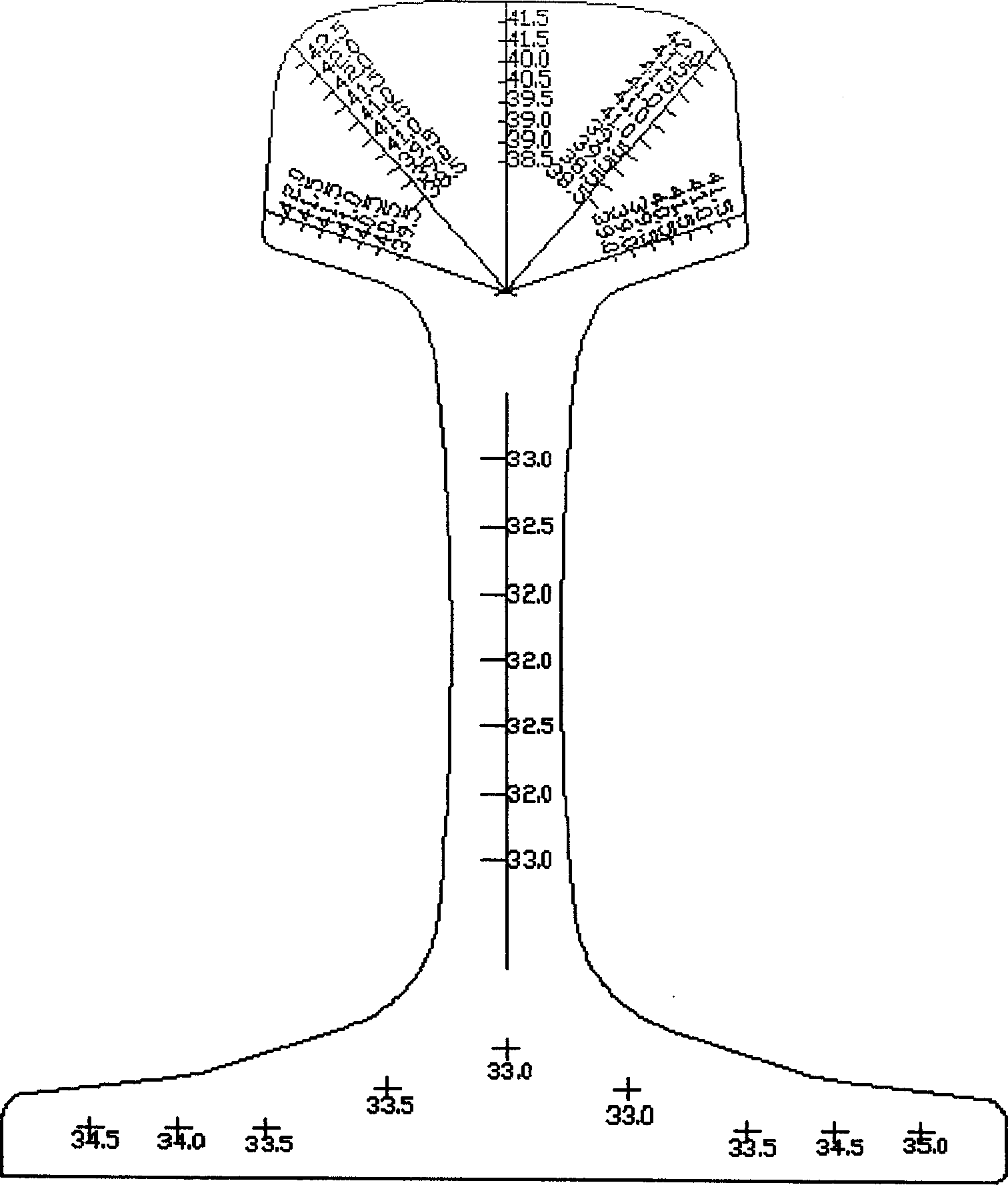
Figure 1 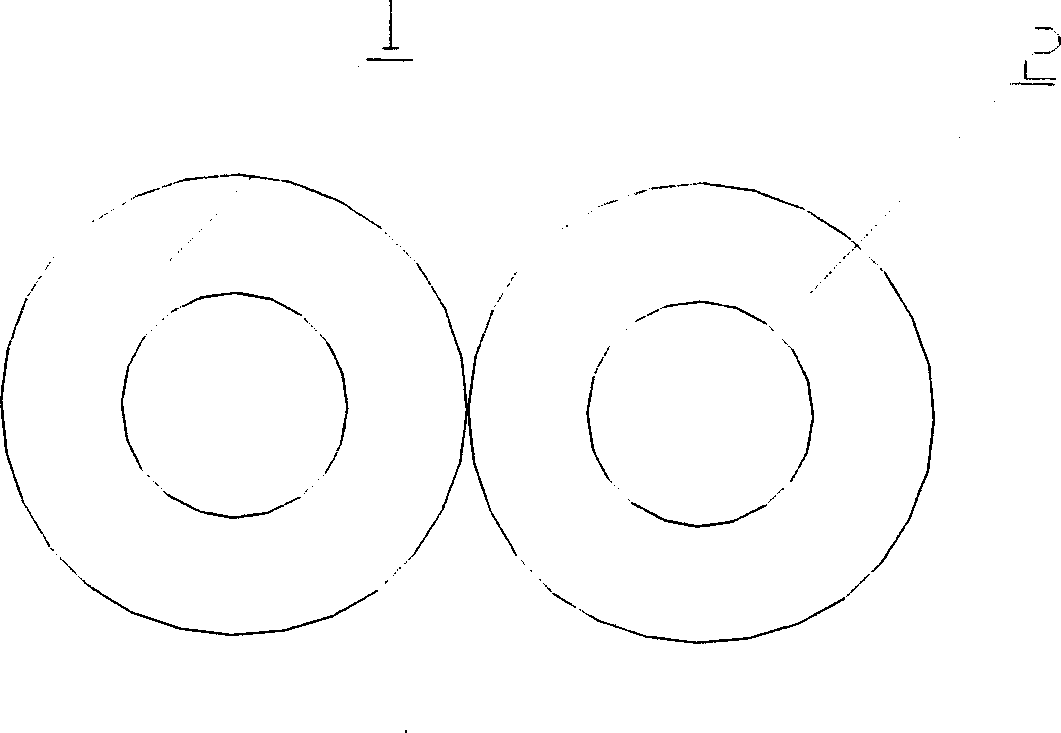
Figure 2
Abstract
Description
Technical field
[0001] The invention relates to a steel rail and a production method thereof, in particular to a pearlite heat-treated steel rail and a production method thereof. Background technique
[0002] The heavy load of railway freight requires steel rails to have higher strength, and the tissues that can be used in a large number of rails are mainly pearlite, tempered martensite or bainite. Among them, pearlite has the most wear resistance and the most production technology. Simple, the lowest production cost and the most stable performance are one of the directions for continuous improvement and development of rail materials in the future. Generally, the strengthening methods of pearlite rails include alloying, heat treatment, and alloying + heat treatment. From the perspective of development, alloying + heat treatment is an ideal method, which has the advantages of high strength, good toughness and plasticity, and low cost.
[0003] CN1012906B discloses a wear-resistant...
Examples
Embodiment 1
[0034] The weight percentage of the chemical composition of the rail steel is: C: 0.76%, Si: 0.61%, Mn: 0.81%, V: 0.06%, Cr: 0.68%, P: 0.014%, S: 0.012%, the rest is iron, others Trace elements and impurities, of which Mn+2Cr+5Mo+3Nb=2.17%.
[0035] After the rail is rolled, the temperature of the residual heat is 840°C, and the rail head is spray-cooled at a cooling rate of 4.0°C / s for 110 seconds. When the temperature is 450°C, the cooling is stopped, and it is left naturally. After heat treatment, a fine pearlite structure is obtained. The mechanical properties are: tensile strength Rm is 1360MPa, yield strength Rp0.2 is 940MPa, elongation A is 13%, Brinell hardness of rail head tread is 390HB, Rockwell hardness of rail head section 3mm from the surface is 41.5HRC, The Rockwell hardness at 21mm on the surface is 39.0HRC, and the depth of the hardened layer is 39mm.
[0036] figure 1 It is a schematic diagram of the obtained steel rail's full-section hardness. In the figure, t...
Embodiment 2
[0050] The weight percentage of the chemical composition of the rail steel is: C: 0.70%, Si: 0.55%, Mn: 0.96%, V: 0.08%, Cr: 0.46%, P: 0.022%, S: 0.011%, Ti: 0.01%, The rest is iron, other trace elements and impurities, of which Mn+2Cr+5Mo+3Nb=1.88%
[0051] After the rail is rolled, the temperature of the residual heat is 785°C, and the rail head is spray-cooled at a cold rate of 5.0°C / s for 70 seconds. When the temperature is 438°C, the cooling stops and it is left naturally. After heat treatment, a fine pearlite structure is obtained. The mechanical properties are: tensile strength Rm is 1330MPa, yield strength Rp0.2 is 905MPa, elongation A is 12%, Brinell hardness of rail head tread is 380HB, Rockwell hardness of rail head section 3mm from the surface is 39.5HRC, The Rockwell hardness at 21mm on the surface is 38.5HRC, and the depth of the hardened layer is 35mm.
[0052] After the wear test, the wear rate is 29% of the U71Mn hot-rolled rail, that is, the wear resistance is 3....
Embodiment 3
[0054] The weight percentage of the chemical composition of rail steel is: C: 0.85%, Si: 0.73%, Mn: 0.75%, V: 0.11%, Cr: 0.38%, P: 0.019%, S: 0.010%, Nb: 0.03%, Cu: 0.30%. The rest is iron, other trace elements and impurities, of which Mn+2Cr+5Mo+3Nb=1.60%.
[0055] After the rail is rolled, the temperature of the residual heat is 682°C, and the rail head is cooled with compressed air at a cooling rate of 2.5°C / s for 100 seconds. When the temperature is 437°C, the cooling stops and it is left naturally. After heat treatment, a fine pearlite structure is obtained. The mechanical properties are: tensile strength Rm is 1390MPa, yield strength Rp0.2 is 1040MPa, elongation A is 11%, rail head tread Brinell hardness is 401HB, rail head section 3mm from the surface, Rockwell hardness is 41.5HRC, The Rockwell hardness at 21mm on the surface is 40.0HRC, and the depth of the hardened layer is 35mm. According to the neutral salt spray accelerated corrosion comparison test, the corrosion rate...