Connector-based high-voltage lockout function

a high-voltage lockout and connector technology, applied in the direction of secondary cell servicing/maintenance, coupling device connection, safety/protection circuit, etc., can solve the problems of high-voltage bus de-energized and disconnectress, and achieve simplified and robust connector-based, reduce high-voltage power exposure, and reduce dependence

US10923926B2Active Publication Date: 2021-02-16GM GLOBAL TECH OPERATIONS LLC
1 Cites 0 Cited by

Patent Information

Authority / Receiving Office
US · United States
Patent Type
Patents(United States)
Current Assignee / Owner
Publication Date
2021-02-16

Smart Images

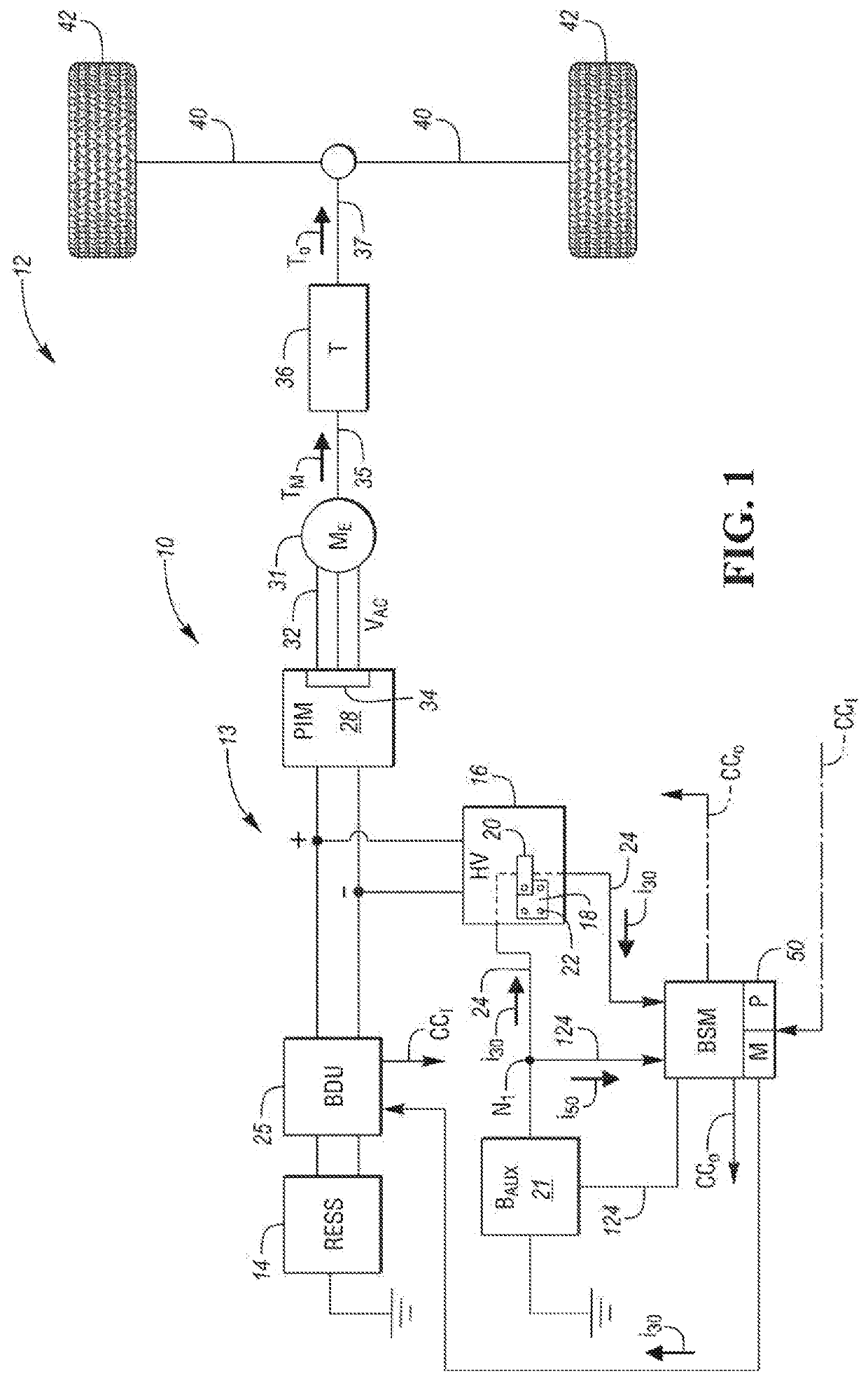
  • Figure 1
    Figure 1
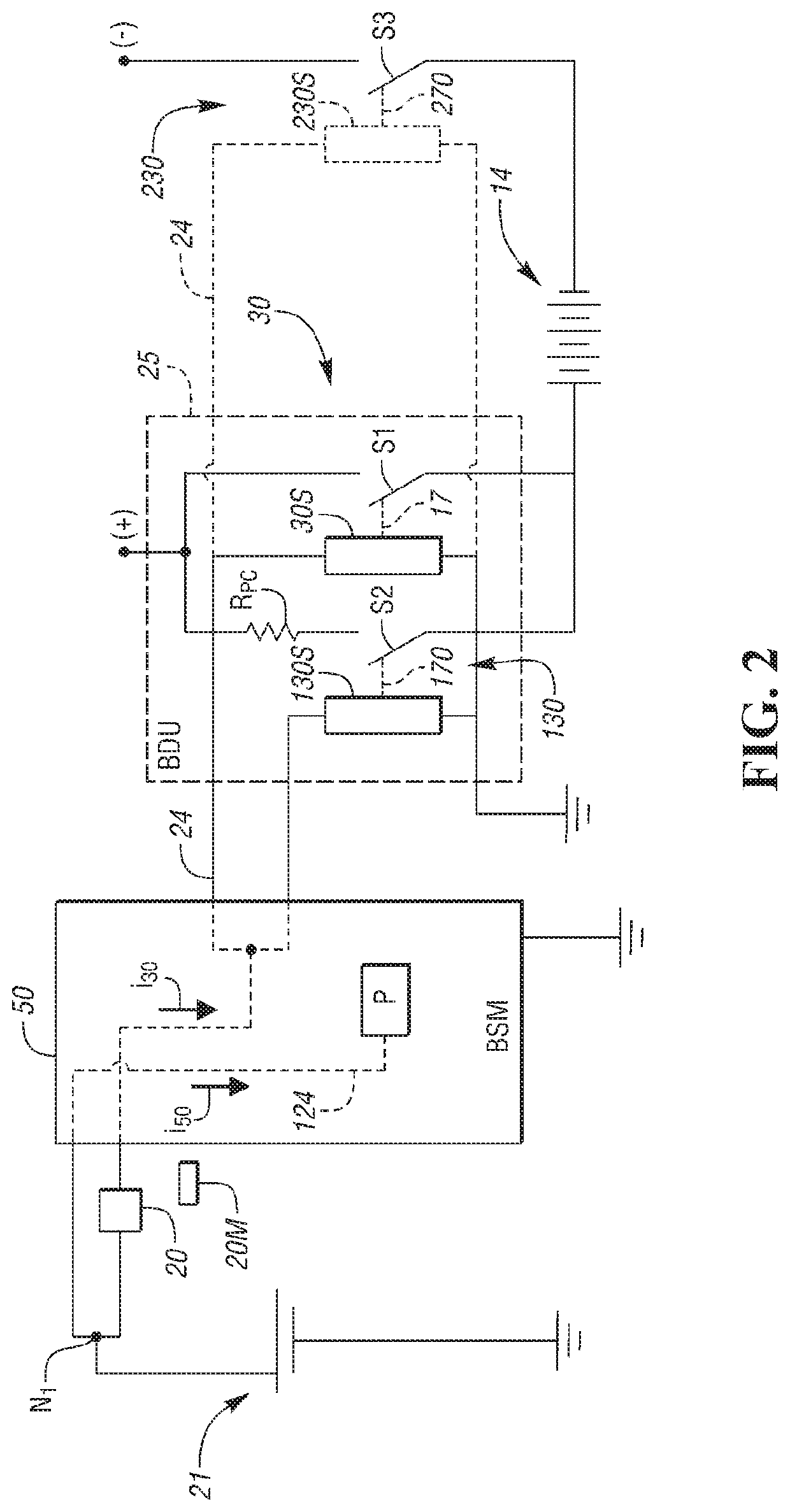
  • Figure 2
    Figure 2
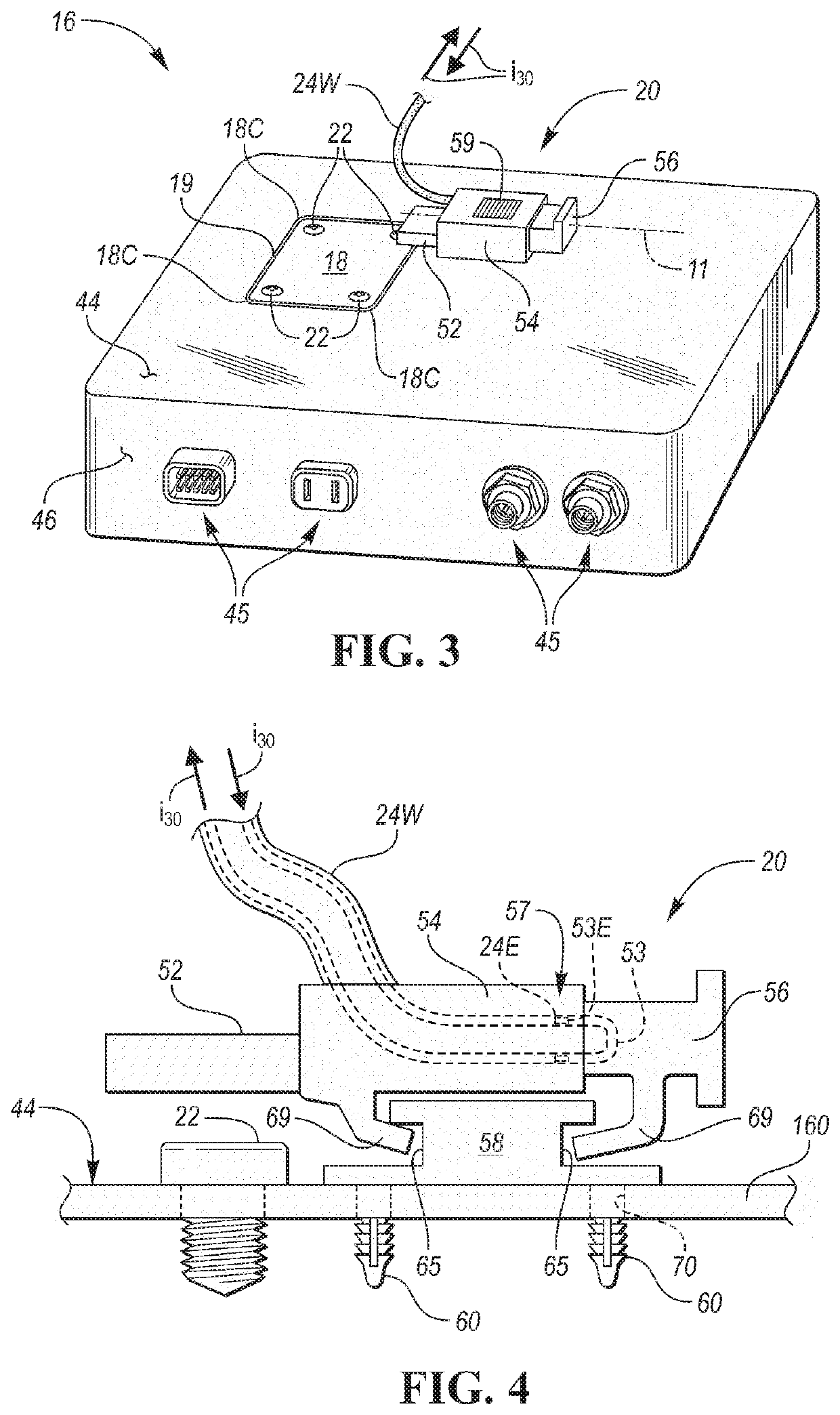
  • Figure 3
    Figure 3
Patent Text Reader

Abstract

An electrical system includes a high-voltage bus connected to a rechargeable energy storage system (RESS) and a high-voltage component connected to the RESS via the voltage bus. The component defines a service opening spanned by a removable cover. The electrical system may include a fastener connecting the cover to the component, as well as a battery disconnect unit (BDU) having a high-voltage switch device connecting the RESS to the high-voltage bus. The switch device closes responsive to a low-voltage drive current to connect the RESS to the high-voltage bus. A drive circuit conducts the current to the switch device. An electrical connector has multiple connector pieces collectively forming a switch in the drive circuit. Disconnection of the pieces from each other opens the switch to interrupt the drive current and cause the high-voltage switch device to open, which disconnects the RESS from the high-voltage bus.
Need to check novelty before this filing date? Find Prior Art

Description

INTRODUCTION

[0001] An electrified vehicle powertrain, power plant, or other high-voltage system may include an electrical system having separate high-voltage and low-voltage buses. While “high-voltage” and “low-voltage” are relative terms, “low-voltage” often encompasses a maximum voltage level of 12-15 volts, i.e., an auxiliary voltage, with the term “high-voltage” describing voltage levels well above auxiliary voltage levels. An electrified vehicle propulsion system, for instance, may have a maximum bus voltage of 60-300 volts, with certain emerging battery packs having a voltage capacity of 500-800 volts.

[0002] Regardless of nominal voltage levels, the high-voltage and low-voltage buses of a dual-bus electrical system are respectively connected to a high-voltage rechargeable energy storage system (RESS), e.g., a lithium ion or nickel metal hydride battery pack and associated power electronics, and a lead-acid or other application-suitable auxiliary battery pack. On the high-voltage...

Examples

Embodiment Construction

[0025]Referring to the drawings, wherein like reference numbers refer to like components, an electrical system 10 is shown in FIG. 1. The electrical system 10, which may be used as part of an example vehicle 12 as described herein or as part of a power plant or other mobile or stationary device or system, provides a high-voltage system lockout (HVSL) function that may forego use of a manual service disconnect (MSD) and / or high-voltage interlock (HVIL) process as described above.

[0026]The electrical system 10 includes multiple voltage buses, including a high-voltage (HV) bus 13 that is connected to a rechargeable energy storage system (RESS) 14. The term “high-voltage” as used herein refers to voltage levels in excess of 12-15 volt low-voltage / auxiliary voltage levels, e.g., 60-300 volts or higher. Also as used herein, the term “RESS” refers to a multi-cell rechargeable battery pack having a lithium ion, nickel metal hydride, or other application-suitable battery chemistry, as well a...