
Facilitated forward chemical genetics using tagged triazine library
a triazine library and forward chemical technology, applied in the field of forward chemical genetics to evaluate triazine compounds, can solve the problems of reducing the number of hits, and reducing the efficiency of the affinity matrix in which the hit compound does not lose activity, so as to reduce the unfruitful efforts to modify the hit compound later, the effect of removing an already existing linker and being easy to prob
- Summary
- Abstract
- Description
- Claims
- Application Information
AI Technical Summary
Benefits of technology
Problems solved by technology
Method used
Image

Examples
Embodiment Construction
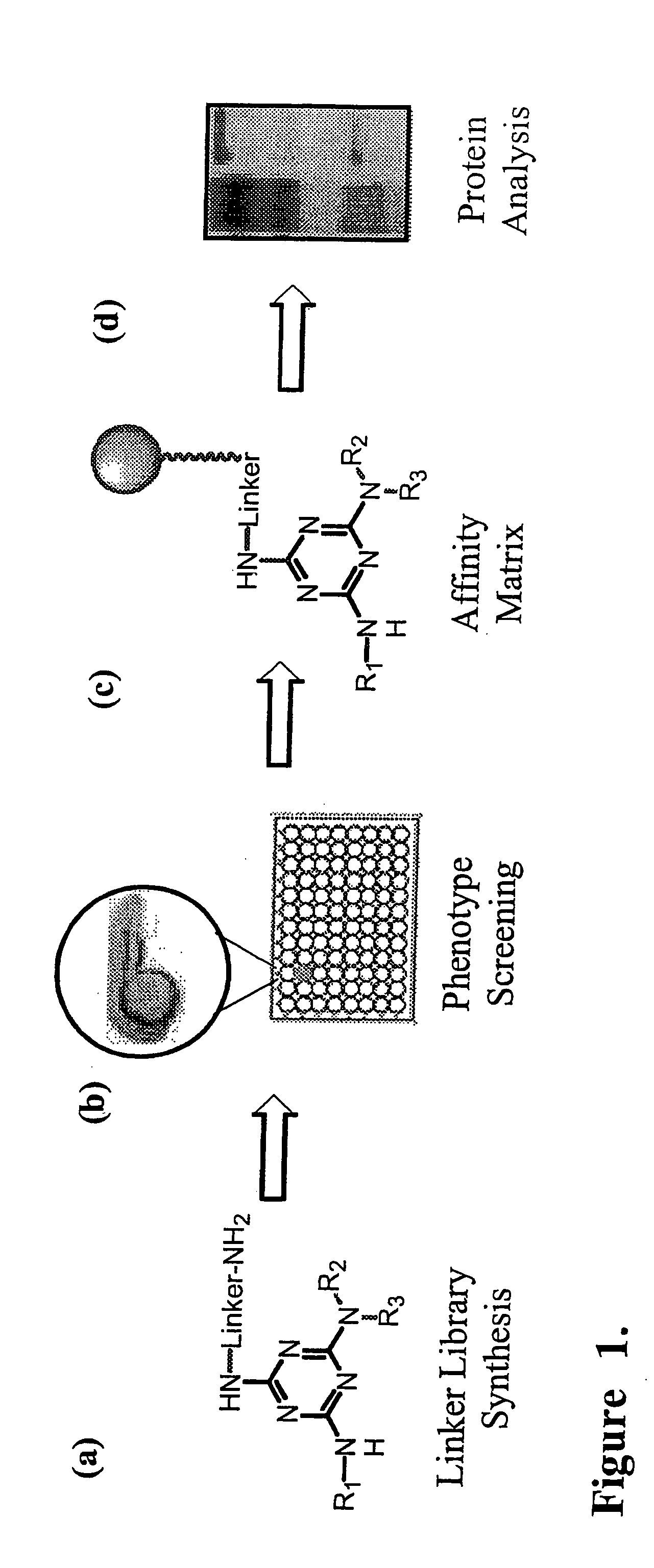
[0018] Incorporating linkers in a library of compounds prior to biological screening provides for a straightforward method for isolating a target protein without compromising the lead compound's activity or performing further SAR experiments.
[0019] The libraries produced by the present invention are useful in screening compounds in a biological assay in search for novel phenotypes and elucidating protein functions.
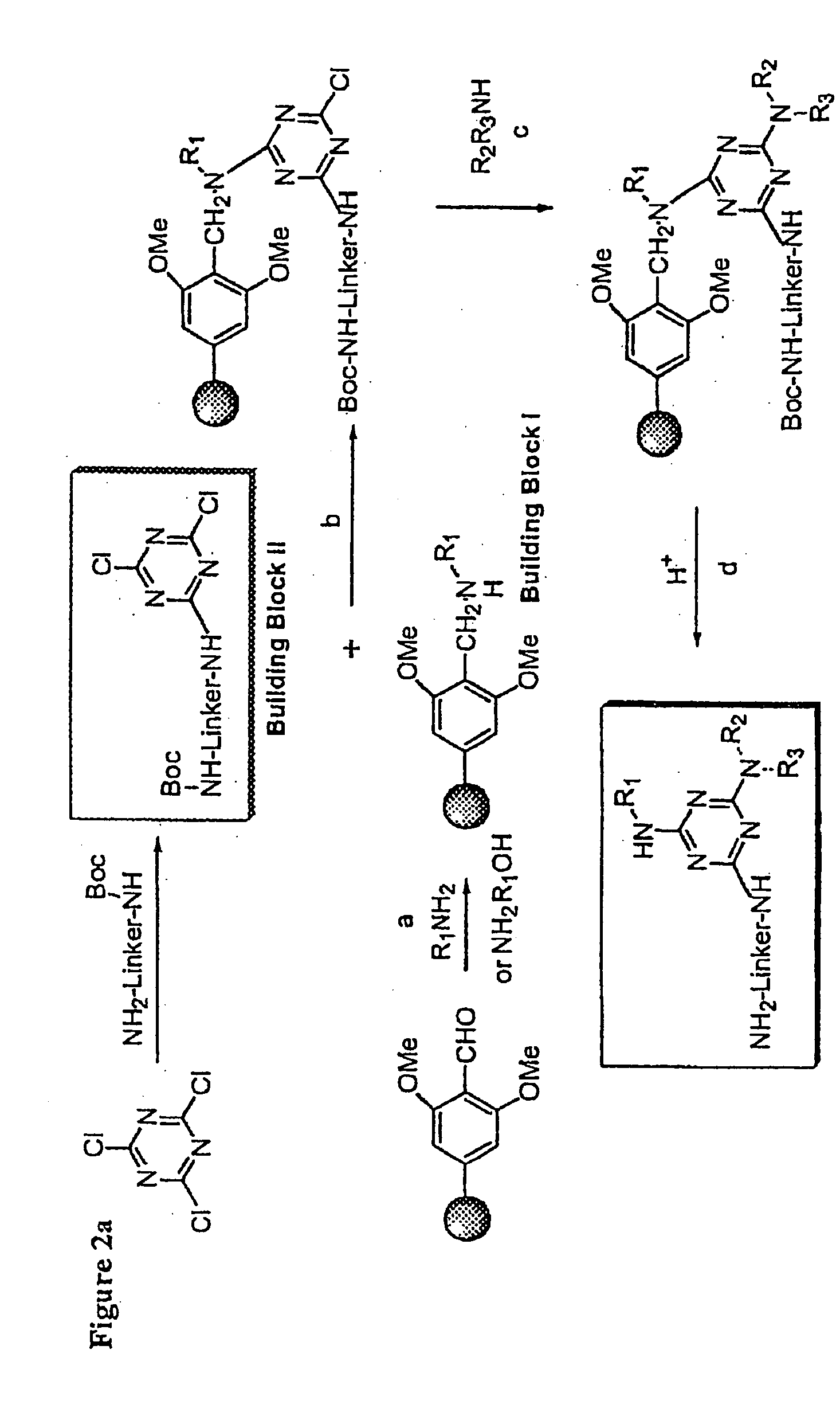
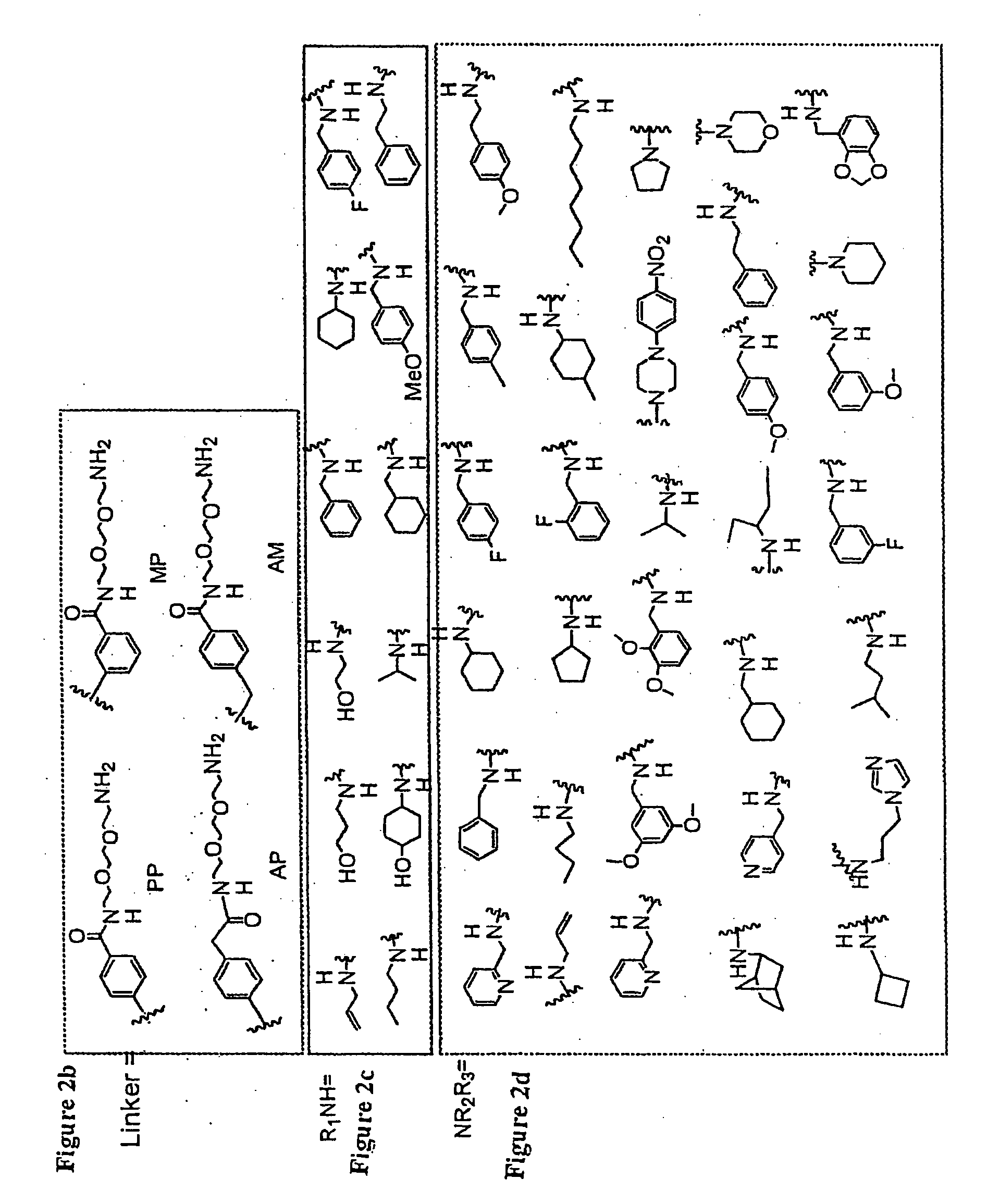
[0020] The linkers for use in the present invention comprise triethyleneglycol aryl or alkyl linkers. In order to provide detection capability, or to add labels for assays, the end group of the linker carries moieties such as azide, amino, NHBoc, biotin, acetylene, or fluorescent moieties.
[0021] For producing building block I, a primary amine or amino alcohol is used. The primary amine or amino alcohol may be a substituted or unsubstituted alkyl, alkenyl, alkynyl, or aryl primary amine or amino alcohol.
[0022] The linker compound shown in FIG. 1a and the affinity matrix...
PUM
| Property | Measurement | Unit |
|---|---|---|
| Reaction time | aaaaa | aaaaa |
| particle size | aaaaa | aaaaa |
| Reaction time | aaaaa | aaaaa |
Abstract
Description
Claims
Application Information
 Login to View More