
Human mesenchymal progenitor cell
- Summary
- Abstract
- Description
- Claims
- Application Information
AI Technical Summary
Benefits of technology
Problems solved by technology
Method used
Image

Examples
example 1
Isolation and Characterization of MPCs from Dexter-Type Bone Marrow Stromal Cell Culture Systems
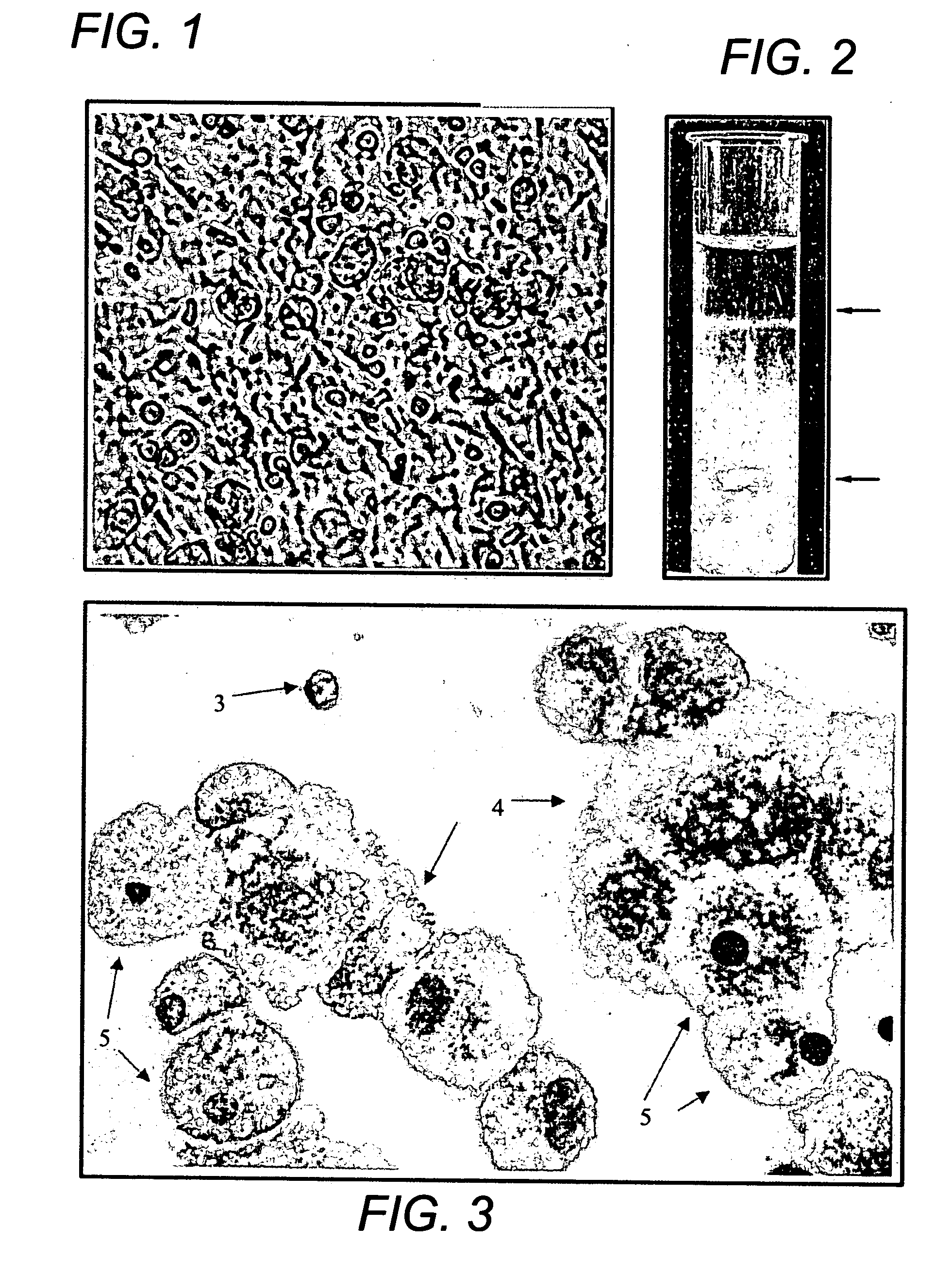
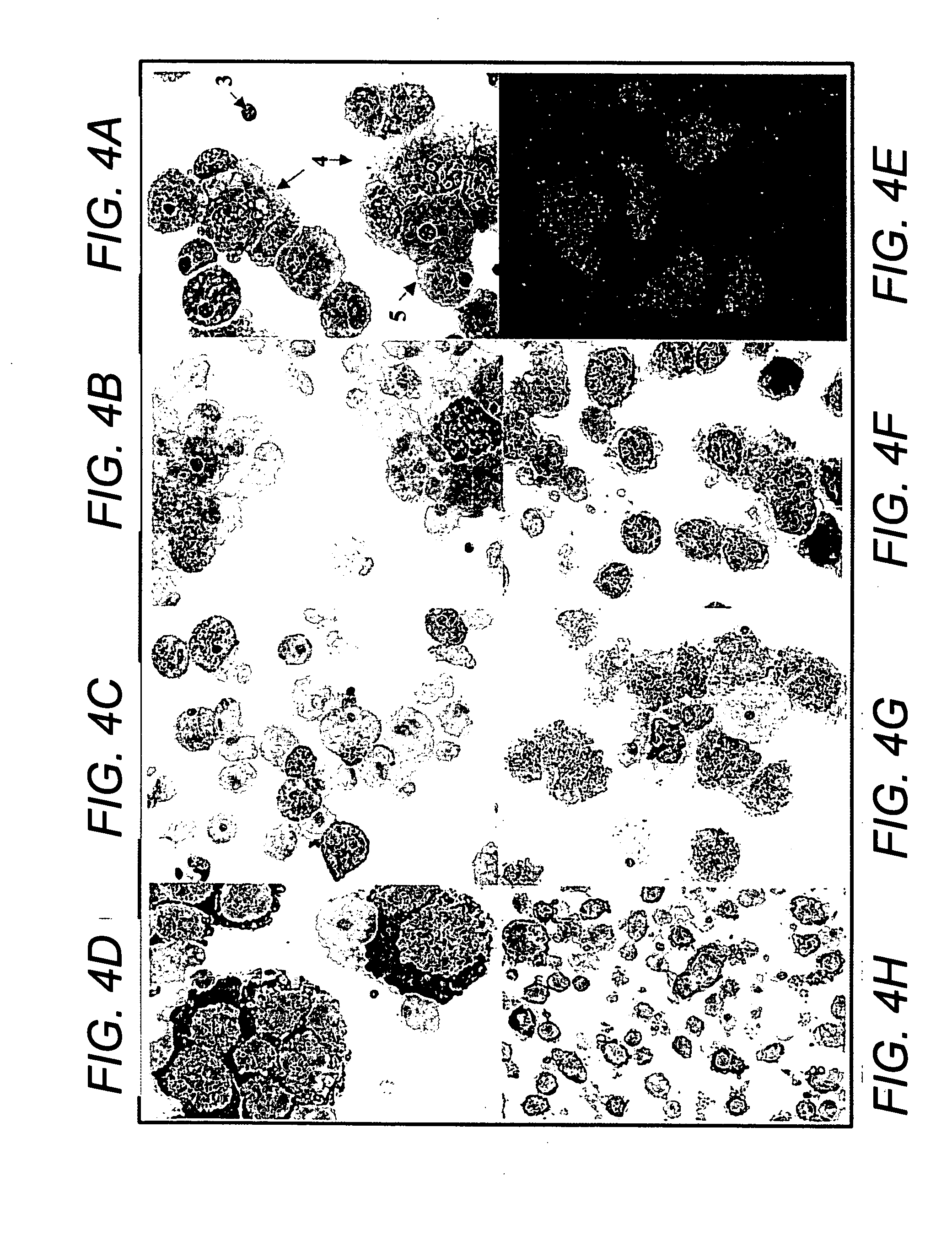
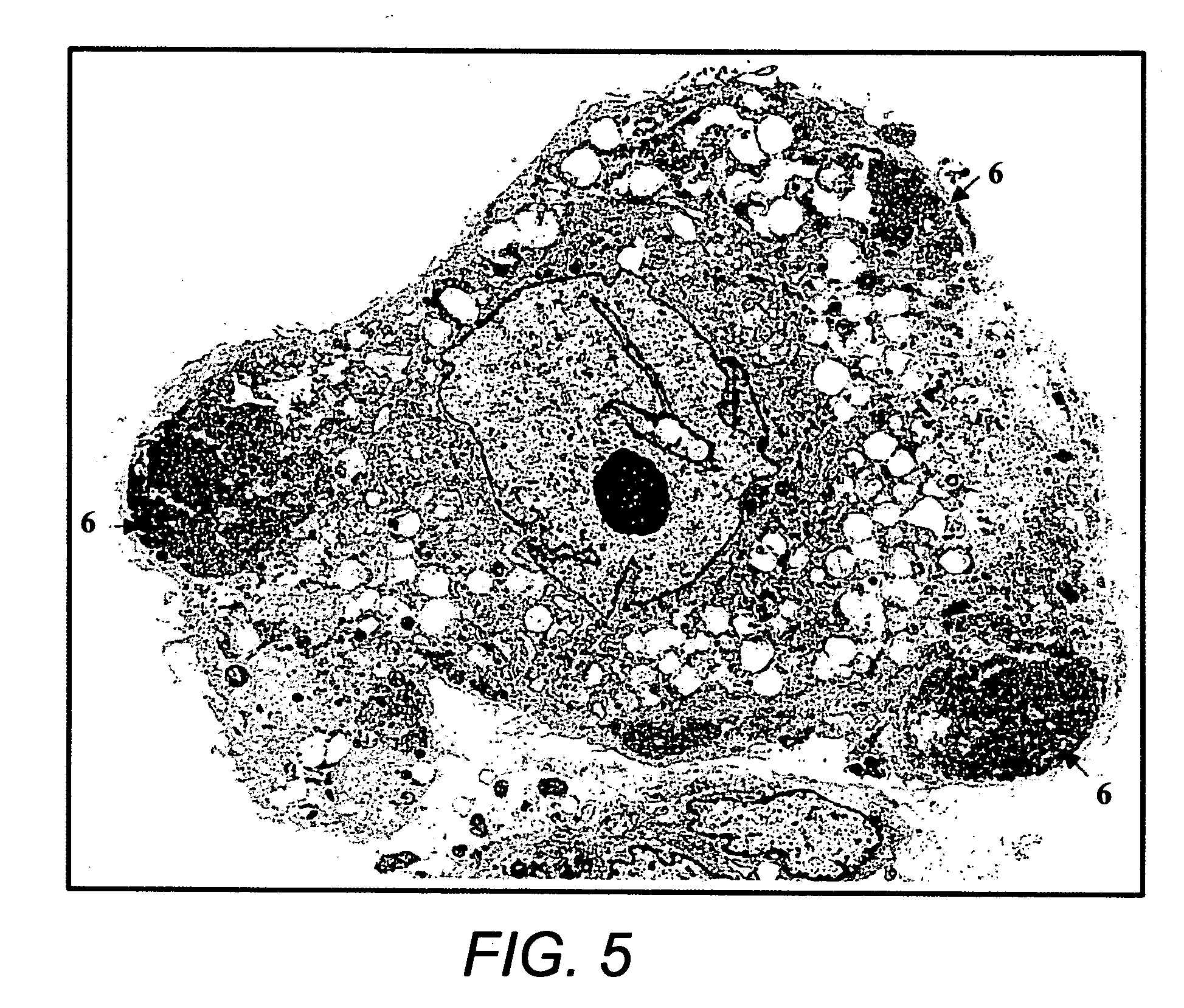
[0089] Bone Marrow Culture: Bone marrow samples were obtained from posterior superior iliac crest under general anesthesia for standard marrow transplantation. Marrow stromal cell cultures were set up using the residual cells recovered from the filters of Fenwal Bone Marrow Collection System after complete filtration of the marrow samples. The filters were rinsed with phosphate-buffered saline without Ca2+ and Mg2+ (PBS-CMF). The cell suspension was subjected to Ficoll gradient isolation of the mononuclear cells (bone marrow MNCs). The bone marrow MNCs were washed (×2) in PBS-CMF and suspended in McCoy's 5A with HEPES medium containing 12.5% fetal bovine serum (FBS), 12.5% horse serum, 1 μM / L hydrocortisone and 1% penicillin / streptomycin (for this study McCoy's complete medium) and cultured under standard stromal-cell culture conditions (FIG. 1) (Seshi et al. Blood, 1994, 83:2399; Gartne...
example 2
Comparison of the Ability to Support in vitro Hematopoiesis by Purified MPCs vs. Unfractionated Bone Marrow Stromal Cells
[0110] CD34+ positive cells (hematopoietic progenitor cells) were purified (Dynal kit) and cocultured with irradiated stromal monolayers for five weeks, followed by performance of standard colony assays for hematopoietic progenitors using methylcellulose medium supplemented with colony stimulating factors (using MethoCult medium from Stem Cell Technologies, Inc, Canada). Unfractionated bone marrow stromal cells and purified MPCs were prepared in the same manner as in Example 1. Data in FIG. 8 represents results from three experiments. Purified MPC provides increased preservation of hematopoietic progenitor cells compared to unfractionated stromal cells.
example 3
Animal Model for Enhanced Engraftment Capacity of MPCs
[0111] The Severe Combined Immunodeficiency Disease (SCID) mouse model is an ideal system in which to investigate MPC function. Engraftment of human hematopoietic progenitors in SCID mice requires either coadministration of exogenous human cytokines, or cotransplantation of human bone marrow plugs or bone fragments.
[0112] There has been discovered a convenient, new source for human bone marrow stromal cells for enhancing transplantation that does not require cytokines, bone fragment, or marrow. Unlike prior methods, the isolated cells of the present invention support human hematopoiesis in the SCID mouse model as effectively as whole marrow stroma. The transplantation of human marrow mononuclear cells combined with purified MPCs results in dramatically vigorous engraftment of human cells in spleen, bone marrow, liver, pancreas, lungs, stomach, and paravertebral neuronal ganglia of SCID mice. By contrast, mice receiving human bo...
PUM
 Login to View More
 Abstract
Description
Claims
Application Information
 Login to View More