
X-ray device
a technology of x-ray detector and diaphragm, which is applied in the direction of radiation diagnostic diaphragm, application, and use of diaphragm/collimeter, etc., can solve the problem that the x-ray detector cannot be electrically controlled asymmetrically, and achieve the effects of facilitating diagnosis c, facilitating visualization on the monitor, and facilitating selection of the desired area
- Summary
- Abstract
- Description
- Claims
- Application Information
AI Technical Summary
Benefits of technology
Problems solved by technology
Method used
Image

Examples
Embodiment Construction
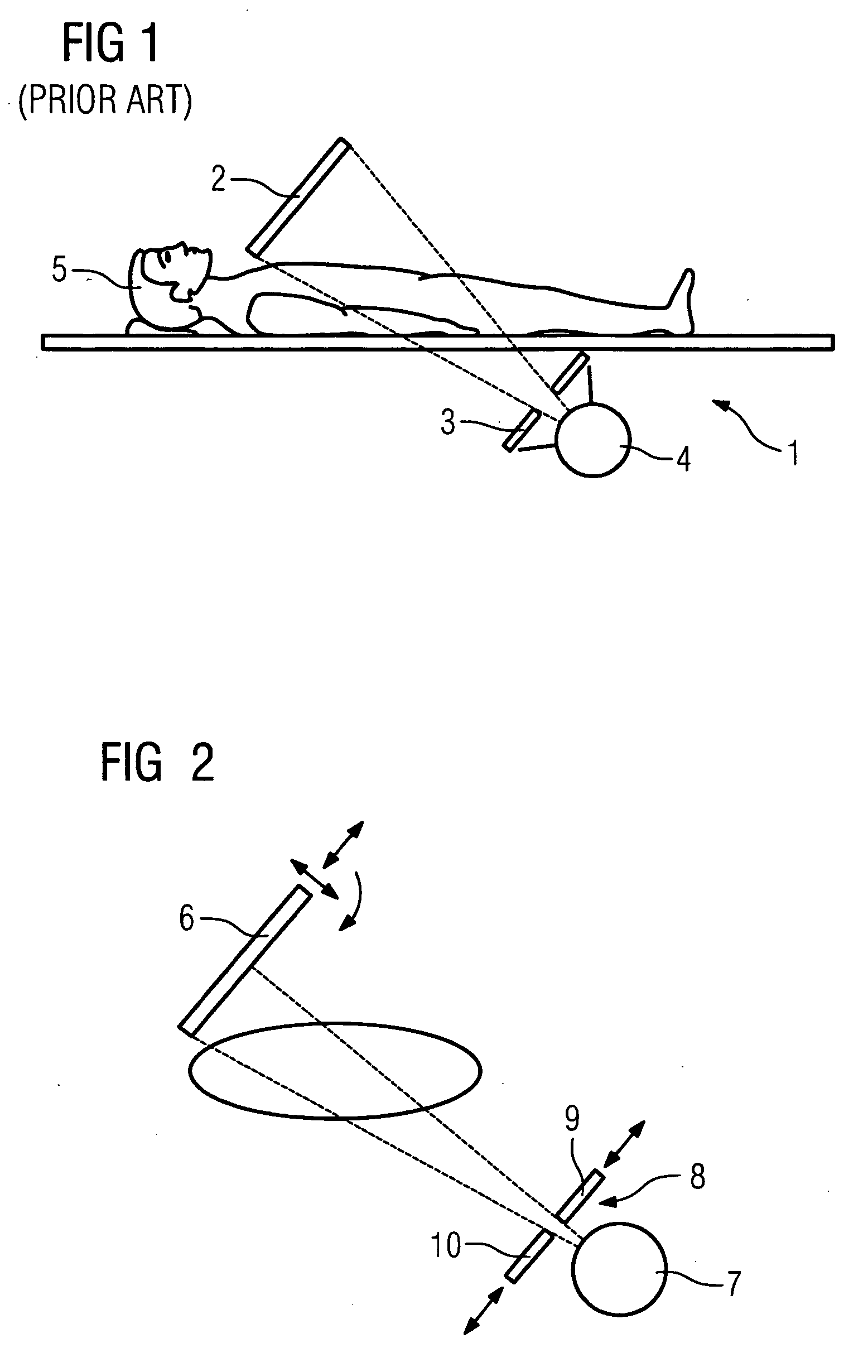
[0021]FIG. 1 shows a conventional X-ray device 1 with a detector 2 and an adjustable diaphragm 3. The diaphragm 3 is located between an X-ray tube 4 and a patient 5 and allows the examination area to be precisely faded-in by symmetrically moving the diaphragm 3.
[0022]FIG. 1 shows that with certain examinations the detector 2 cannot be moved sufficiently close to the patient, e.g. cardioangiography, as a result of its size. This is why different size detectors are used in practice. The diaphragm 3 can be moved symmetrically in relation to a detector center point, so that the lateral restrictions of the examination area are equidistant from the center of the detector in each instant.
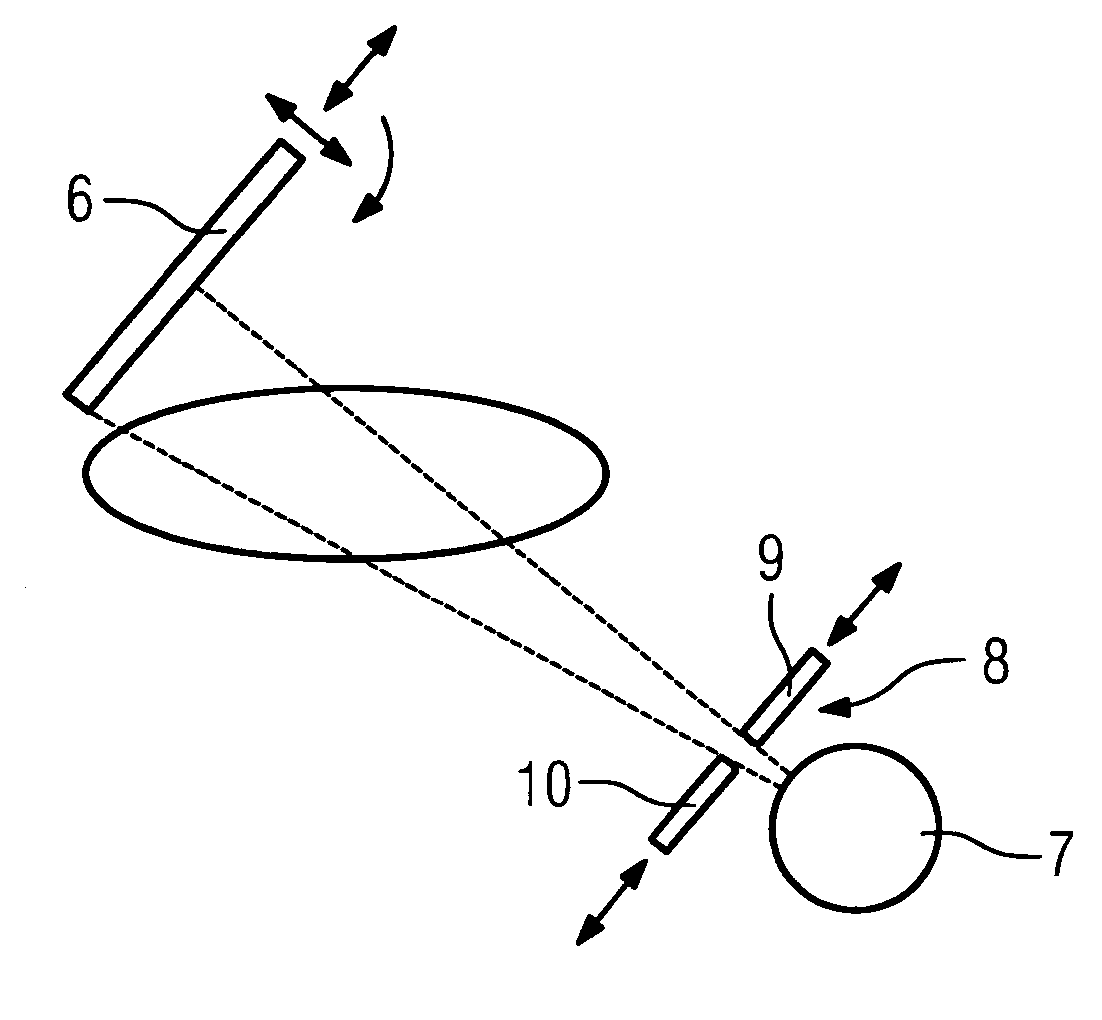
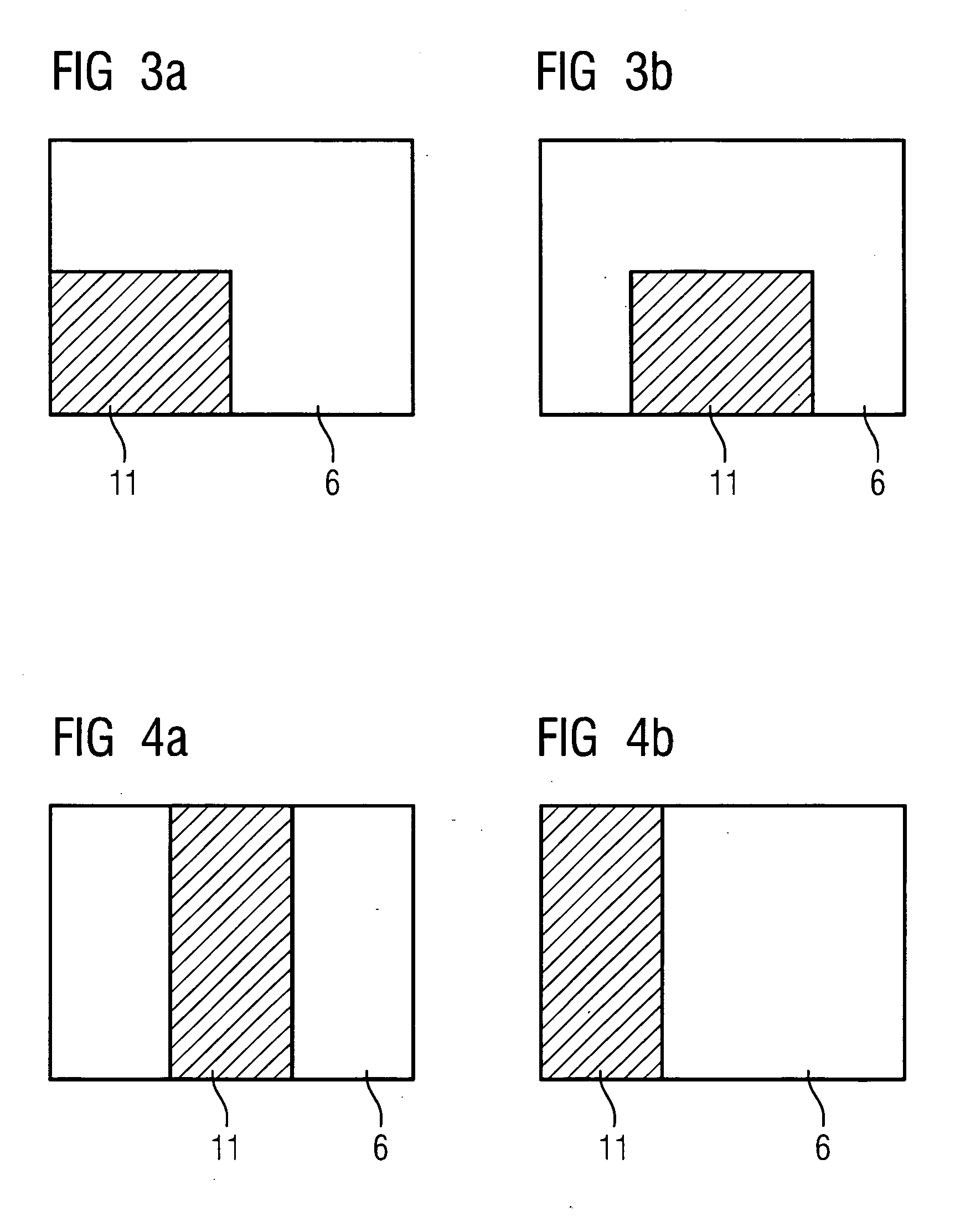
[0023]FIG. 2 shows an exemplary embodiment of the invention, whereby certain components of the X-ray device, which are of no significance for the invention, are not displayed. The detector 6 can be asymmetrically controlled and read out. It is possible to read out only subareas of the detector, so that t...
PUM
 Login to View More
 Abstract
Description
Claims
Application Information
 Login to View More