This helps you quickly interpret patents by identifying the three key elements:
Problems solved by technology
Method used
Benefits of technology
Benefits of technology
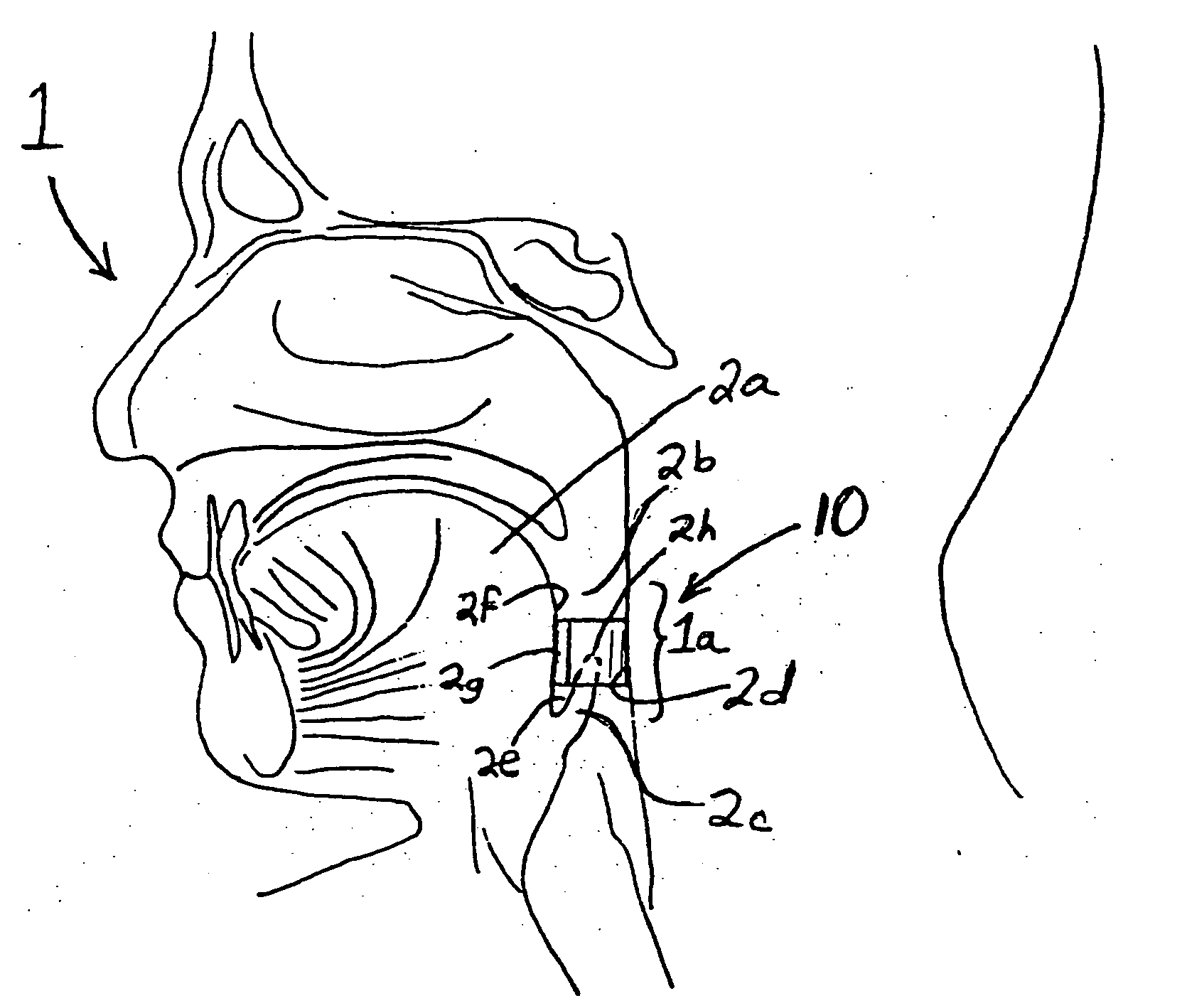
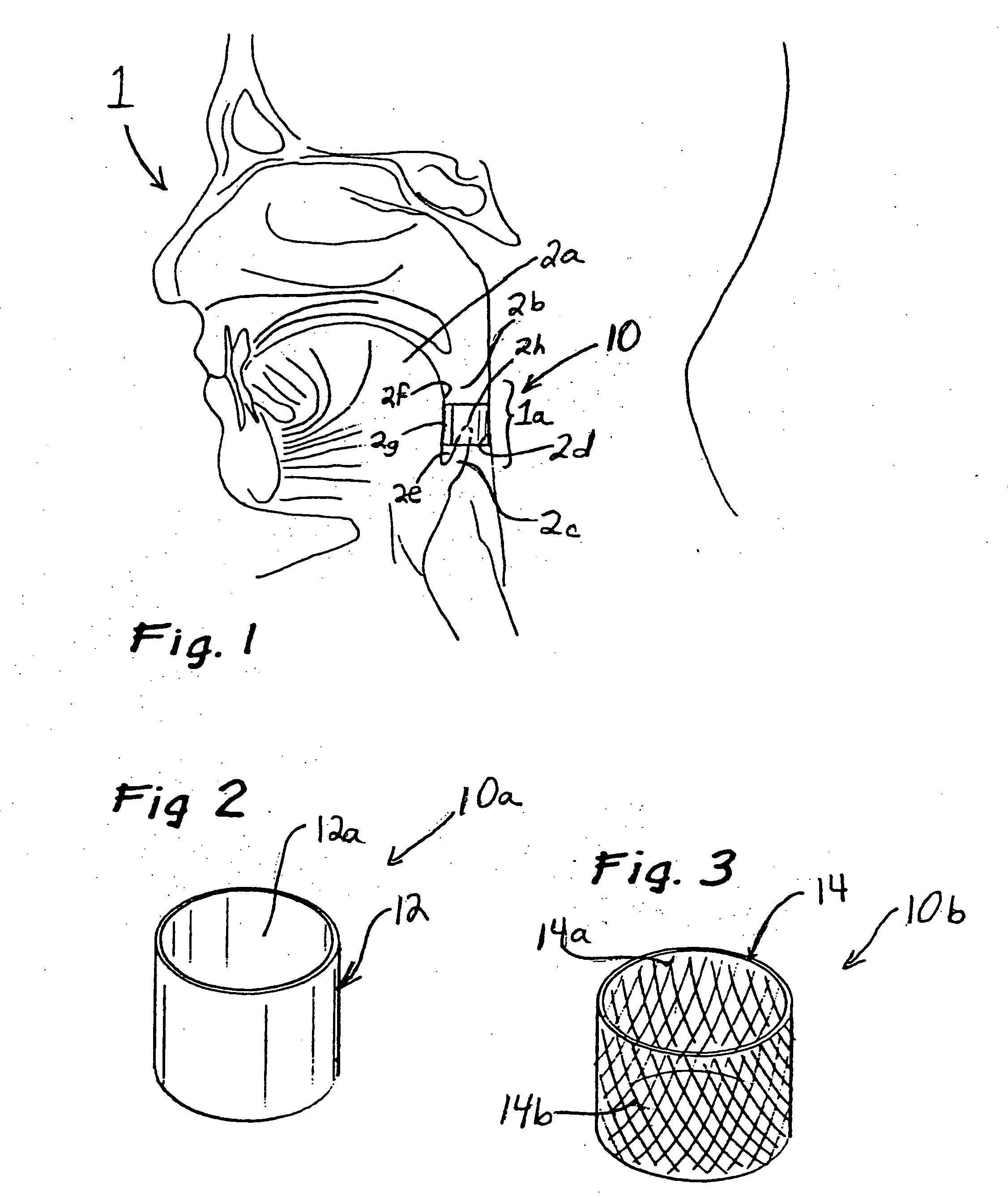
[0015] Accordingly, the present invention provides apparatus and methods effective to treat, for example, to substantially eliminate or at least reduce the occurrence of, sleep apnea and / or snoring, meaning to include snoring and / or other sleep-related breathing disorders. The apparatus and methods are relatively straightforward to structure and use, are minimally invasive and provide substantial benefits over conventional techniques in controlling sleep apnea and / or snoring.
Problems solved by technology
It is a disorder with significant morbidity and mortality, contributing to increased risk of hypertension, cardiac arrhythmias, stroke, and cardiovascular death.
As air is inspired, the tongue and posterior walls of the pharynx collapse, causing snoring or more seriously, causing partial or complete obstruction of the airway.
The ongoing force of inspiration serves to generate increasingly negative pressure within the pharynx, causing further collapse.
However, UPPP does not address apnea caused by obstructions deeper in the throat and airway, for example, apnea resulting from collapse of tissue near the base of tongue or in the oropharyngeal region of the airway.
LAUP, or Laser-Assisted Uvulopalatoplasty, is a modification of the above-mentioned technique, but has not proven particularly useful for sleep apnea.
These surgical techniques are extremely invasive, requiring general anesthesia, and a prolonged, painful recovery.
Like UPPP and LAUP, more than one session is typically required and it does not address sleep apnea resulting from tissues deeper in the throat than the upper airway.
The methods of Conrad et al. are specifically designed to reduce the audibility of snoring but do not address the more serious condition of sleep apnea.
These conventional devices and treatments continue to suffer poor cure rates.
The failures lie in their inability to maintain patency in the retropalatal region and retroglossal region (the caudal margin of the soft palate to the base of the epiglottis).
Method used
the structure of the environmentally friendly knitted fabric provided by the present invention; figure 2 Flow chart of the yarn wrapping machine for environmentally friendly knitted fabrics and storage devices; image 3 Is the parameter map of the yarn covering machine
View more
Image
Smart Image Click on the blue labels to locate them in the text.
Viewing Examples
Smart Image
Click on the blue label to locate the original text in one second.
Reading with bidirectional positioning of images and text.
Smart Image
Examples
Experimental program
Comparison scheme
Effect test
example 1
[0167] A 40-year-old, 5-foot, 11 in., 350 lb male is referred by his primary care physician for evaluation of sleep disturbance. He experiences snoring with apneic pauses, and severe daytime hypersomnolence with narcolepsy, and has so for many years. His occupation as a truck driver has been jeopardized by this behavior. Several years prior, he underwent uvulopalatoplasty (UPPP) and tonsillectomy, without any significant relief of his symptoms. The patient claims that the use of CPAP was attempted, but was unsuccessful.
[0168] A polysomnography is performed indicating a Respiratory Disturbance Index (RDI) of 113.4 with severe desaturations, bradycardia, and complete absence of stage 3, stage 4, and REM sleep. CPAP therapy was titrated to 18 cm of water, but the patient's RDI remained elevated at 60 with ongoing, severe desaturations.
[0169] Appliance 1400 having a length of about 70 mm and a width of about 1.0 mm and a thickness of about 0.0075 inches (about 0.2 mm), is selected by ...
example 2
[0175] A 50 year old, 5 foot 4, 180 pound, female patient complains of severe hypersomnolence. It is additionally noted that the patient's spouse has longed complained of the patient's substantial nightly snoring and has witnessed pauses in the patient's breathing followed by gasping for air when she sleeps (believed to be apneic pauses).
[0176] Following clinical tests and evaluation of patient history, the patient is diagnosed with severe sleep apnea.
[0177] An appliance 1400 is selected for implantation in the patient. In this example, the appliance 1400 is made of Nitinol and has a length of about 40 mm, a width of 1.25 mm and a thickness of about 0.5 mm.
[0178] Under general anesthesia, and using direct laryngoscopy techniques, the appliance is introduced into the submucosal tissues beginning in the right lateral oropharyngeal region. The appliance is then guided medially, and inferiorly, traveling around the posterior oropharyngeal region and ultimately into the submucosal tis...
the structure of the environmentally friendly knitted fabric provided by the present invention; figure 2 Flow chart of the yarn wrapping machine for environmentally friendly knitted fabrics and storage devices; image 3 Is the parameter map of the yarn covering machine
Login to View More
PUM
Login to View More
Abstract
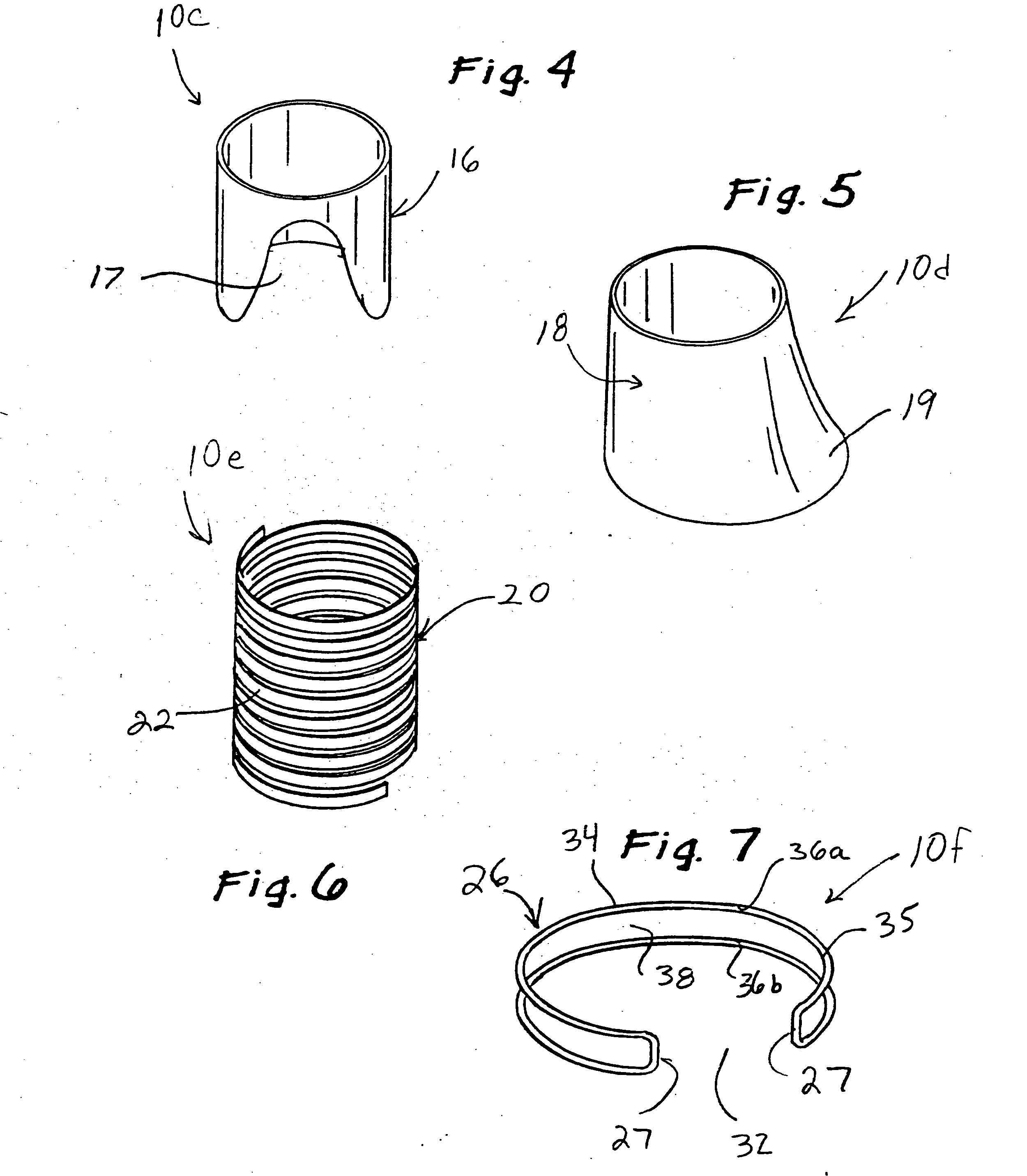
An apparatus and method for treating sleep apnea and / or snoring is provided. The apparatus includes an appliance sized and structured to be placed in the pharyngeal region of a human or animal and being effective in treating sleep apnea and / or snoring, for example in maintaining openness of an oropharyngeal region of a human or animal during natural sleep, advantageously while not interfering with normal functioning of the epiglottis. Preferably, the appliance is non-circumferential in form and includes rounded, spaced apart end portions.
Description
RELATED APPLICATIONS [0001] This application claims the benefit of U.S. provisional application No. 60 / 436,945 filed on Dec. 30, 2002, and U.S. provisional application No. 60 / 437,058 filed on Dec. 30, 2002, the entire disclosures of which are incorporated herein by this specific reference.BACKGROUND OF THE INVENTION [0002] The present invention generally relates to apparatus and methods for treating sleep apnea and / or related breathing disorders, and more specifically relates to apparatus for placement in the oropharyngeal region of a human or animal and methods using such apparatus for treating sleep apnea and / or snoring. [0003] Sleep apnea is a sleep-related breathing disorder that is thought to affect between 1-10% of the adult population. Recent epidemiologic data indicate that 2% of women and 4% of men between the ages of 30 and 60 years meet the minimum diagnostic criteria for sleep apnea syndrome, representing more than 10 million individuals in the United States. It is a dis...
Claims
the structure of the environmentally friendly knitted fabric provided by the present invention; figure 2 Flow chart of the yarn wrapping machine for environmentally friendly knitted fabrics and storage devices; image 3 Is the parameter map of the yarn covering machine
Login to View More
Application Information
Patent Timeline
Application Date:The date an application was filed.
Publication Date:The date a patent or application was officially published.
First Publication Date:The earliest publication date of a patent with the same application number.
Issue Date:Publication date of the patent grant document.
PCT Entry Date:The Entry date of PCT National Phase.
Estimated Expiry Date:The statutory expiry date of a patent right according to the Patent Law, and it is the longest term of protection that the patent right can achieve without the termination of the patent right due to other reasons(Term extension factor has been taken into account ).
Invalid Date:Actual expiry date is based on effective date or publication date of legal transaction data of invalid patent.


 Login to View More
  Login to View More