Super-turbocharger

US20060032225A1Inactive Publication Date: 2006-02-16VANDYNE SUPERTURBO
38 Cites 126 Cited by

Patent Information

Authority / Receiving Office
US · United States
Current Assignee / Owner
Publication Date
2006-02-16
Estimated Expiration
Not applicable · inactive patent

Smart Images

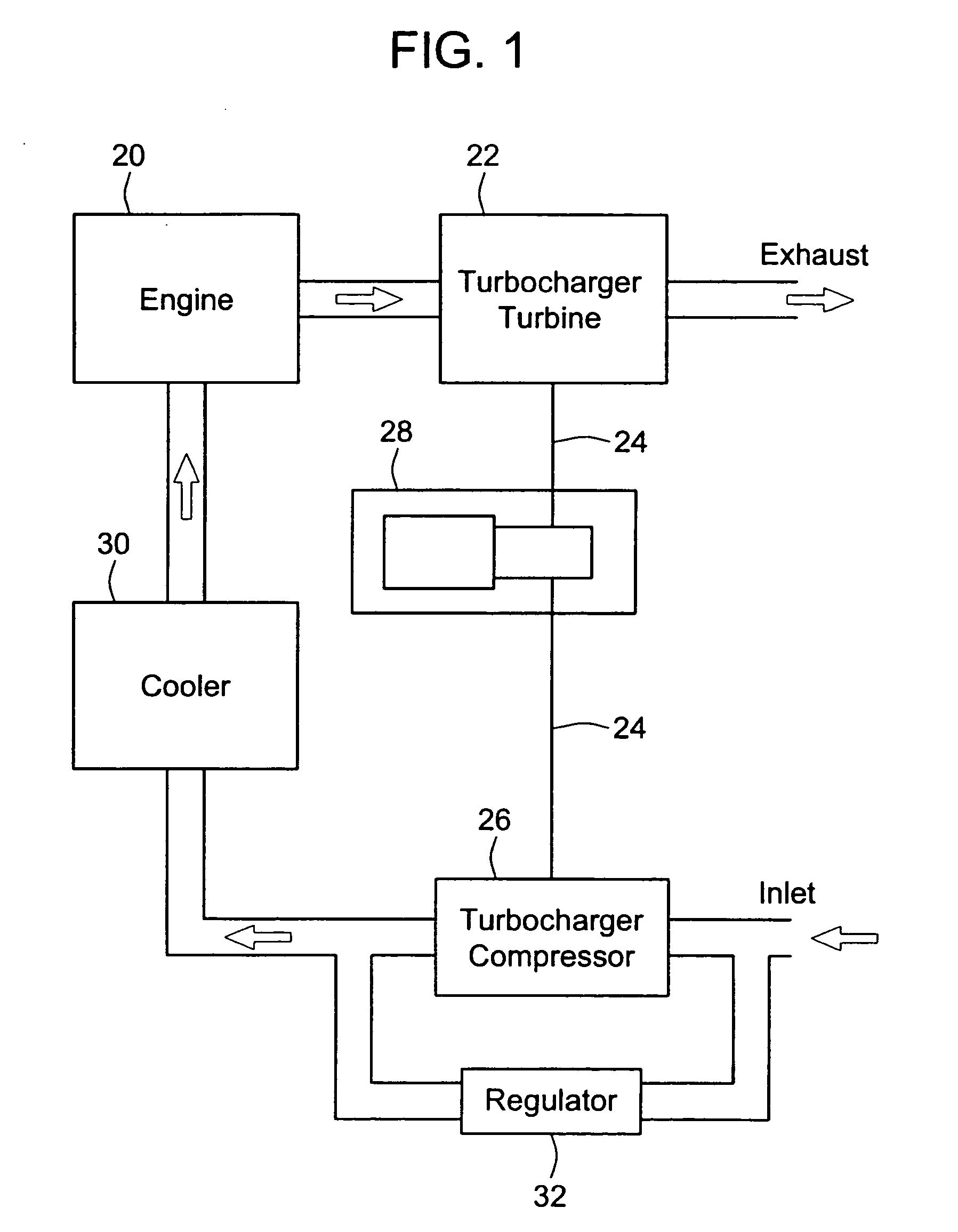
  • Figure 1
    Figure 1
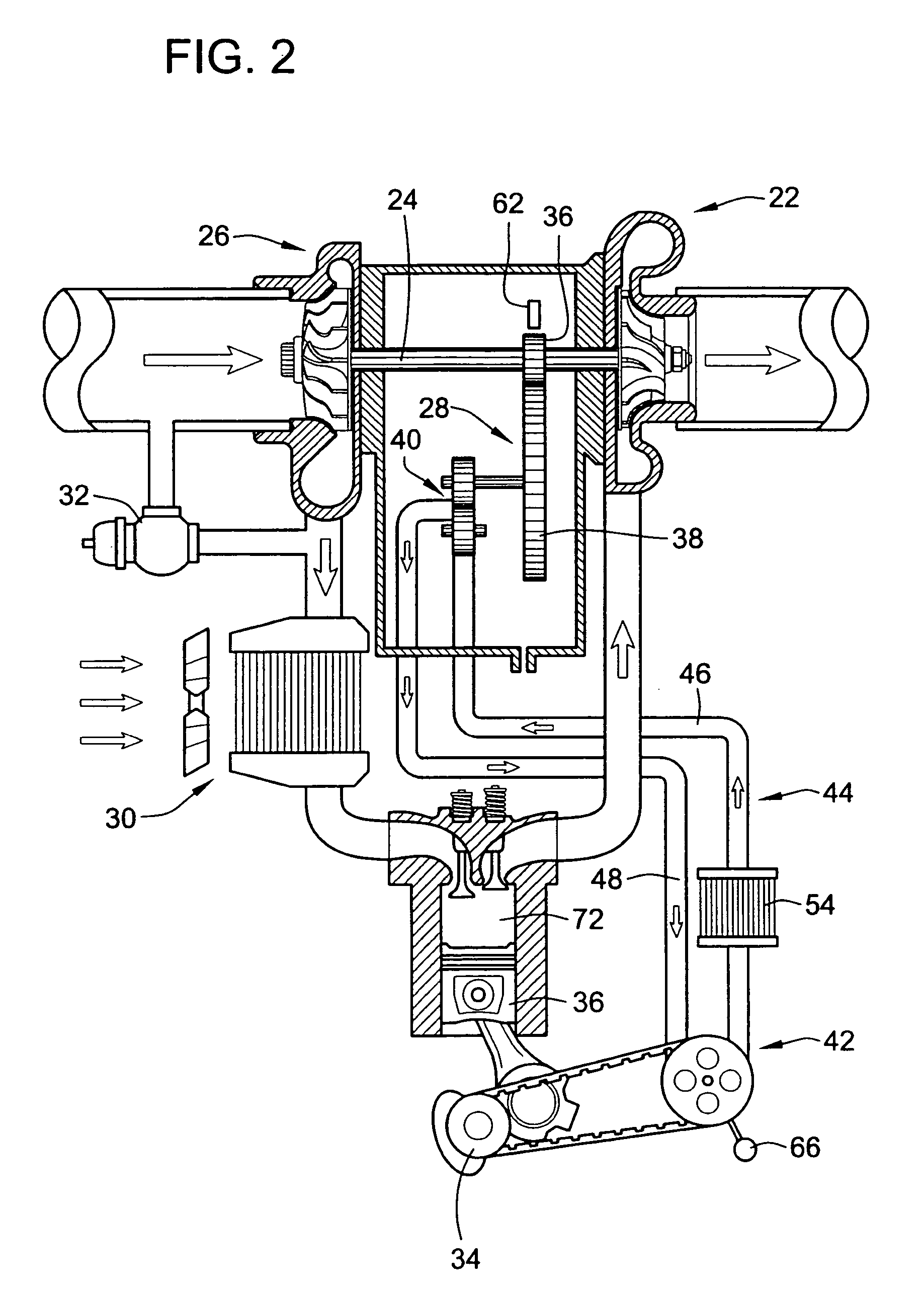
  • Figure 2
    Figure 2
  • Figure 3
    Figure 3
Patent Text Reader

Abstract

The invention combines the features of a supercharger, a turbocharger and turbo-compounding into one system, utilizing a hydraulic or mechanical continuously variable transmission to drive the turbocharger up to a specific speed or intake manifold pressure and then holding the ideal speed to keep it at the right boost pressure for the engine condition. The benefits of a supercharger, which is primarily good for high torque at low speed, and a turbocharger, which is usually only good for high horsepower at high speeds are merged. Once the exhaust energy begins to provide more work than it takes to drive the intake compressor, the invention recovers that excess energy and uses it to add torque to the crankshaft. As a result, the invention provides the benefits of low speed with high torque and the added value of high speed with higher horsepower or better fuel economy all from one system.
Need to check novelty before this filing date? Find Prior Art

Description

CROSS-REFERENCE TO RELATED PATENT APPLICATIONS

[0001] This patent application claims the benefit of U.S. Provisional Patent Application No. 60 / 601,844, filed Aug. 16, 2004.FIELD OF THE INVENTION

[0002] This invention pertains to turbochargers, and more particularly to hydraulically driven turbochargers. BACKGROUND OF THE INVENTION

[0003] Conventional turbochargers are driven by waste exhaust heat and gases, which are forced through an exhaust turbine housing onto a turbine wheel. The turbine wheel is connected by a common turbo-shaft to a compressor wheel. As the exhaust gases hit the turbine wheel, both wheels rotate simultaneously. Rotation of the compressor wheel draws air in through a compressor housing, which forces compressed air into the engine cylinder to achieve improved engine performance and fuel efficiency. Turbochargers for variable speed / load applications are typically sized for maximum efficiency at torque peak speed in order to develop sufficient boost to reach peak ...

Examples

Embodiment Construction

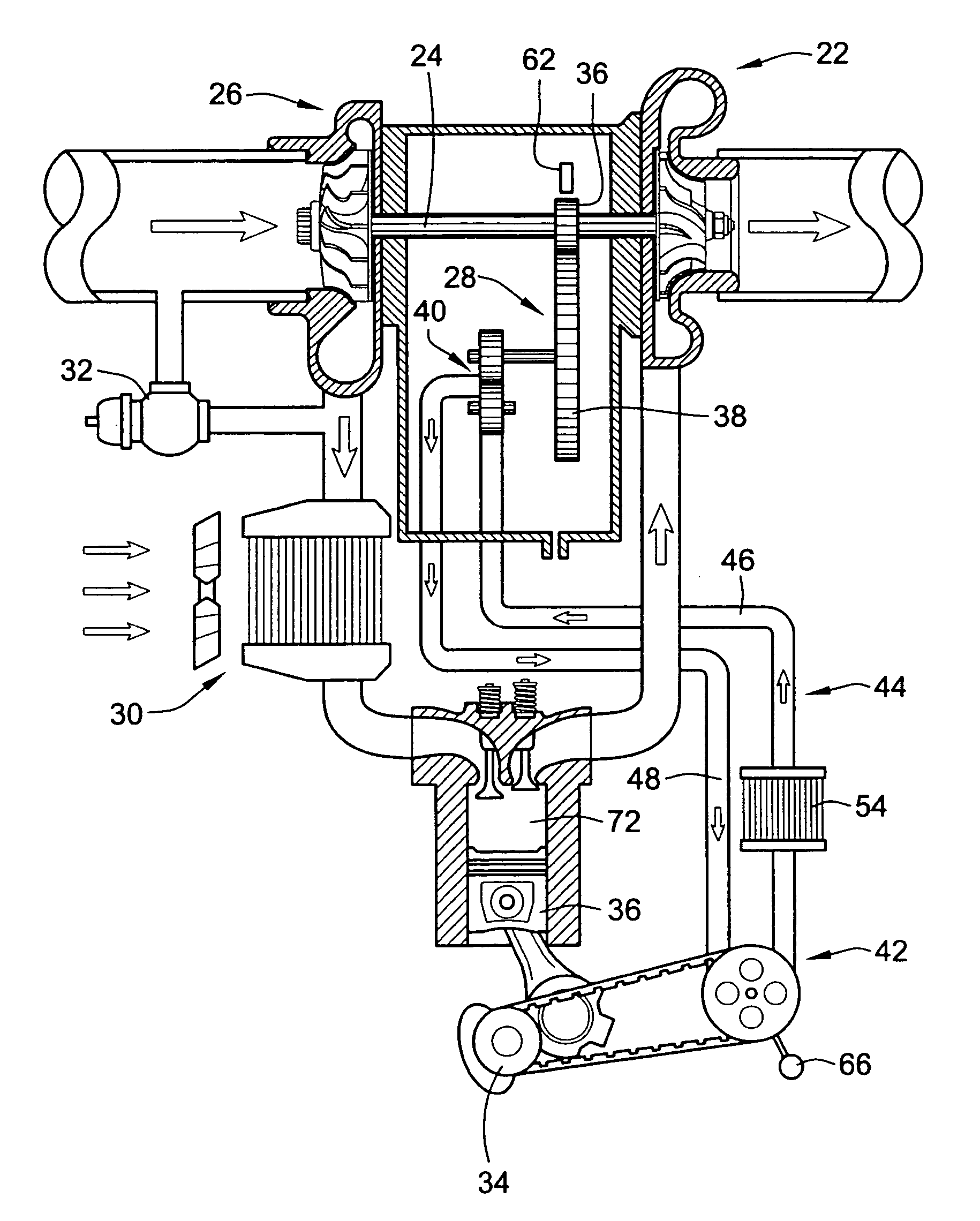
[0024] Turbocompounding is a way to harness excess exhaust energy that is not used by the turbine of the turbocharger. This is achieved by adding a second larger turbine attached to a transmission which is then attached to the output shaft of the engine. Turbocompounding can improve fuel economy by as much as 5%. This invention provide the best of both turbocompounding and supercharging all in one device. The invention provides a system that reduces turbocharger lag and harnesses excess exhaust energy from the turbocharger. The invention utilizes relatively inexpensive and commercially available components. The overall system cost of the system in accordance with the invention is believed to be equal to or less then that of a supercharger system and only slightly more expensive than a turbocharger system.

[0025] The invention combines the features of a supercharger and a turbocharger, utilizing a hydraulic pump to drive the turbocharger up to a specific speed or intake manifold pres...