
Methods and systems for rise-time improvements in differential signal outputs
a technology of differential signal output and rise-time improvement, applied in the field of methods and systems for improving signal transmission, can solve problems such as mismatch, and achieve the effect of reducing the impedance load
- Summary
- Abstract
- Description
- Claims
- Application Information
AI Technical Summary
Benefits of technology
Problems solved by technology
Method used
Image

Examples
Embodiment Construction
[0034] The present invention, as illustrated by the following embodiments, provides the methods and structures that enable improvements in rise-time performance for single ended outputs, and improvements in rise and fall times for differential output signals. In particular, differential output signals that need to be driven off-chip will benefit from the improvements in rise and fall time performance. As should be appreciated, the present invention can be implemented in various ways, including a method, system, or device. In some instances, well known process operations have not been described in detail in order to avoid obscuring the present invention.
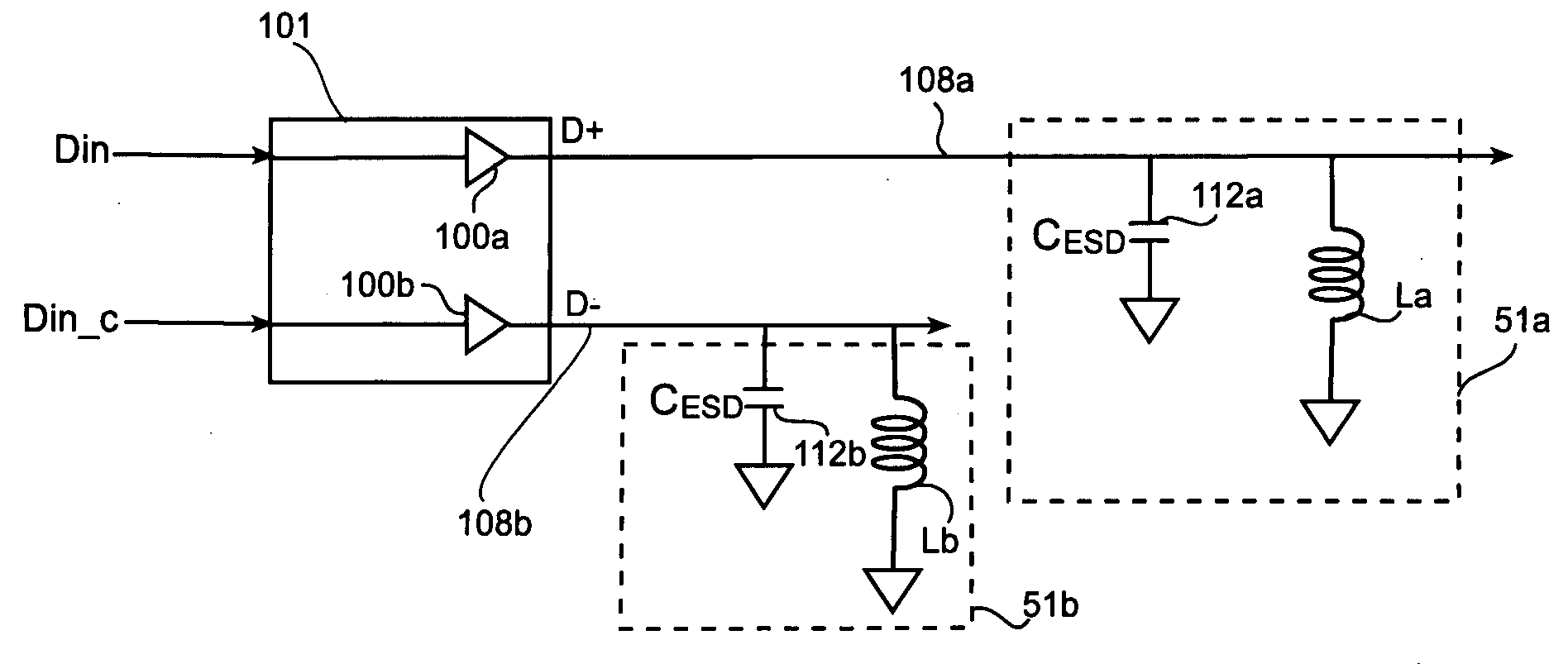
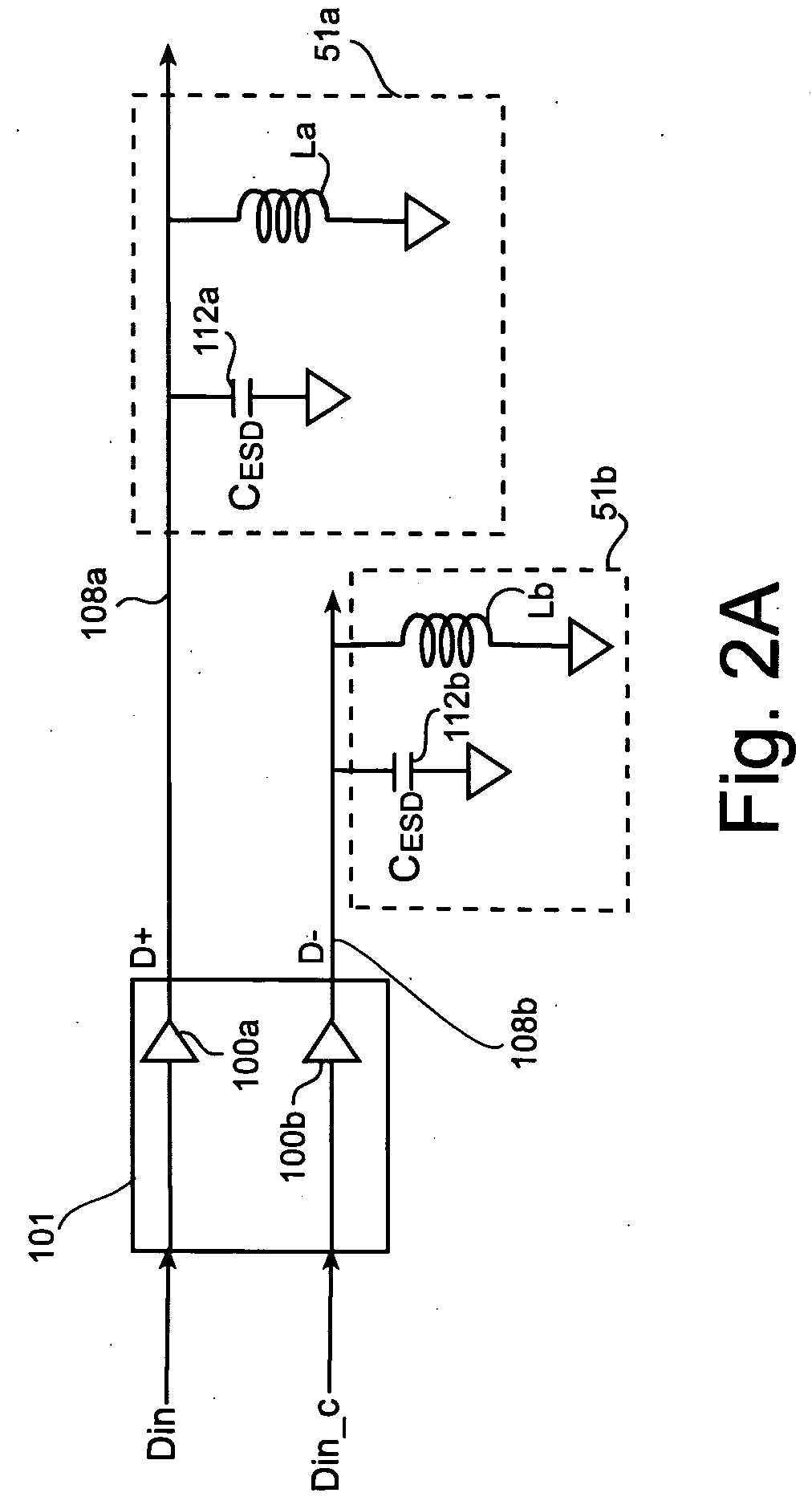
[0035] With reference to FIG. 2A, a differential driver 101 is typically comprised of two single-ended drivers 100a and 100b, each having separate outputs D+ and D− for driving respective output leads 108a and 108b. Each driver 100a and 100b drives the complementary signal of the other. That is, while driver 100a outputs a true signa...
PUM
 Login to View More
 Abstract
Description
Claims
Application Information
 Login to View More