
Method of forming directional wireless networks using in-band channels
- Summary
- Abstract
- Description
- Claims
- Application Information
AI Technical Summary
Benefits of technology
Problems solved by technology
Method used
Image

Examples
Embodiment Construction
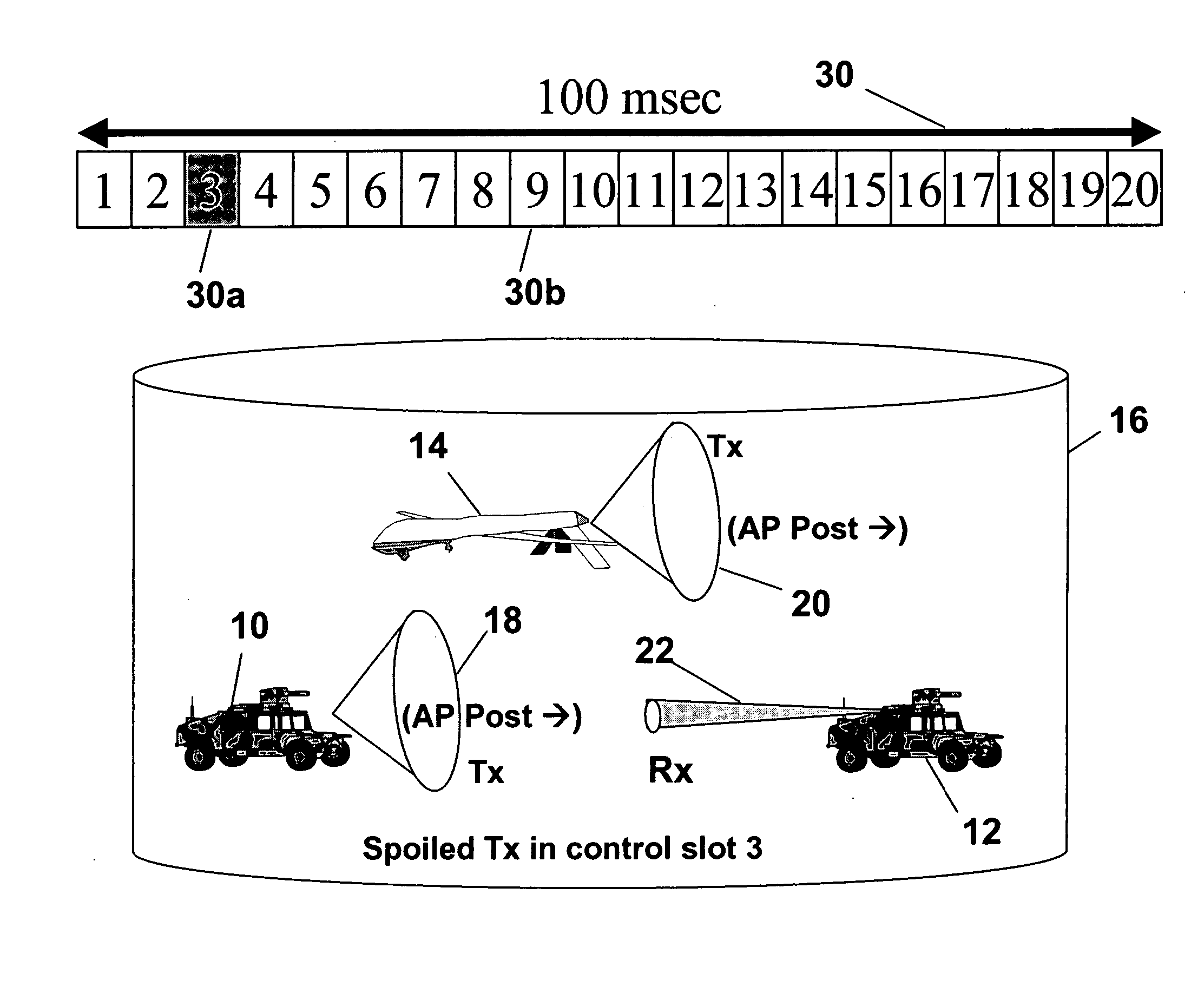
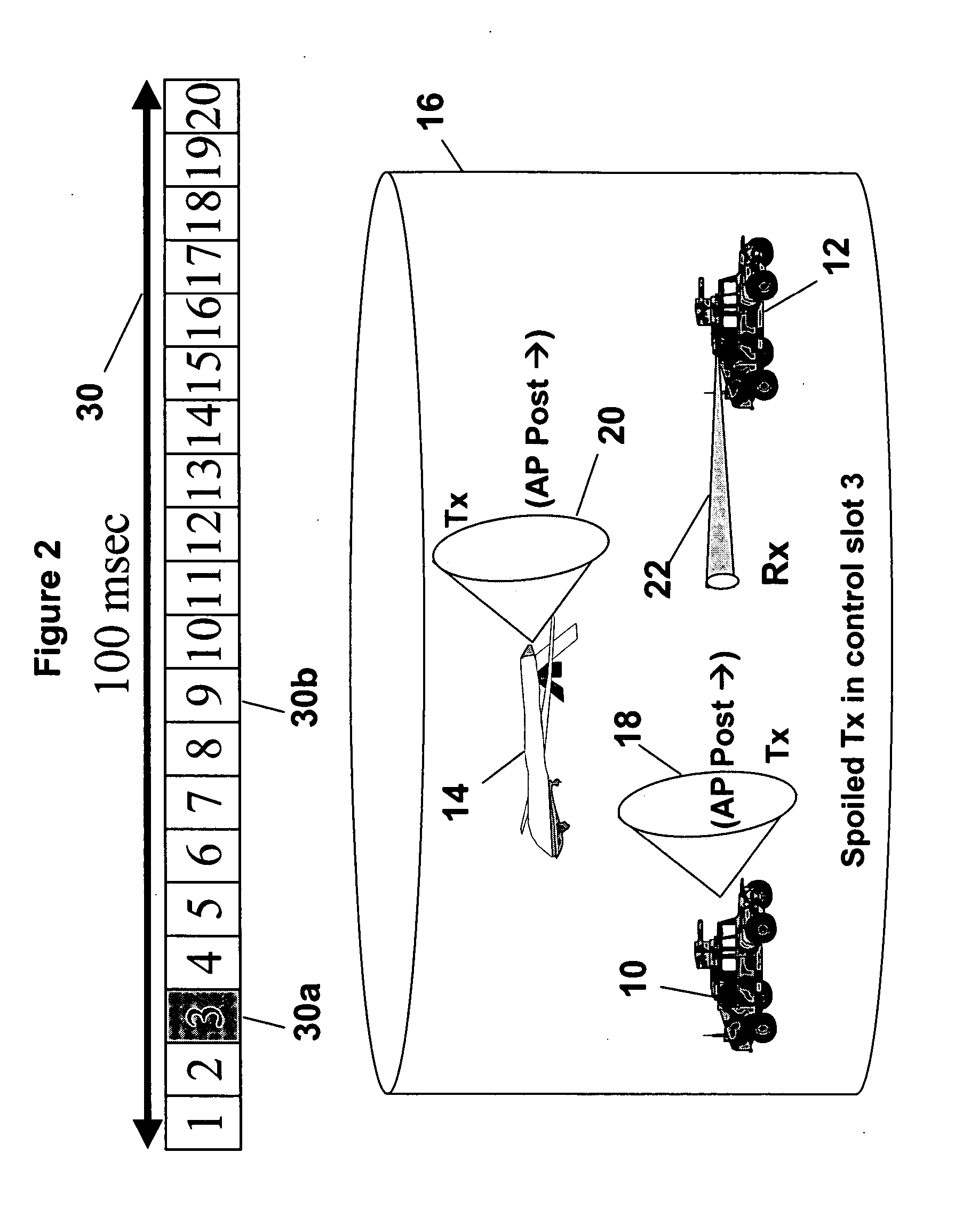
[0027] The present invention provides a method of forming a mobile network using directional antennas. Directional antennas, such as Phased Array Antennas (PAA) can focus radiation energy in a narrow angle to form wireless links between nodes in a network. Directional antennas have a number of advantageous properties for communications networking—high data transmission rates, long range communication, as well as LPD, LPE, LPI and AJ as mentioned above. The present invention implements neighbor discovery with blind announcements without sacrificing the inherent LPD advantages of directional antennas.
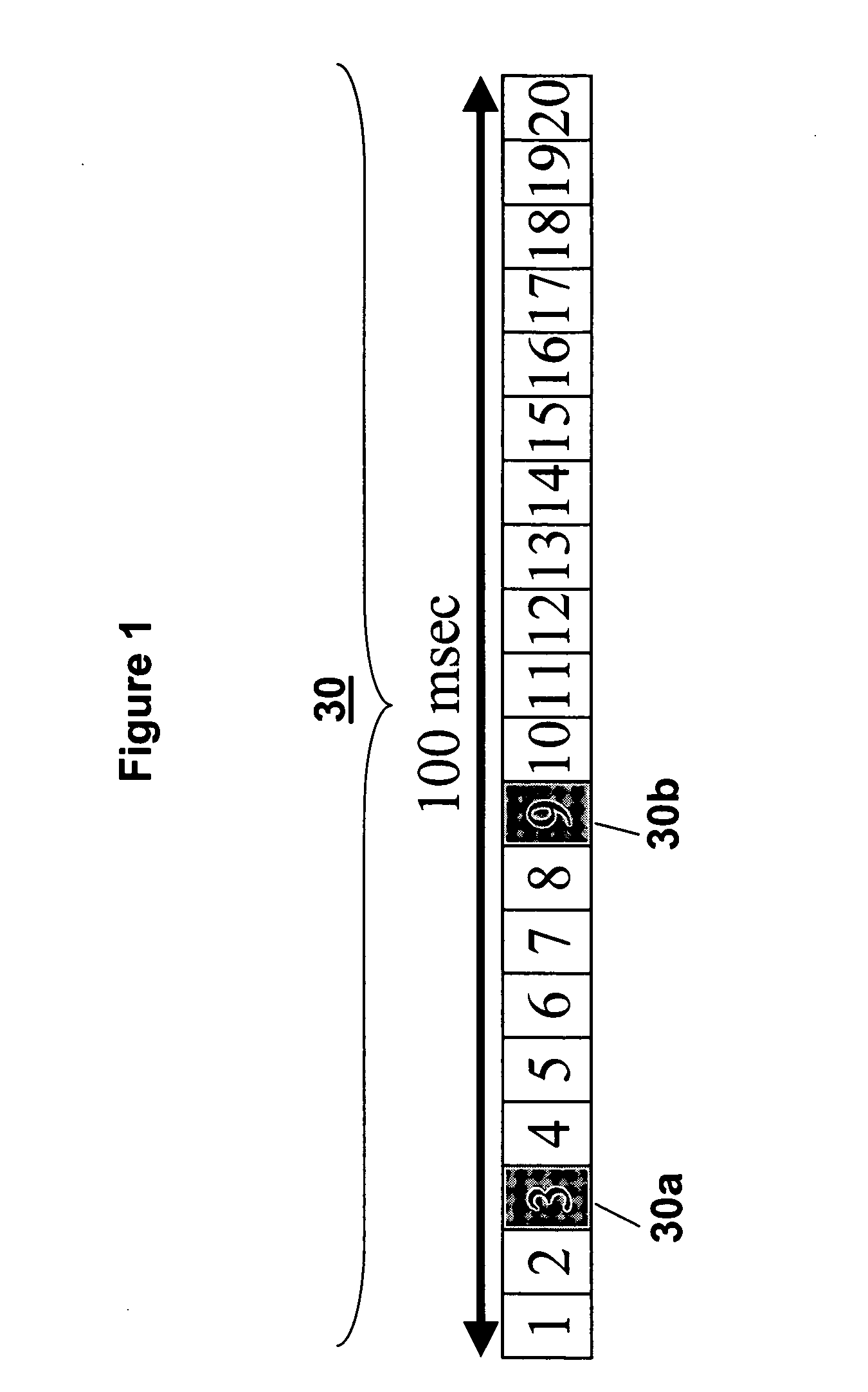
[0028] The neighbor discovery process, i.e., the sending and receiving of the announcement packets (AP), exchanging position information and selecting slots for a persistent link, is based on Spatial-Time Division Multiple Access (S-TDMA) protocol architecture. Referring to FIG. 1, the neighbor discovery process of the present invention uses a control structure or architecture generally ...
PUM
 Login to View More
 Abstract
Description
Claims
Application Information
 Login to View More