Predictive radiosensitivity network model

a network model and radiosensitivity technology, applied in the field of cancer treatment, can solve the problems of inability to capture and study the continuous nature of many phenotypic features in diseased and normal states, and the dynamics of network component interactions have remained mostly undefined, so as to facilitate the study of radiation response, improve the ability to define network dynamics, and improve the understanding of variables

a network model and radiosensitivity technology, applied in the field of cancer treatment, can solve the problems of inability to capture and study the continuous nature of many phenotypic features in diseased and normal states, and the dynamics of network component interactions have remained mostly undefined, so as to facilitate the study of radiation response, improve the ability to define network dynamics, and improve the understanding of variables

US20080234946A1Inactive Publication Date: 2008-09-25UNIV OF SOUTH FLORIDA +1

Image

Smart Image Click on the blue labels to locate them in the text.
Viewing Examples
Smart Image
  • Predictive radiosensitivity network model
  • Predictive radiosensitivity network model
  • Predictive radiosensitivity network model

Examples

Experimental program
Comparison scheme
Effect test

Embodiment Construction

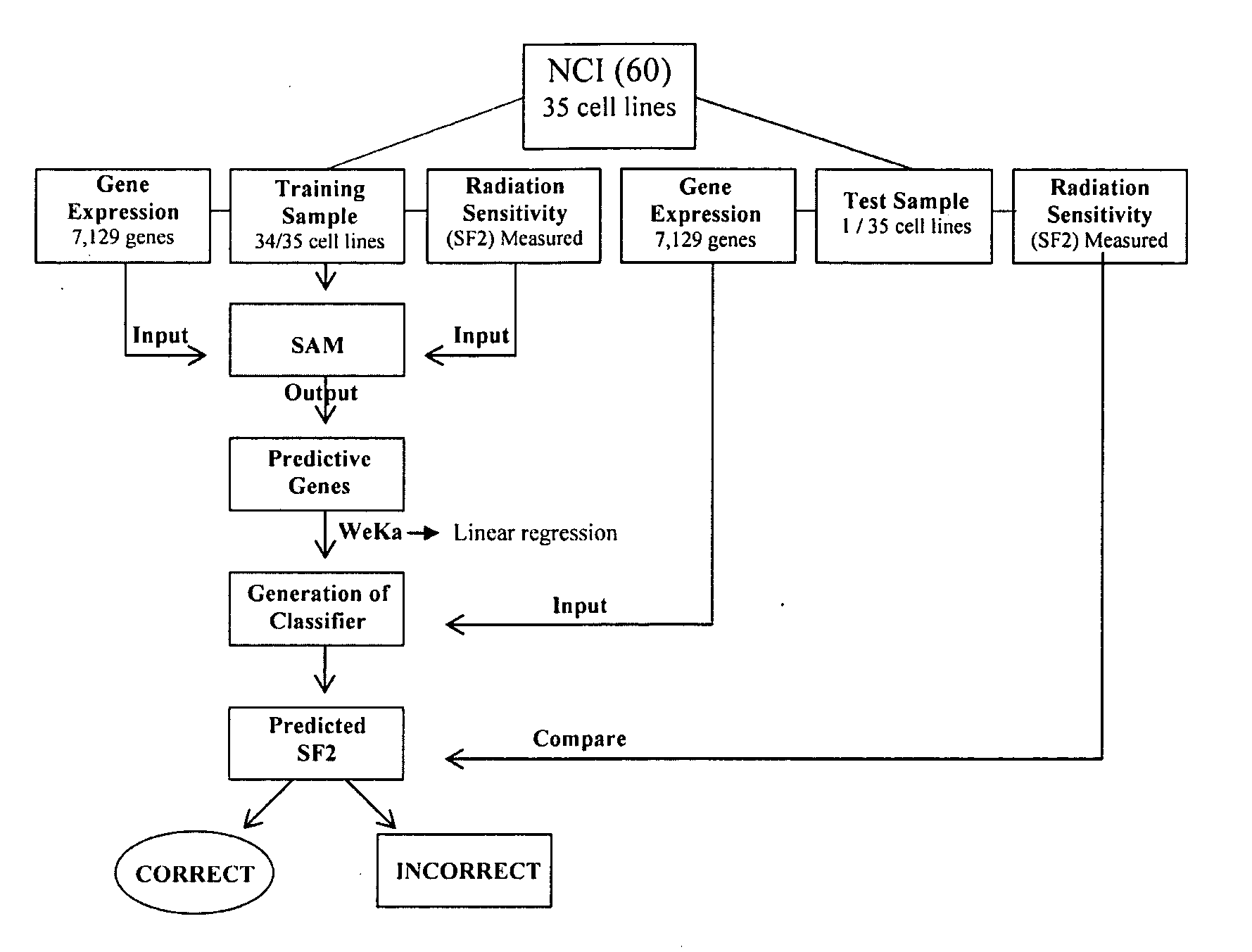
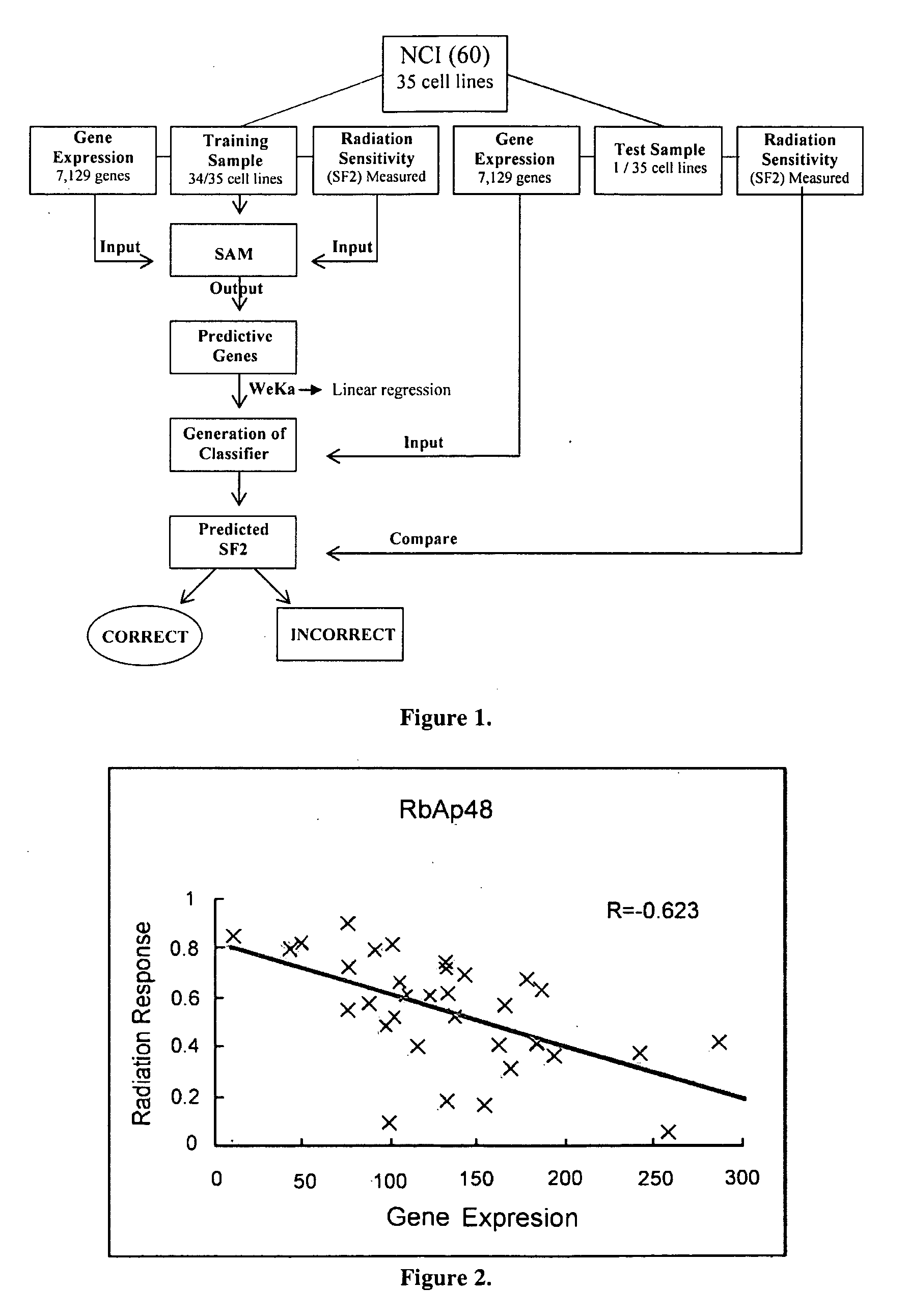
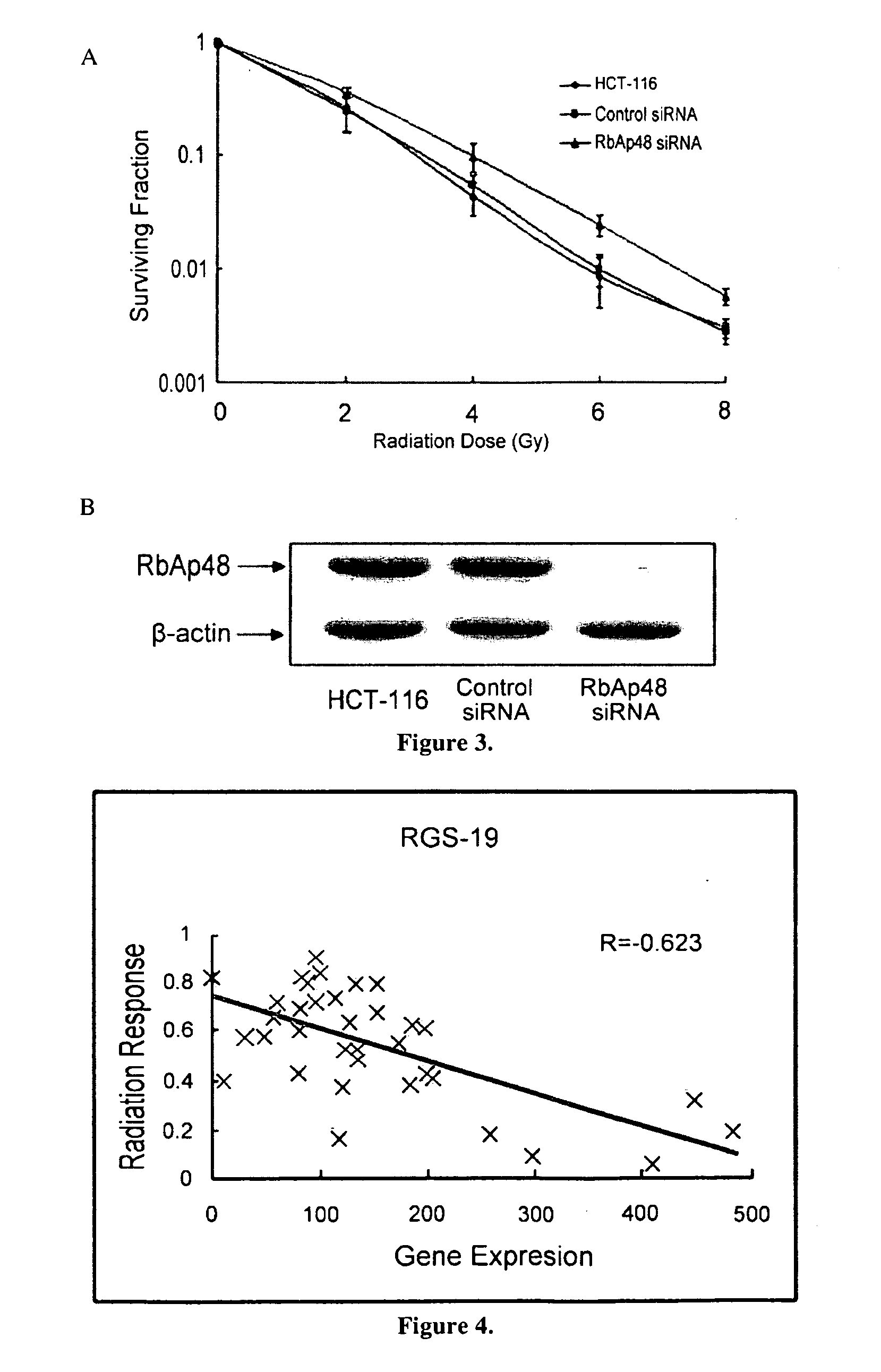
[0039]A multivariate linear regression model of gene expression and radiosensitivity (SF2) was developed in a 35 cell line database within the context of an accurate radiation sensitivity classifier. The clinical value of a radiosensitivity predictive model is significant, therefore an understanding the intricacies of its operation were critical. The predictive algorithm identified five components of functional / biological relevance to the network that proved best at building the most accurate predictor, genes rbap48, top1, rgs19, r5pia and an unknown gene. FIG. 1 shows a schematic representation of the classifier algorithm. As shown in FIGS. 2-5, rbap48 and rgs-19 were biologically-validated as network components. Consistent with model predictions, depicted in FIG. 2, siRNA knockdown of rbap48 in HCT-116 cells, seen in FIG. 3(b), resulted in radioresistance as seen in FIG. 3(a). Next, G-protein signaling regulator rgs-19 was overexpressed in MDA-MB231 cell lines, seen in FIG. 5(b). ...

the structure of the environmentally friendly knitted fabric provided by the present invention; figure 2 Flow chart of the yarn wrapping machine for environmentally friendly knitted fabrics and storage devices; image 3 Is the parameter map of the yarn covering machine
Login to View More

PUM

No PUM Login to View More

Abstract

This invention is a model that simulates the complexity of biological signaling in a cell in response to radiation therapy. Using gene expression profiles and radiation survival assays in an algorithm, a systems model was generated of the radiosensitivity network. The network consists of ten highly interconnected genetic hubs with significant signal redundancy. The model was validated with in vitro tests perturbing network components, correctly predicting radiation sensitivity 2 / 3 times. The model's clinical relevance was shown by linking clinical radiosensitivity targets to the model network. Clinical applications were confirmed by testing model predictions against clinical response to preoperative radiochemotherapy in patients with rectal or esophageal cancer.

Description

CROSS REFERENCE TO RELATED APPLICATIONS[0001]This application claims priority to currently pending U.S. Provisional Patent Application 60 / 896,350, entitled, “Radiation Response System Model”, filed Mar. 22, 2007, and pending U.S. Provisional Patent Application 60 / 896,550, entitled, “Radiation Response System Model”, filed Mar. 23, 2007 the contents of which are herein incorporated by reference.STATEMENT OF GOVERNMENT INTEREST[0002]This invention was made with Government support under Grant No. K08 CA 108926 awarded by the National Cancer Institute. The Government has certain rights in the invention.FIELD OF INVENTION[0003]This invention relates to cancer treatment. Specifically this invention is a predictive model of cancer radiosensitization.BACKGROUND AND SUMMARY OF THE INVENTION[0004]Understanding the biological networks that regulate oncogenic events and influence the inherent radiosensitivity of tumors is central to the development of personalized treatment strategies in radiat...

Claims

the structure of the environmentally friendly knitted fabric provided by the present invention; figure 2 Flow chart of the yarn wrapping machine for environmentally friendly knitted fabrics and storage devices; image 3 Is the parameter map of the yarn covering machine
Login to View More

Application Information

Patent Timeline
25 Sep 2008
Publication
US20080234946A1
IPC
G06F17/18; G06F19/00; G06F17/10; G16B5/00; G16B25/10; G16B40/00
CPC
G06F19/12; G06F19/3437; G06F19/24; G06F19/20; G16H50/50; G16B5/00; G16B25/00; G16B40/00
Inventors
TORRES-ROCA, JAVIER F.; ESCHRICH, STEVEN