
Methods and apparatus for producing ethanol from syngas with high carbon efficiency
a technology of ethanol and syngas, which is applied in the preparation of oxygen-containing compounds, physical/chemical process catalysts, organic chemistry, etc., can solve the problems of inefficiency and cost in separation, recompression, endothermic chemistry, etc., and achieve the effect of increasing at least one c2-c4 alcohol product selectivity
- Summary
- Abstract
- Description
- Claims
- Application Information
AI Technical Summary
Benefits of technology
Problems solved by technology
Method used
Image

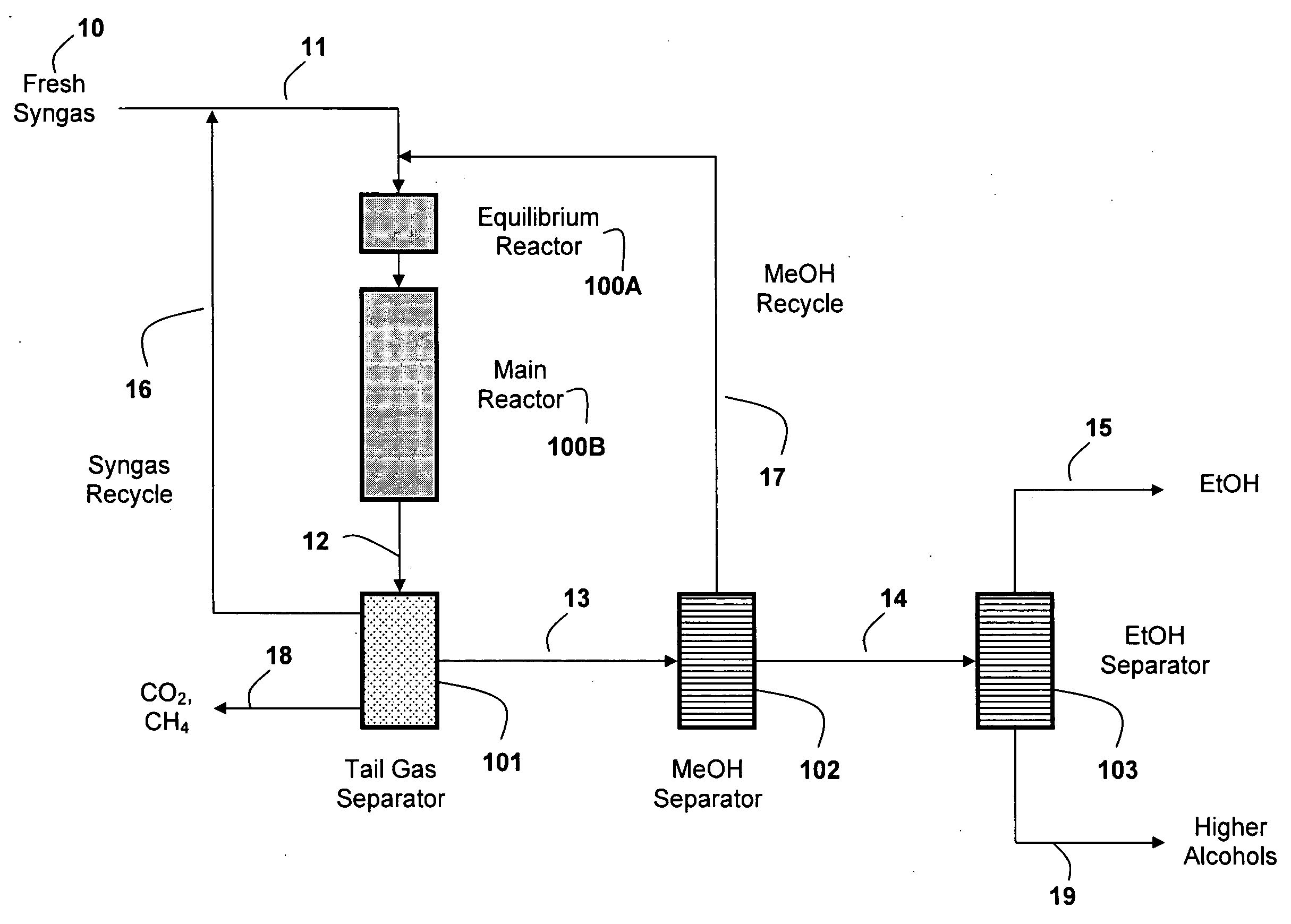
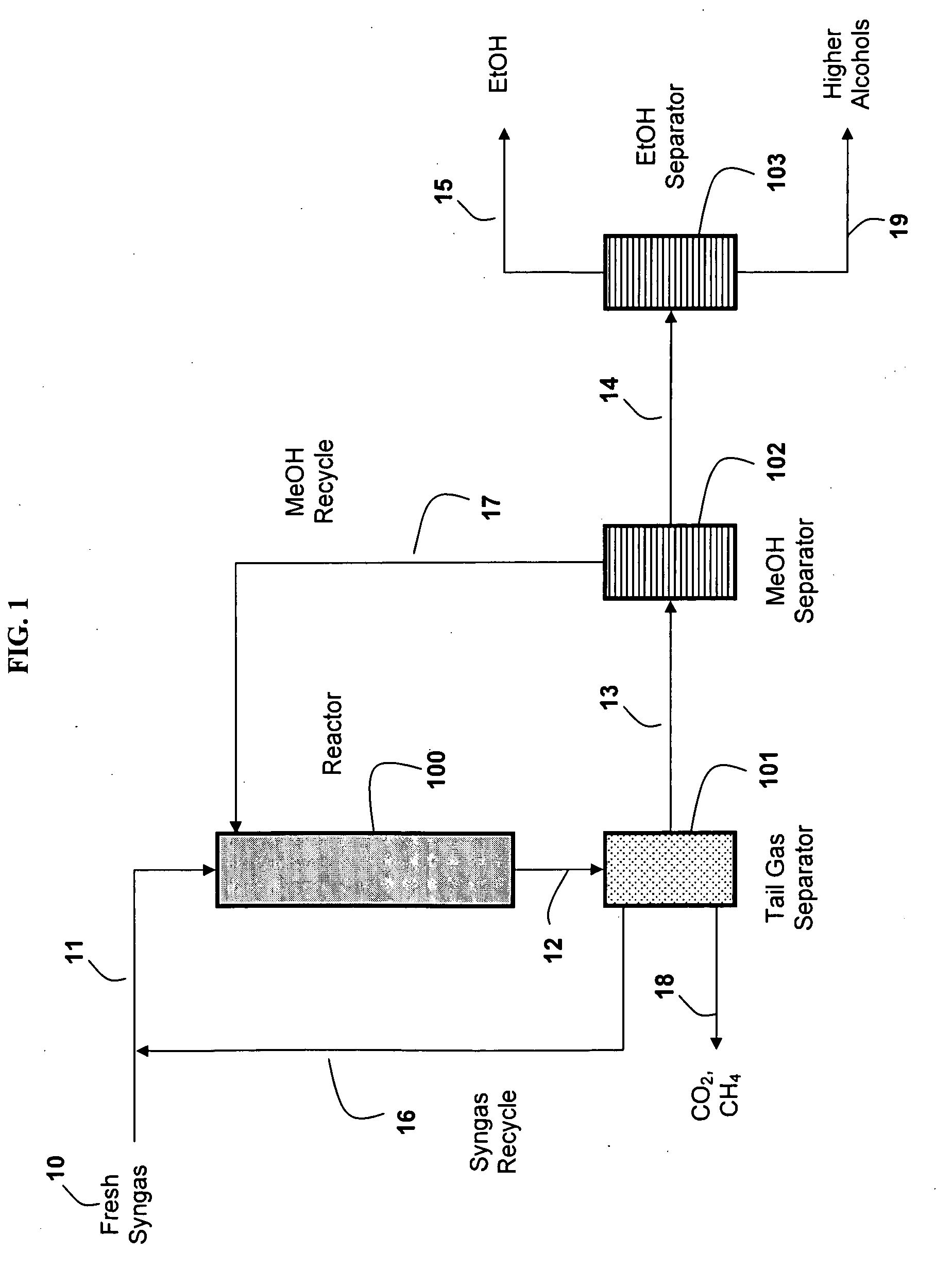
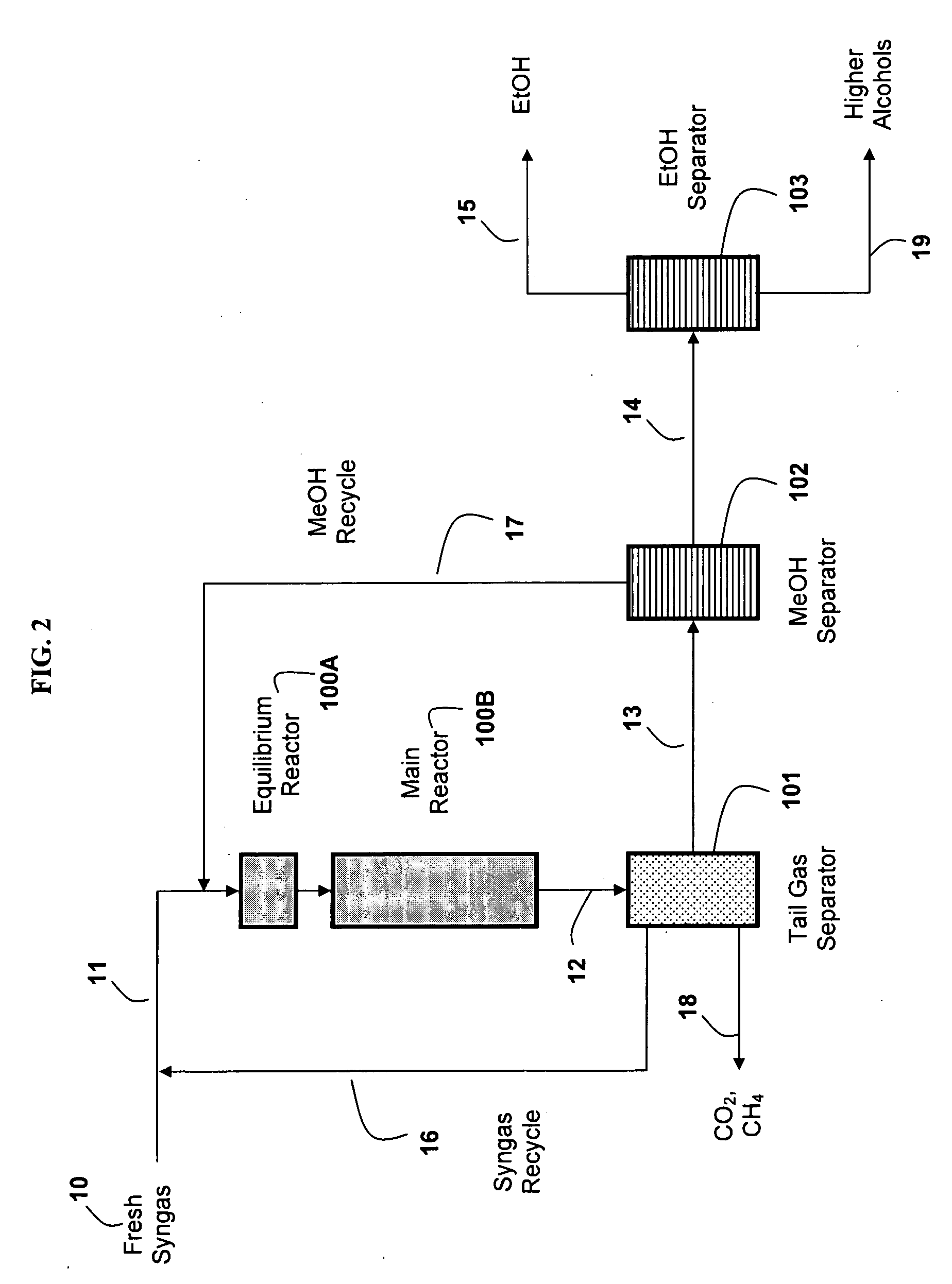
Examples
Embodiment Construction
[0072]This description will enable one skilled in the art to make and use the invention. Several embodiments, adaptations, variations, alternatives, and uses of the invention, including what is presently believed to be the best mode of carrying out the invention, are described herein. As used in this specification and the appended claims, the singular forms “a,”“an,” and “the” include plural referents unless the context clearly indicates otherwise. Unless defined otherwise, all technical and scientific terms used herein have the same meaning as is commonly understood by one of ordinary skill in the art to which this invention belongs.
[0073]Unless otherwise indicated, all numbers expressing reaction conditions, stoichiometries, concentrations of components, and so forth used in the specification and claims are to be understood as being modified in all instances by the term “about.” Accordingly, unless indicated to the contrary, the numerical parameters set forth in the following spec...
PUM
| Property | Measurement | Unit |
|---|---|---|
| reactor temperature | aaaaa | aaaaa |
| reactor temperature | aaaaa | aaaaa |
| pressure | aaaaa | aaaaa |
Abstract
Description
Claims
Application Information
 Login to View More