On the other hand, there has been a problem in the control of gas engines that ignition of fuel-air mixture because of low calorific value of fuel gas.
However, there has been a
disadvantage that response to change of load is slow with the conventional fuel-air mixture control method as mentioned above, although it has an
advantage of easiness of controlling air fuel ratio.
There is as one of problems of
responsivity a
disadvantage that, even if fine control is carried out to stabilize engine speed, stabilization of engine speed is difficult because of slow responsivity.
However, with this conventional method, control of air fuel ratio is difficult, and stable
combustion control cannot be achieved.
As it is difficult to keep air fuel ratio in an appropriate range, there occurs a problem of compliance with
exhaust emission regulation.
Moreover, as fuel flow can not be detected quantitatively with the conventionally prevalent fuel gas flow control method of controlling the opening of the fuel flow control valve, over run or overload of engine due to excessive supply of fuel is apt to occur.
Particularly, engine stall or abnormal
combustion is apt to occur at application or rejection of load because of difficulty of accurate control of air fuel ratio when applying or shutting off load.
Furthermore, in the conventional fuel-air mixture control method, it is required to have leeway in supercharging pressure in order to secure ample engine output, and decrease in
thermal efficiency is unavoidable due to pumping loss caused by throttling the mixture inlet passage to the main
combustion chamber.
On the other hand, with the fuel gas flow control method, the engine is immune from the problem of output shortage due to increased pumping loss, however, it is difficult to keep air fuel ratio in an appropriate range and comply with
exhaust emission regulation.
With air fuel ratio control using a
signal from the
oxygen sensor as a feedback
signal as recited in the document 1, manufacturing cost will be increased due to
expansive oxygen sensor.
The configuration of the gas engine of the document 1 is suited for a large engine and difficult to adopt for a
small engine.
Besides, as a part of air supplied from the compressor is released to outside through the air release valve to control air quantity charged into the
combustion chamber, efficiency of the engine is reduced, and a larger compressor is required.
With the air fuel ratio control method disclosed in the document 3, starting performance is improved by reducing excess air ratio of the mixture, however, there occurs a problem that responsivity as mentioned above is slow when load is applied after the engine has started.
With the fuel gas flow control method, controlling at engine starting is performed by controlling opening of the fuel gas flow control valve and the throttle valve, so the engine starting is apt to be unstable.
Furthermore, with the conventional control device, air fuel ratio control and engine speed control are performed by separate control devices respectively, however, there is a
disadvantage that manufacturing cost increases since the control devices are expensive, and in addition, to assure coordinated behavior of each device is difficult, which makes smooth control of the engine difficult.



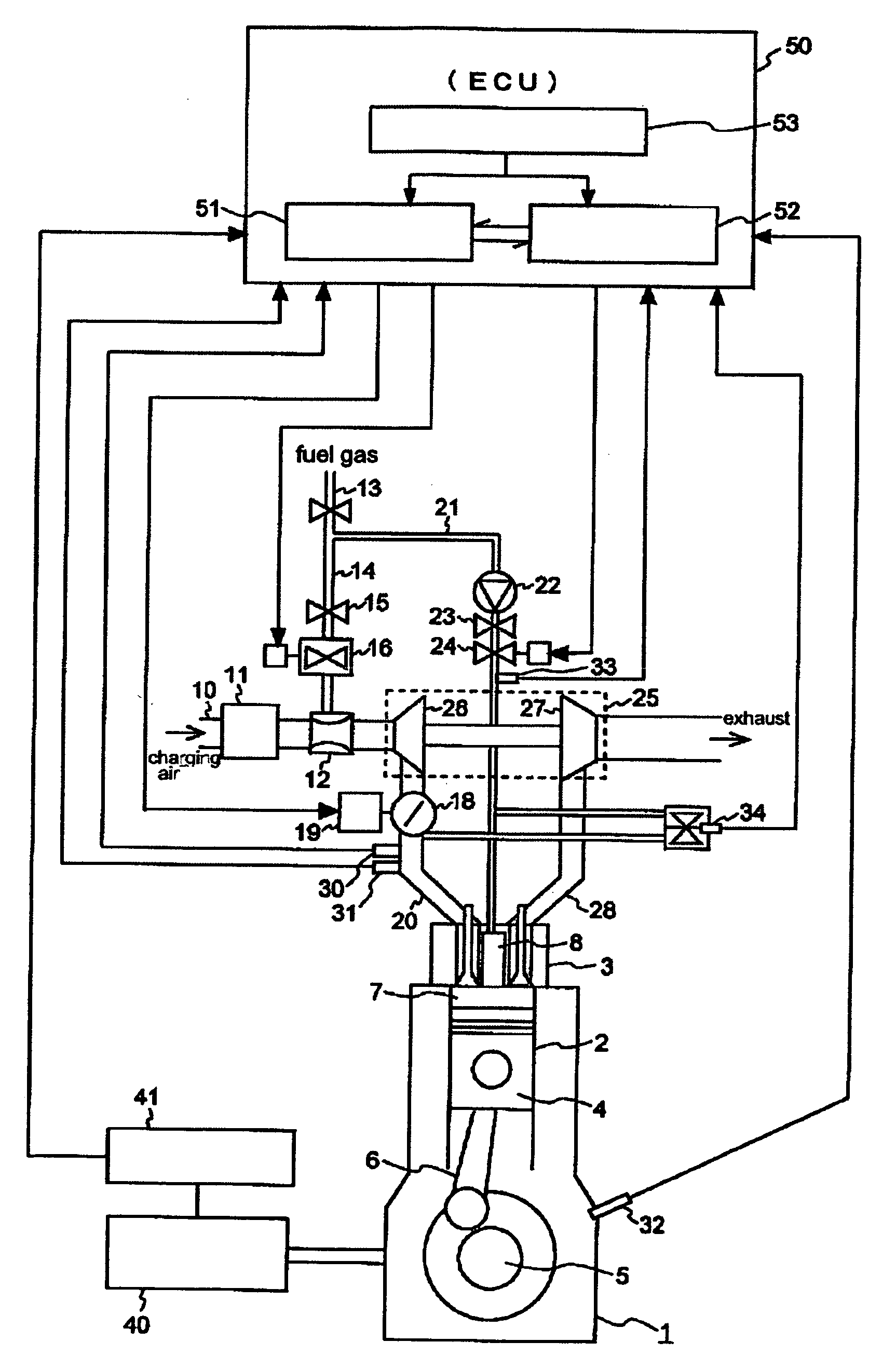
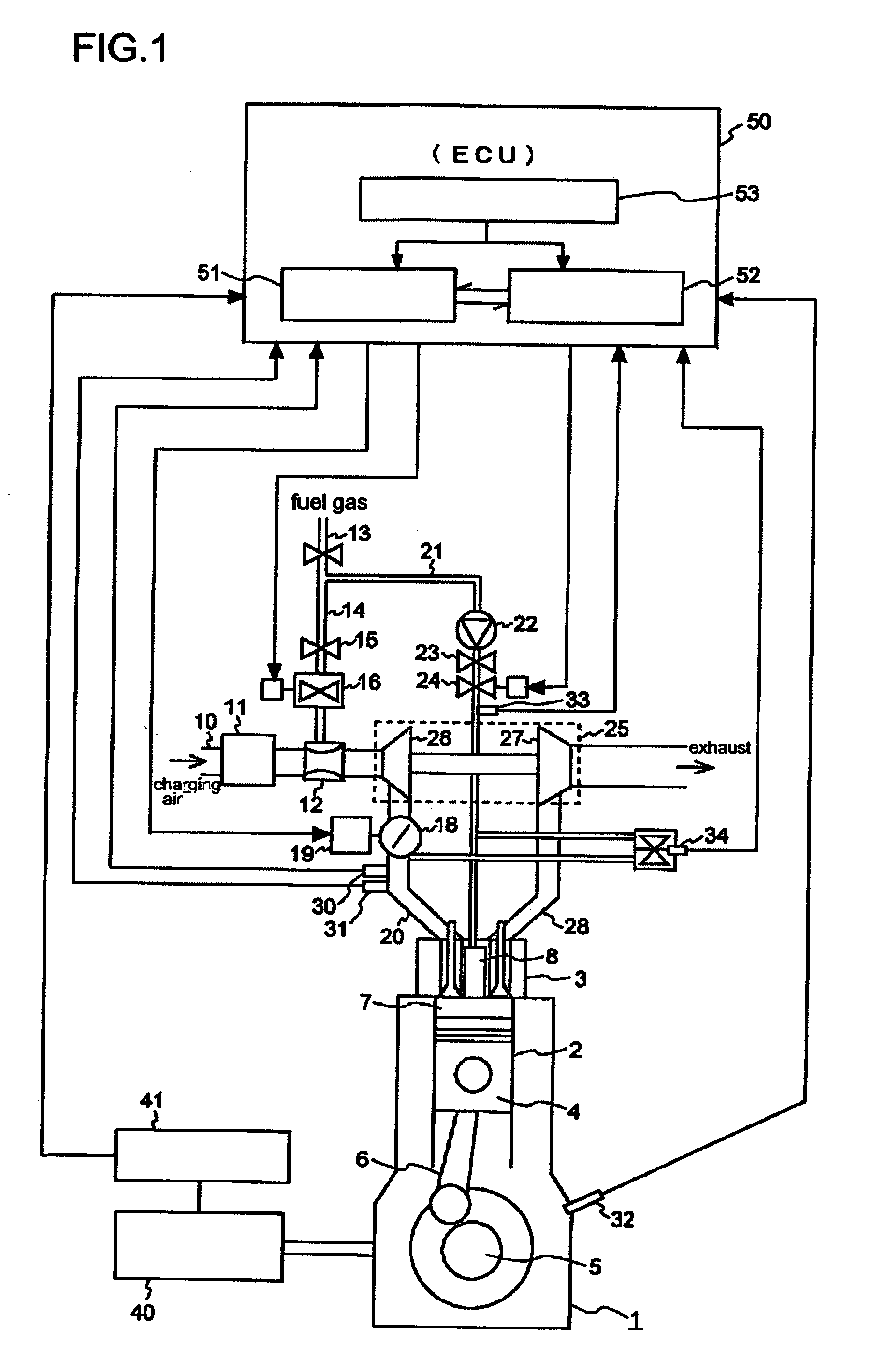
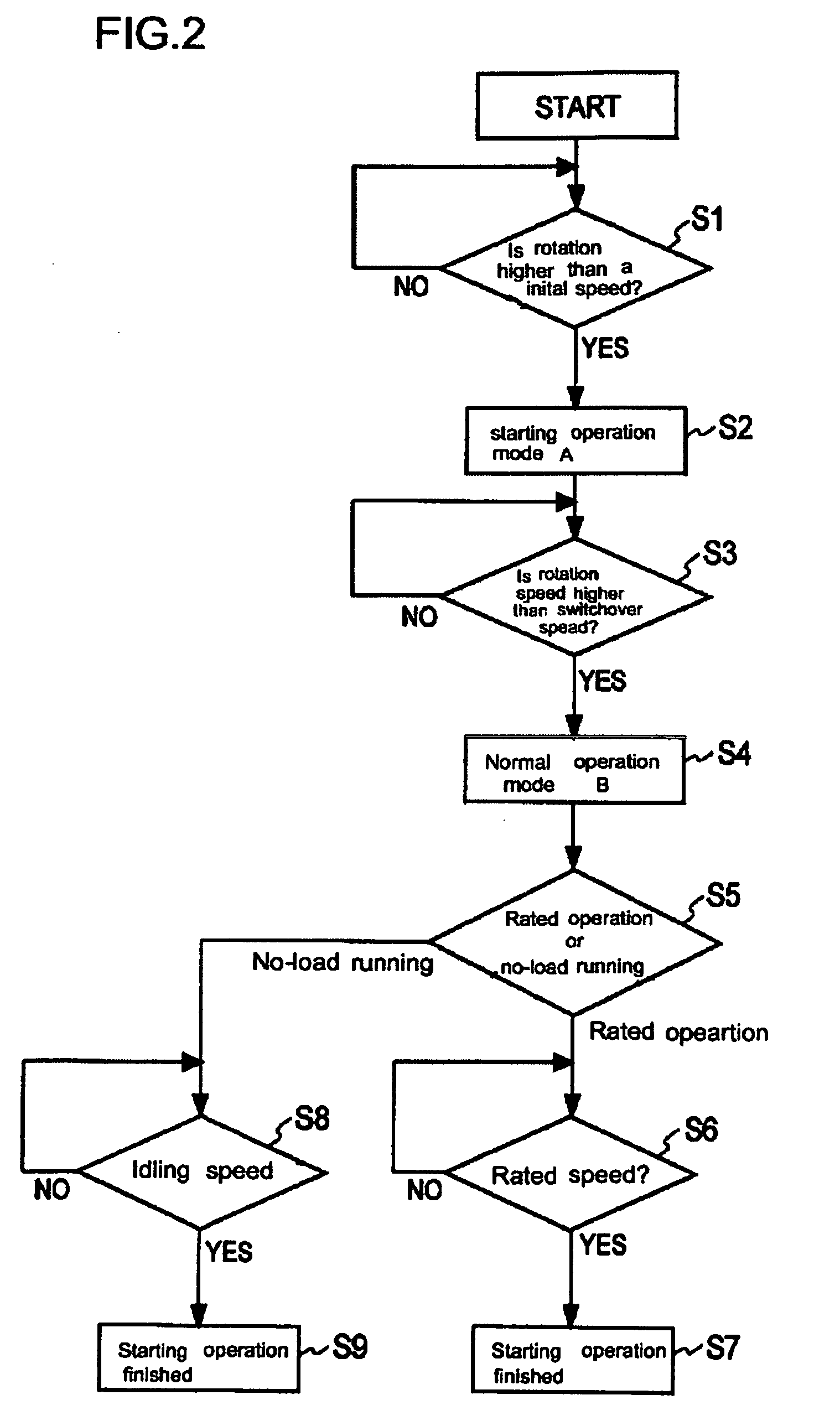
 Login to View More
  Login to View More