These beverage making systems and containers such as the Keurig cup have been commercially successful however certain disadvantages have led to various attempts for improvements.
Furthermore due to the nature of the
thermoforming process the container base is made from a sheet having a relatively uniform thickness and the thermoformed base bottom cannot easily be thinned without also
thinning the base sidewall which adversely reduces the rigidity and strength of the base causing a tendency for the sidewall to buckle inward during the piercing process.
Also, as the outlet tube is pressed against the base bottom for piercing to permit exit of brewed coffee, a similar buckling may occur.
These distortions of the container disadvantageously can result in leakage
proximate the outlet tube causing the liquid to spray or coat parts of the apparatus or otherwise remain or locate to undesirable places rather than travel along the desired path to the inside of the drinking cup.
This leakage may produce customer dissatisfaction due to loss of product, as well as require additional maintenance to avoid unsanitary conditions or further equipment malfunction.
These tubes are expensive and may require periodic
sharpening.
Another problem associated with
distortion of the base by the piercing operation is that some brewed beverage may remain in the second chamber unable to exit due to the
distortion proximate the outlet tube pierced opening causing an area within the base to be below the outlet tube opening.
This attempt suffers from the need to provide not only different containers or cartridges, but also a different beverage making apparatus since the outlet tubes must be introduced from a position that is located 180° from the present apparatus location.
Also, there are additional complications attendant to the
brewing process since the distribution of ingredient and flow of the liquid are not as easily controlled to yield a uniform extraction from e.g.
ground coffee.
It is believed that this
system while addressing the piercing problem would tend to produce a channelling effect in transfer of the hot water across the coffee resulting in a need for containers made from more material, or which use additional coffee or a longer
residence time to produce an equivalent amount of brewed coffee.
Additionally the exit tube would require a motive force in opposition to gravity to cause the brewed liquid to exit which is believed to lead to additional expense to create a positive or negative pressure sufficient to effect transport or alternatively necessitates use of additional water to displace the requisite amount of brewed coffee thereby creating a waste of water and additional disposal concerns and weight.
This tendency of the container side wall to buckle under the force exerted by the outlet tube as it pierces or attempts to pierce the container bottom sometimes results in a failure of the outlet tube to achieve the desired penetration, thereby causing a malfunction in the
brewing process which prevents delivery of some or all of the brewed beverage to the underlying drinking cup.
As previously mentioned, buckling of the container side wall can also distort the punctured opening in the container bottom, thereby disrupting a continuous seal about the tube perimeter which may result in leakage of the brewed beverage.
Other known problems include reliably sealing the
flange or rim of the filter component to the interior side wall of the container, as well as in centrally securing the bottom of the filter component to the container bottom.
Failure to achieve a proper
flange seal can cause the unsealed portion of the filter to collapse under pressure from introduction of the liquid, resulting in the brewed beverage being contaminated by beverage ingredient particles such as
coffee grounds from the collapsed filter.
Contamination of the beverage may also happen if the filter bottom is not properly located and secured, resulting in the filter being punctured by the outlet probe as it projects upwardly through the container bottom.
Another problem arises from heat sealing the upper rim of the filter at or closely adjacent to the upper rim of the container side wall.
This increases the unoccupied head space between the outside of the filter and the surrounding container wall, and also limits the maximum amount of beverage medium that can be stored in the cartridge to that which can be contained within the filter.
In some cases, this can compromise the “strength” or extent of extraction of a resulting brewed beverage.
Beverage strength can be increased by filling the filter to its maximum capacity, but this can result in errant granules of the beverage medium spilling onto the container rim.
This in turn can disrupt the integrity of the seal between the cover and the container rim.
One approach to provide a material that is more easily pierced is to thin the wall of the container however this tends to undesirably decrease rigidity of the container and increase flexibility.
Such fluting may also introduce manufacturing complications by causing
thinning of the barrier
layers and materials within the container walls which assist the container in preventing or diminishing the permeability thereof to gases such as
oxygen which have a deleterious effect on ingredients.
In addition, production of fluted containers may reduce production speeds.
Thus, there are several known drawbacks including difficulties associated with piercing or
puncturing the container base, lack of rigidity or excessive flexibility in the base and the amount of packaging material required to produce a functional container.
Containers such as a Keurig cup or cartridge require tight size tolerances with a
small range of variation to maintain acceptable levels of performance and these tight tolerances lead to waste in
thermoforming operations.



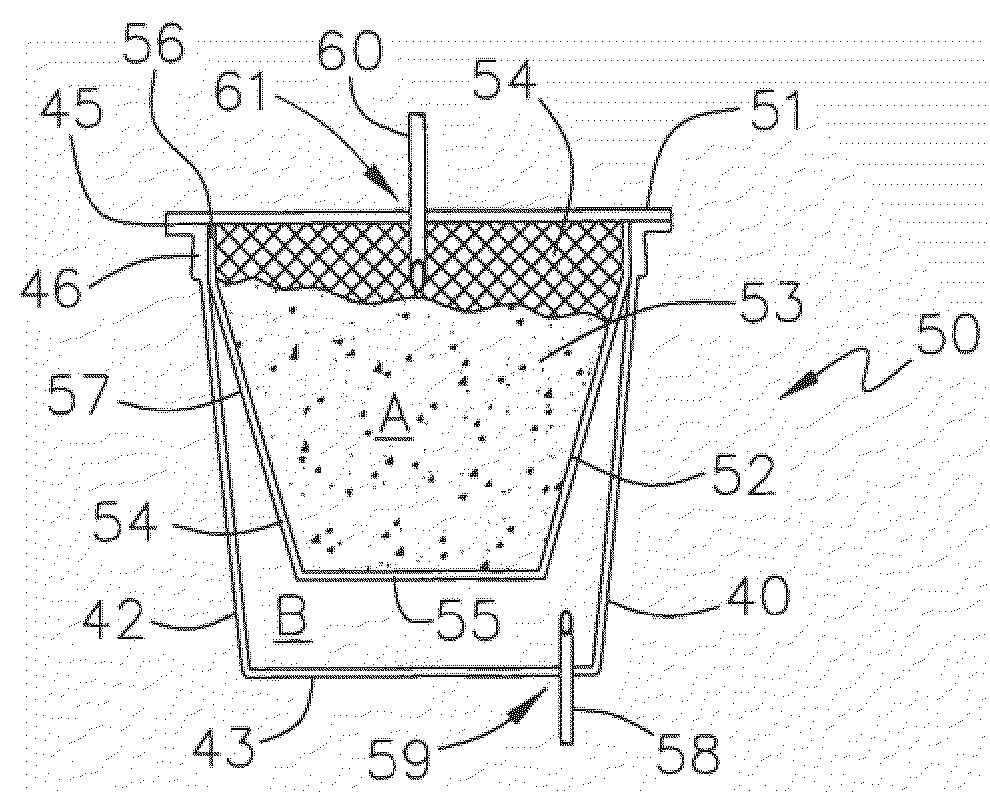
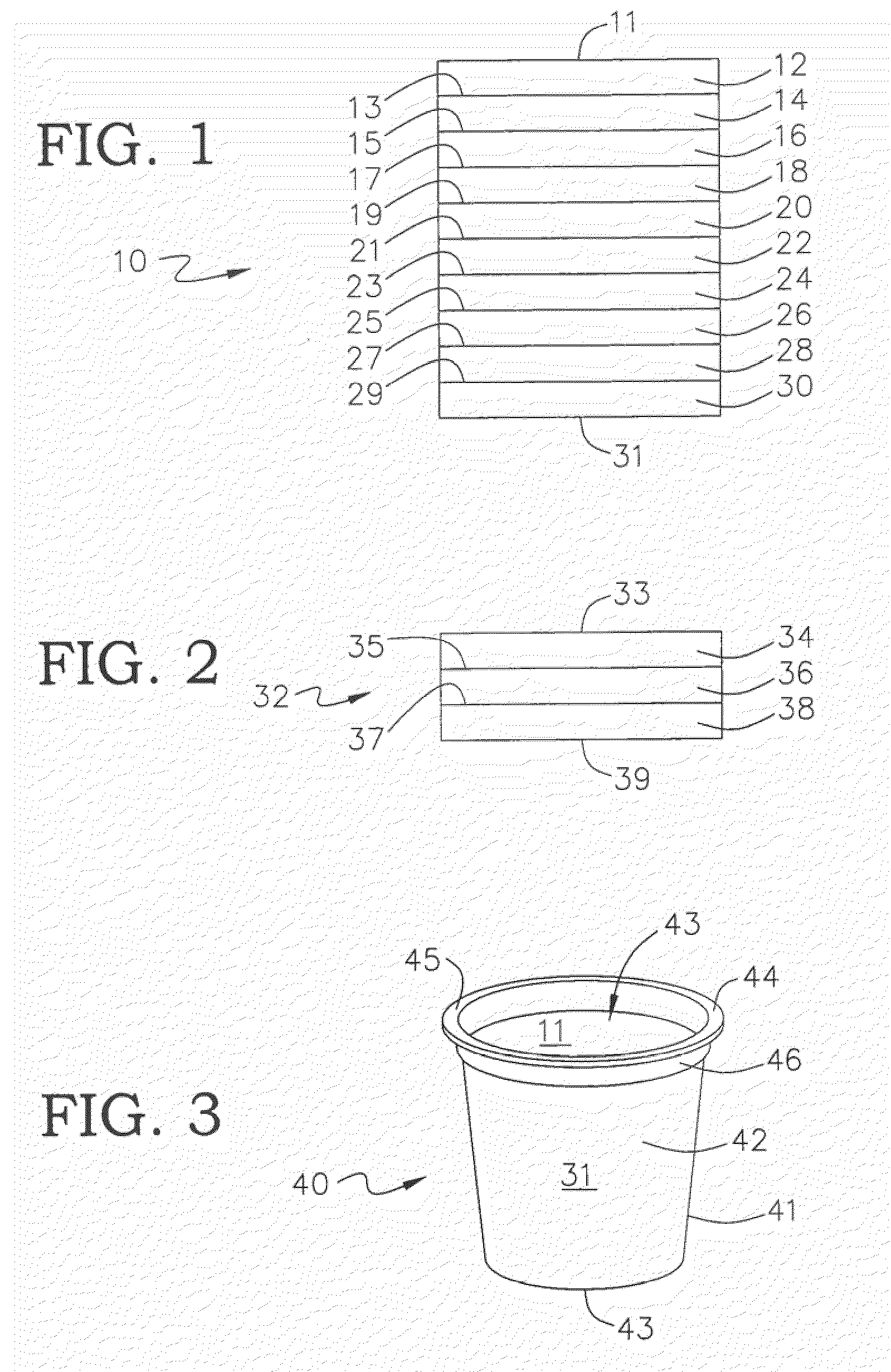
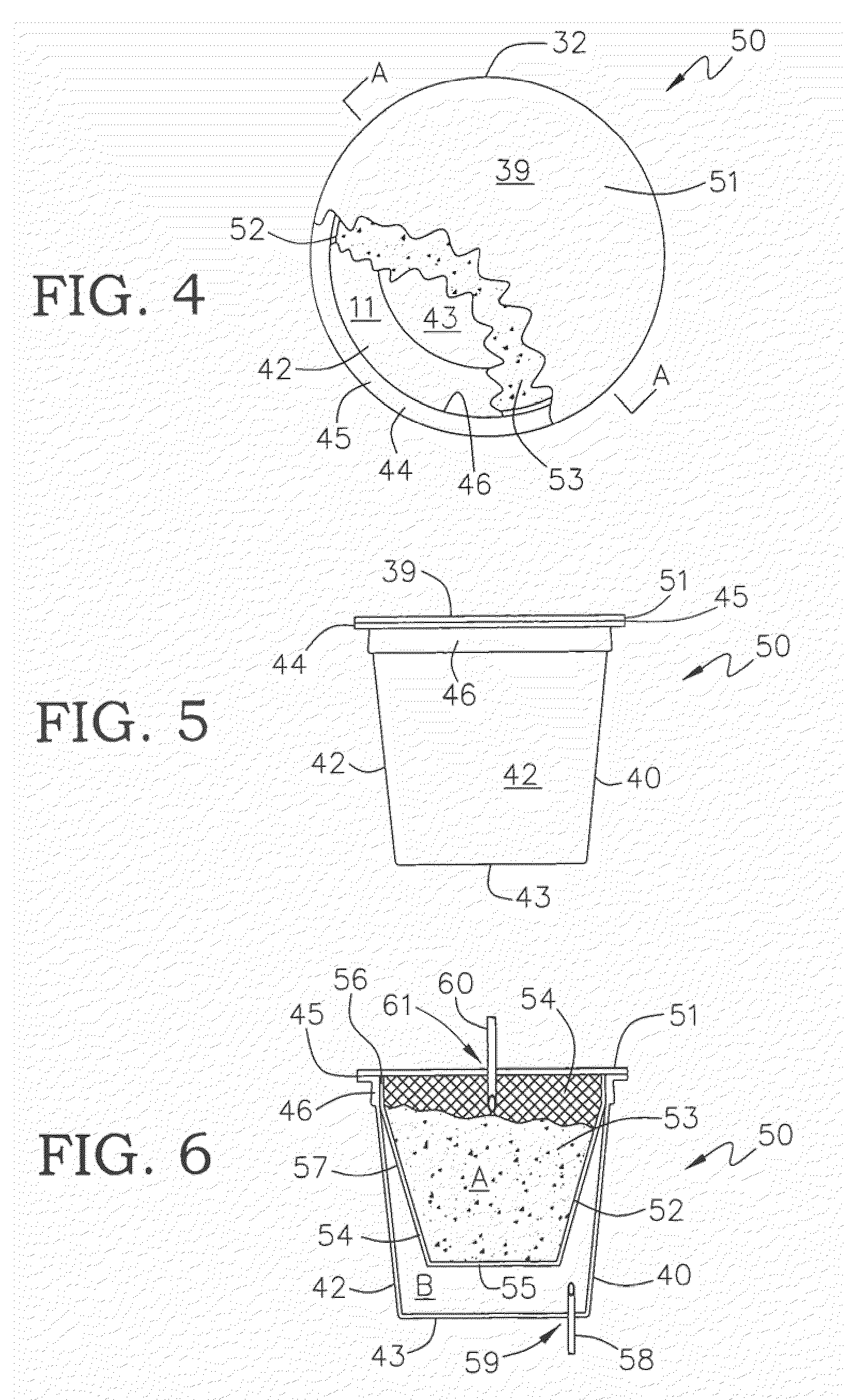
 Login to View More
  Login to View More