
Linear vacuum robot with z motion and articulated arm
a vacuum robot and z-motion technology, applied in the direction of arms, manufacturing tools, transportation and packaging, etc., can solve the problems of increasing costs, increasing risks in undertaking investments, and extremely high costs of manufacturing semiconductors, so as to reduce costs, increase costs, and reduce the effect of manufacturing costs
- Summary
- Abstract
- Description
- Claims
- Application Information
AI Technical Summary
Benefits of technology
Problems solved by technology
Method used
Image

Examples
Embodiment Construction
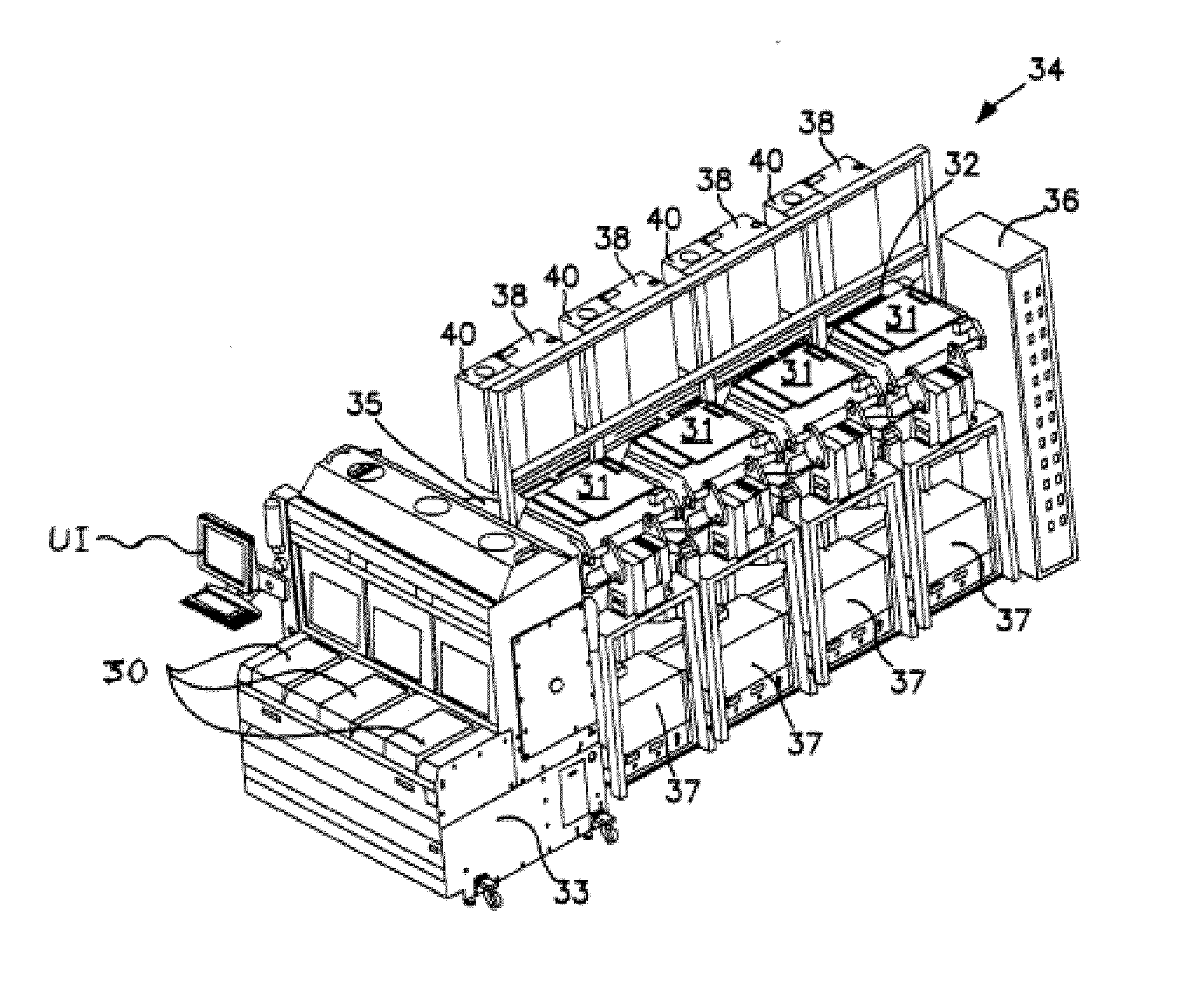
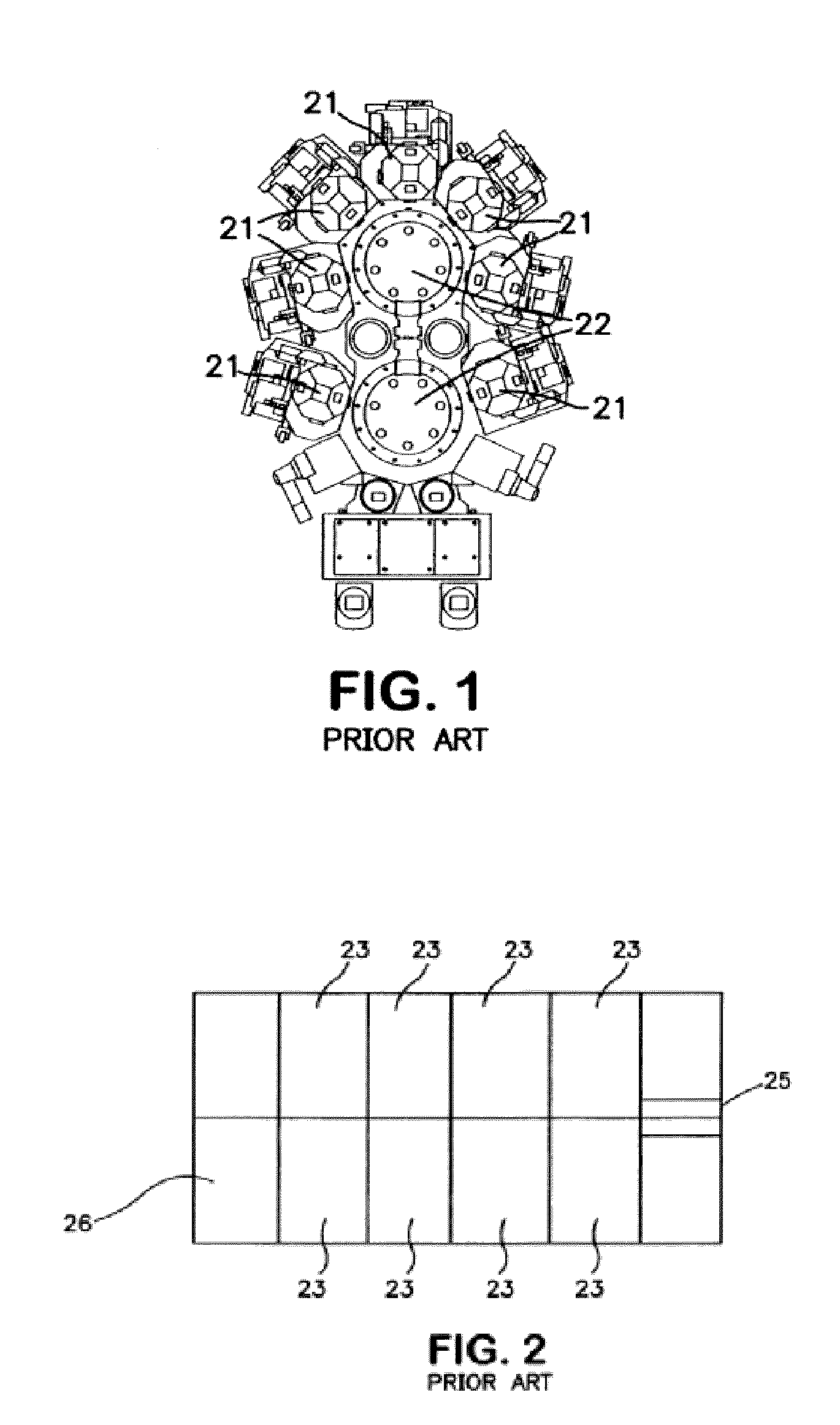
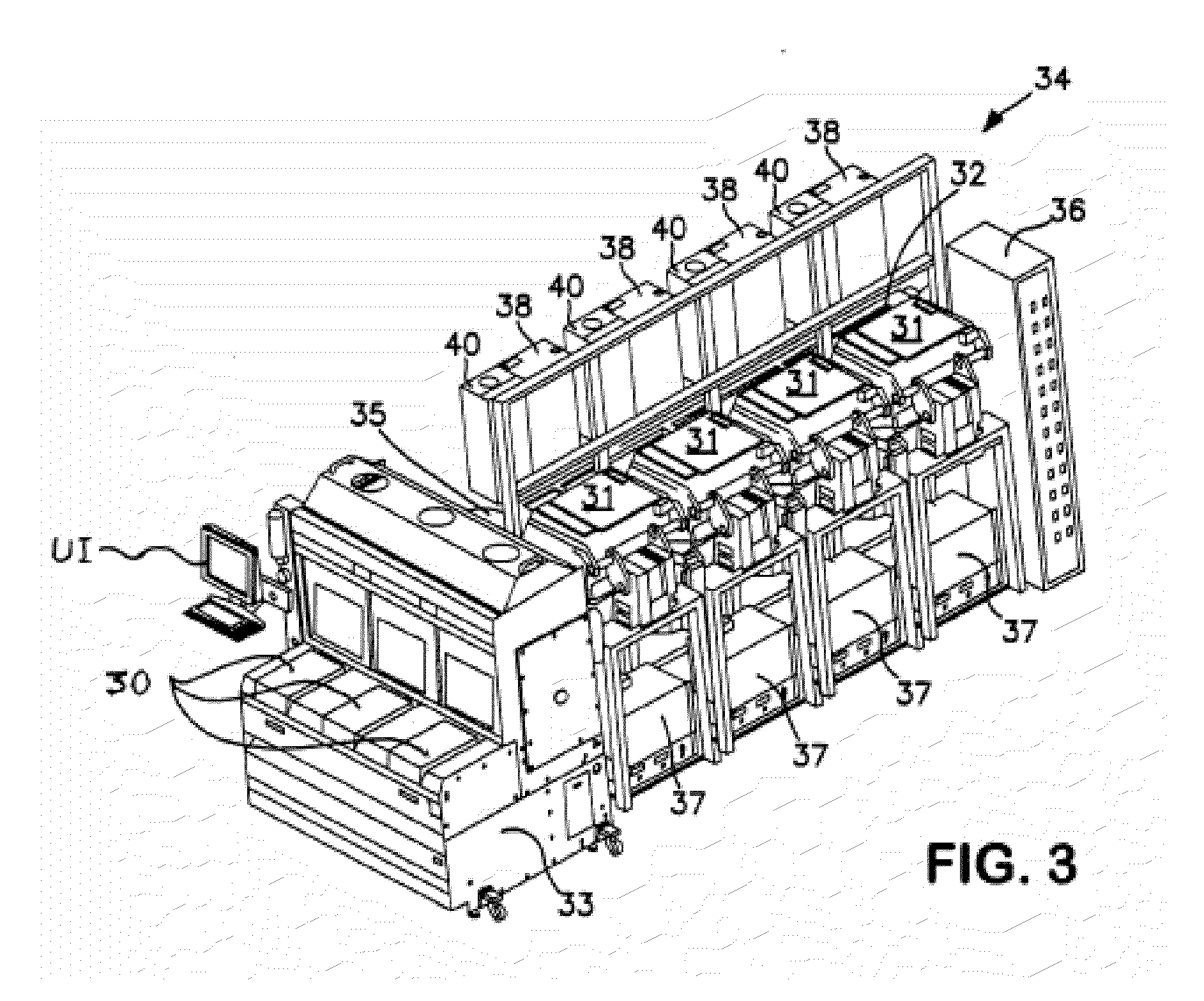
[0039]Referring now to FIG. 1, there is illustrated a cluster tool of the type commonly in use today. In general this comprises processing chambers 21 radially disposed around and attached to central chambers 22. In this system, there are two central chambers. Other systems may have only a single central chamber. A system with more than two can exist except that it is cumbersome and instead users will generally acquire another system. In operation, a robot is typically located within each central chamber 22. The robot receives wafers into the system and carries wafers from the central chamber to processing chambers and after processing back to the central chamber. In some prior art systems, a central robot can access only a single wafer and single chamber at one time. Thus the robot can become engaged or busy during processing in connection while a wafer is in a single chamber. This combination of a single robot tied to a processing station during processing is a limitation on the t...
PUM
| Property | Measurement | Unit |
|---|---|---|
| Diameter | aaaaa | aaaaa |
| Flexibility | aaaaa | aaaaa |
| Elevation | aaaaa | aaaaa |
Abstract
Description
Claims
Application Information
 Login to View More