Methods of Treating Glucose Metabolism Disorders
a glucose metabolism and disorder technology, applied in the field of glucose metabolism disorders, can solve the problems of diabetes and associated pathologic syndromes that affect a large and growing percentage of the human population
- Summary
- Abstract
- Description
- Claims
- Application Information
AI Technical Summary
Benefits of technology
Problems solved by technology
Method used
Image

Examples
example 1
Effect of In Vivo C15ORF61 / 2300009A05RIK Expression on Blood Glucose Levels in Mice with Diet-Induced Obesity
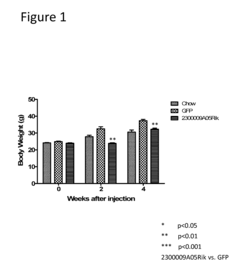
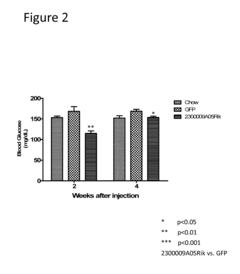
[0168]To identify secreted proteins that have an effect on glucose metabolism, selected genes were overexpressed in mice using adeno-associated virus (AAV) as the gene delivery vehicle. The anti-diabetic effects of the gene products were evaluated in diet-induced obesity (DIO) model. Eight week old male mice received a one-time tail vein injection of recombinant AAV (rAAV), and starting at the time of virus injection were subjected to 60% kcal fat diet. The mice were then followed for eight weeks during which time body weight, blood glucose and serum insulin were determined. rAAV-mediated C15ORF61 / 2300009A05RIK expression significantly reduced blood glucose levels as well as body weight in DIO mice (FIGS. 1 and 2).
[0169]The ability of murine C15ORF61 / 2300009A05RIK to regulate the level of plasma glucose was tested as follows. rAAV expressing C15ORF61 / 2300009A05RIK was injecte...
example 2
Effect of C15ORF61 / 2300009A05RIK Expression on Serum Insulin Levels in Mice with Diet-Induced Obesity
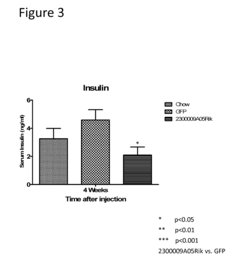
[0170]The ability of murine C15ORF61 / 2300009A05RIK to relieve hyperinsulinemia in mice with diet-induced obesity was tested. rAAV expressing C15ORF61 / 2300009A05RIK was injected through tail vein into mice, and starting at the time of virus injection the mice were subjected to 60% kcal fat diet. At the four week time point after the AAV injection, tail blood was collected from mice that had been fasting for four hours, and serum insulin were determined by enzyme-linked immunosorbent assay (ELISA). In FIG. 3, “Chow” refers to mice on chow (lean) diet; “GFP” to DIO mice that were injected with 5E+11 GC of rAAV expressing green fluorescent protein, and “2300009A05RIK” to mice injected with 5E+11 GC of rAAV expressing 2300009A05RIK (n=7 mice per group). As seen in FIG. 3, recombinant AAV expressing murine 2300009A05RIK reduced hyperinsulinemia in DIO mice.
example 3
[0171]The cloning of the human gene encoding C15ORF61 is carried out by using the PCR method as previously set forth for the cloning of the mouse gene. Briefly, the human C15ORF61 gene can be cloned out by PCR from cDNA library using the following pair of primers, and then cloned into AAV transgene vector as described above for efficacy evaluation. Forward PCR primer: 5′-ATGGAGGCCCTGAGGAGGGCCCA-3′ (SEQ ID NO:18). Reverse PCR primer: 5′-TCAATACATGGCACCTTCATCTT-3′ (SEQ ID NO:19).
[0172]The nucleic acid sequences, and the encoded amino acid sequence, for human C15ORF61 are provided below:
Human C15ORF61 ORF (GenBank Accession No.NM_001143936)(SEQ ID NO: 20)ATGGAGGCCCTGAGGAGGGCCCACGAGGTCGCGCTCCGCCTGCTGCTGTGTAGGCCGTGGGCCTCGCGCGCCGCCGCCCGCCCCAAGCCCAGCGCCTCGGAGGTGCTGACGCGGCATCTGCTGCAGCGGCGCCTGCCGCACTGGACCTCCTTCTGCGTGCCCTACAGCGCCGTCCGCAACGACCAGTTCGGCCTCTCGCACTTCAACTGGCCGGTGCAGGGCGCCAACTACCACGTCCTGCGCACCGGCTGCTTCCCCTTCATCAAGTACCACTGCTCCAAGGCTCCCTGGCAGGACCTGGCCCGGCAGAAC...
PUM
| Property | Measurement | Unit |
|---|---|---|
| concentration | aaaaa | aaaaa |
| concentration | aaaaa | aaaaa |
| concentration | aaaaa | aaaaa |
Abstract
Description
Claims
Application Information
 Login to View More