Unlock instant, AI-driven research and patent intelligence for your innovation.
Iminooxadiazinedione polyisocyanates
Active Publication Date: 2015-06-11
COVESTRO DEUTSCHLAND AG
View PDF7 Cites 23 Cited by
Summary
Abstract
Description
Claims
Application Information

AI Technical Summary
This helps you quickly interpret patents by identifying the three key elements:
Problems solved by technology
Method used
Benefits of technology
The invention provides a process for making polyisocyanates with a high content of iminooxadiazinedione groups. This is achieved by using a catalyst made of titanium, zirconium, or hafnium and reacting an isocyanate component in their presence. The resulting polyisocyanates have a content of iminooxadiazinedione groups of at least 20 mol% based on the total amount of isocyanurate and iminooxadiazinedione groups.
Problems solved by technology
These catalysts are not commercially available and difficult to prepare.
The dosage of low amounts of highly concentrated solutions of catalysts in technical scale always is difficult.
Method used
the structure of the environmentally friendly knitted fabric provided by the present invention; figure 2 Flow chart of the yarn wrapping machine for environmentally friendly knitted fabrics and storage devices; image 3 Is the parameter map of the yarn covering machine
View more
Image
Smart Image Click on the blue labels to locate them in the text.
Viewing Examples
Smart Image
Click on the blue label to locate the original text in one second.
Reading with bidirectional positioning of images and text.
Smart Image
Examples
Experimental program
Comparison scheme
Effect test
example 1
Inventive
[0081]840 g (5 mol) of hexamethylene diisocyanate (HDI) were initially charged at a temperature of 115° C. under dry nitrogen with stirring and admixed four times with 0.04 g each time of zirconium tetra-n-butylate as catalyst, at intervals of about 40 min in each case. A rapidly decreasing exotherm which caused the reaction mixture to heat up to 118-119° C. for a short time was observable immediately after each catalyst addition. Following addition of the final amount of catalyst, the mixture was stirred at 115° C. for a further two hours until an NCO content of 42.5% had been achieved. The catalyst was then deactivated by adding 0.5 g of a 10% strength solution of isophthaloyl dichloride in HDI and subsequently stirring for 15 minutes. Finally, the unconverted monomeric HDI was separated off in a thin layerevaporator at a temperature of 130° C. and a pressure of 0.1 mbar.
[0082]A practically colourless, clear polyisocyanate mixture was obtained, which had the following ch...
example 2
Inventive
[0083]In accordance with the process described in Example 1, 840 g (5 mol) of HDI were reacted by portionwise addition of a total of 0.2 g of zirconium tetra-2-ethylhexylate. The reaction was terminated as described in Example 1, at an NCO content of 43.8%, with 1.4 g of a 10% strength solution of isophthaloyl dichloride in HDI and the reaction mixture was worked up by distillation. A practically colourless, clear polyisocyanate mixture was obtained, which had the following characteristics and composition:
[0084]In accordance with the process described in Example 1, 840 g (5 mol) of HDI were reacted by portionwise addition of a total of 0.8 g of a 10% strength solution of zirconium tetraethylate in chlorobenzene. The reaction was terminated as described in Example 1, at an NCO content of 41.8%, with 0.6 g of a 10% strength solution of isophthaloyl dichloride in HDI and the reaction mixture was worked up by distillation.
[0085]A practically colourless, clear polyisocyanate mixture was obtained, which had the following characteristics and composition:
the structure of the environmentally friendly knitted fabric provided by the present invention; figure 2 Flow chart of the yarn wrapping machine for environmentally friendly knitted fabrics and storage devices; image 3 Is the parameter map of the yarn covering machine
Login to View More
PUM
Property
Measurement
Unit
Temperature
aaaaa
aaaaa
Temperature
aaaaa
aaaaa
Fraction
aaaaa
aaaaa
Login to View More
Abstract
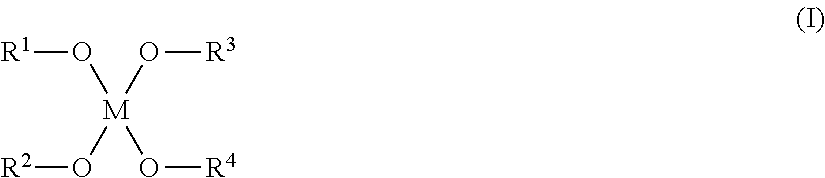
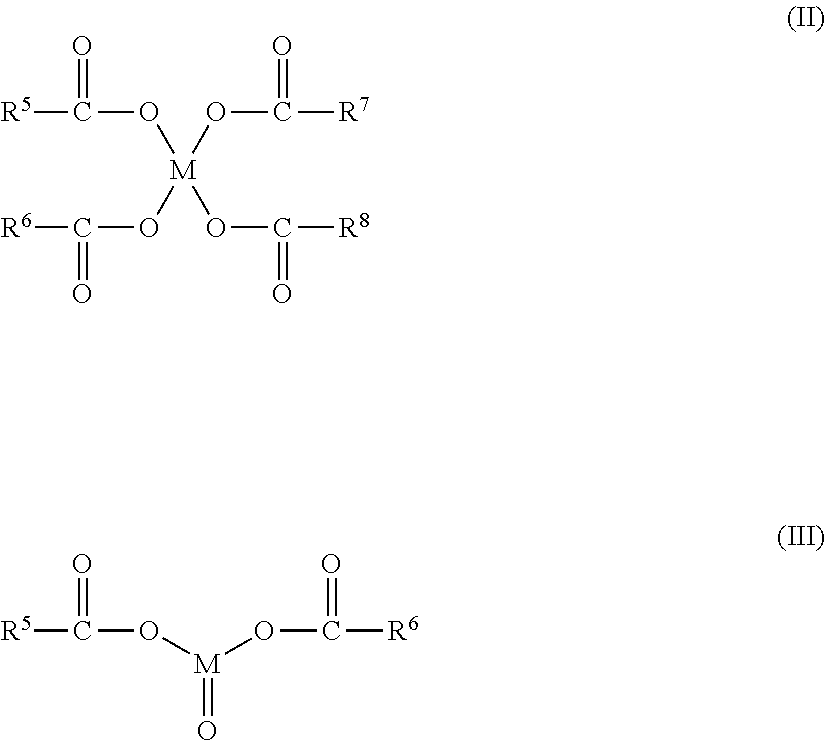
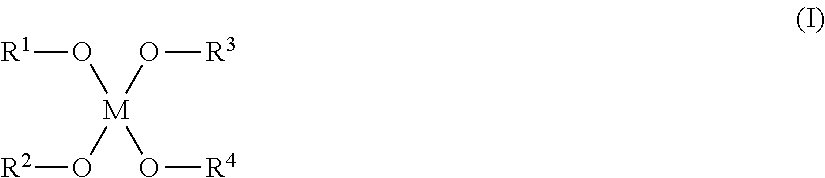
The present invention relates to a process for producing polyisocyanates comprising reacting an isocyanate component in the presence of a mono- or multinuclear complex of titanium, zirconium and / or hafnium as catalyst to give polyisocyanates having a content of iminooxadiazinedione groups of ≧20 mol % based on the total amount of isocyanurate and iminooxadiazinedione groups. The present invention also provides polyisocyanates obtainable by the process according to the invention and both polyurethanes and polyureas obtainable by reacting the polyisocyanates with at least one hydroxy-functional or amino-functional component respectively.
Description
FIELD OF THE INVENTION[0001]The invention relates to a process for producing polyisocyanates. The invention further relates to polyisocyanates obtainable by the process and polyurethanes and polyureas obtainable from the polyisocyanates.BACKGROUND OF THE INVENTION[0002]A process for producing polyisocyanates having a high content of allophanate and isocyanurate groups is disclosed in JP-A 61-151179. The reaction catalyst employed is, for example, zirconium butoxide.[0003]JP-A 61-151179 does not describe polyisocyanates having a high content of iminooxadiazinedione groups in the polyisocyanates. However, such polyisocyanates are advantageous since they exhibit very low viscosities coupled with high isocyanate functionality and are suitable for use in coating systems for example.[0004]The synthesis of asymmetric trimers of HDI by catalytic oligomerisation is well known and can be carried out by use of hydrogen(poly)fluorides (EP-A 0789 299), especially of tetraalkyl ammonium- or tetra...
Claims
the structure of the environmentally friendly knitted fabric provided by the present invention; figure 2 Flow chart of the yarn wrapping machine for environmentally friendly knitted fabrics and storage devices; image 3 Is the parameter map of the yarn covering machine
Login to View More
Application Information
Patent Timeline
Application Date:The date an application was filed.
Publication Date:The date a patent or application was officially published.
First Publication Date:The earliest publication date of a patent with the same application number.
Issue Date:Publication date of the patent grant document.
PCT Entry Date:The Entry date of PCT National Phase.
Estimated Expiry Date:The statutory expiry date of a patent right according to the Patent Law, and it is the longest term of protection that the patent right can achieve without the termination of the patent right due to other reasons(Term extension factor has been taken into account ).
Invalid Date:Actual expiry date is based on effective date or publication date of legal transaction data of invalid patent.