
Data encryption/decryption using neuro and neuro-mechanical fingerprints
a fingerprint and neuro-mechanical technology, applied in the field of user identification, authentication, and data encryption, can solve the problems of less stable unique pattern 200/b>a-200/b>d of a user, internet and may be subject to risks associated, and compromise protection, so as to eliminate the influence of gravity
- Summary
- Abstract
- Description
- Claims
- Application Information
AI Technical Summary
Benefits of technology
Problems solved by technology
Method used
Image

Examples
Embodiment Construction
[0044]In the following detailed description of the embodiments, numerous specific details are set forth in order to provide a thorough understanding. However, it will be obvious to one skilled in the art that the embodiments may be practiced without these specific details. In other instances well known methods, procedures, components, and circuits have not been described in detail so as not to unnecessarily obscure aspects of the embodiments.
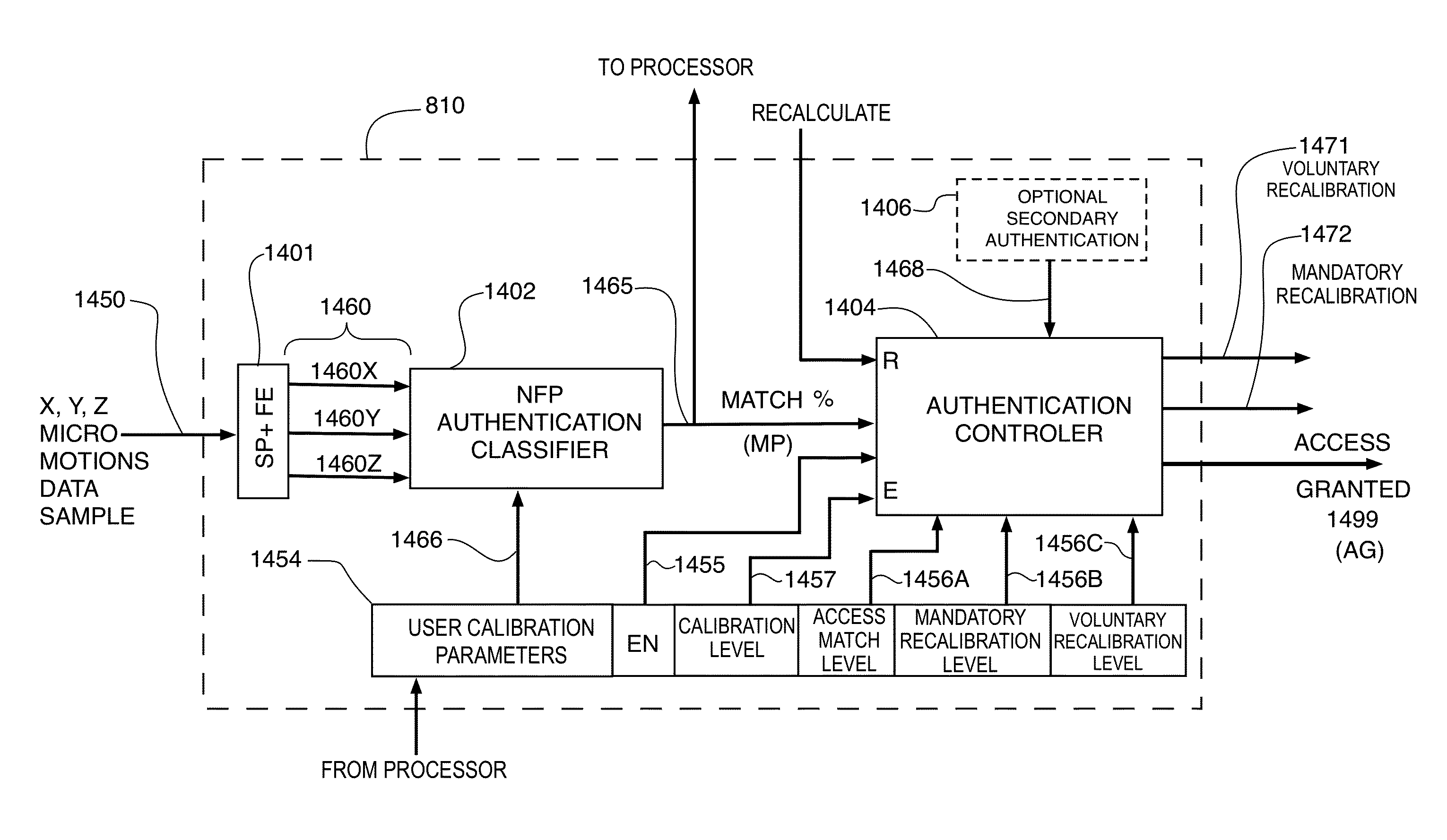
[0045]The embodiments include methods, apparatus, and systems for forming and utilizing neuro-mechanical fingerprints (NFPs) to identify and authenticate a user.
INTRODUCTION
[0046]Certain user motions are habitual or part of a user's motion repertoire. A user signing a document, for example, is a contextual motion that a user develops with behavioral habits. The motions usually analyzed of a signed signature are the macro-motions or large scale motions that a user makes with a writing instrument. For example, from the large motions of a signed si...
PUM
 Login to View More
 Abstract
Description
Claims
Application Information
 Login to View More