
Azaborinine derivatives, their synthesis and use in organic electronic devices
- Summary
- Abstract
- Description
- Claims
- Application Information
AI Technical Summary
Benefits of technology
Problems solved by technology
Method used
Image

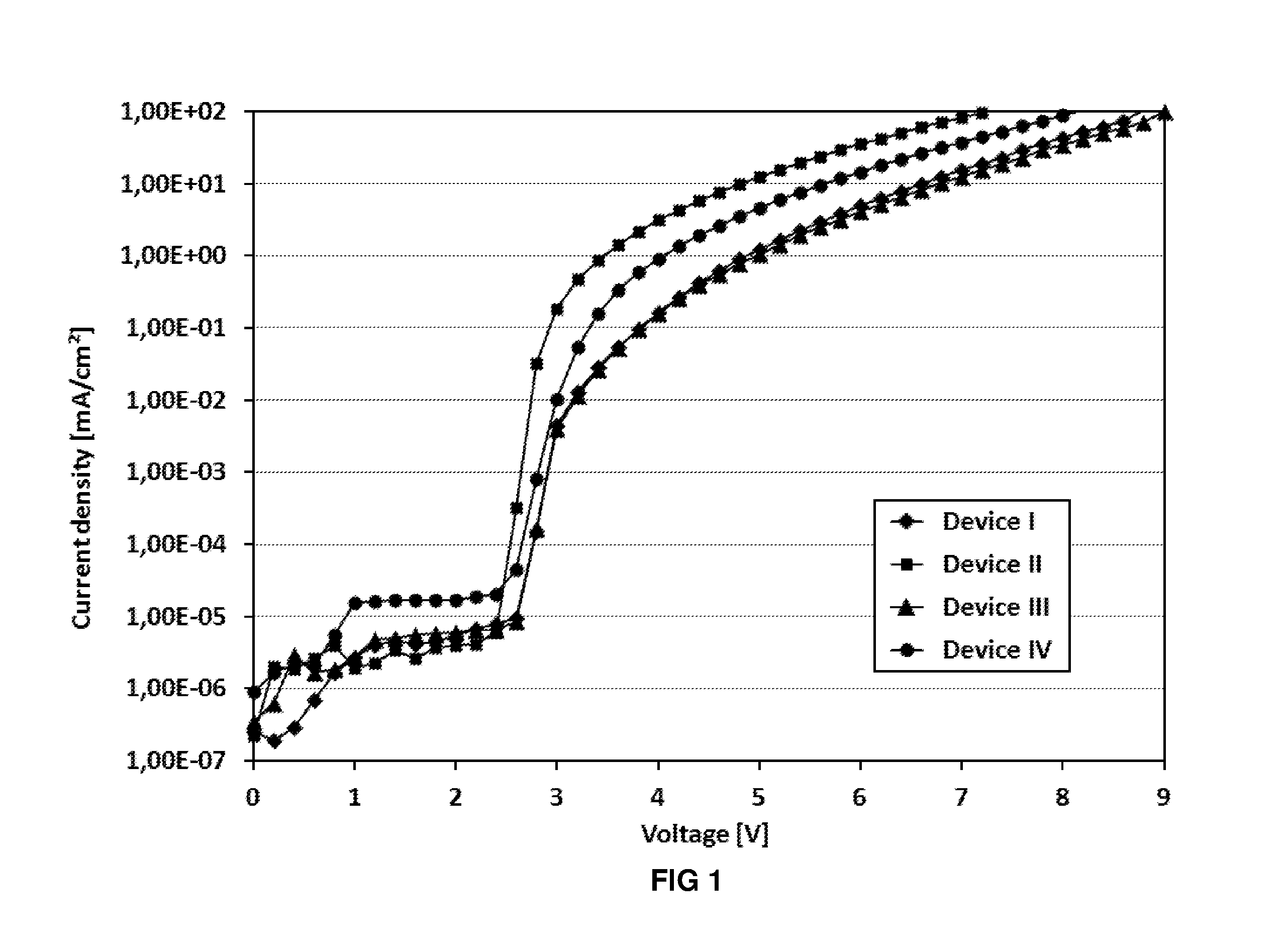
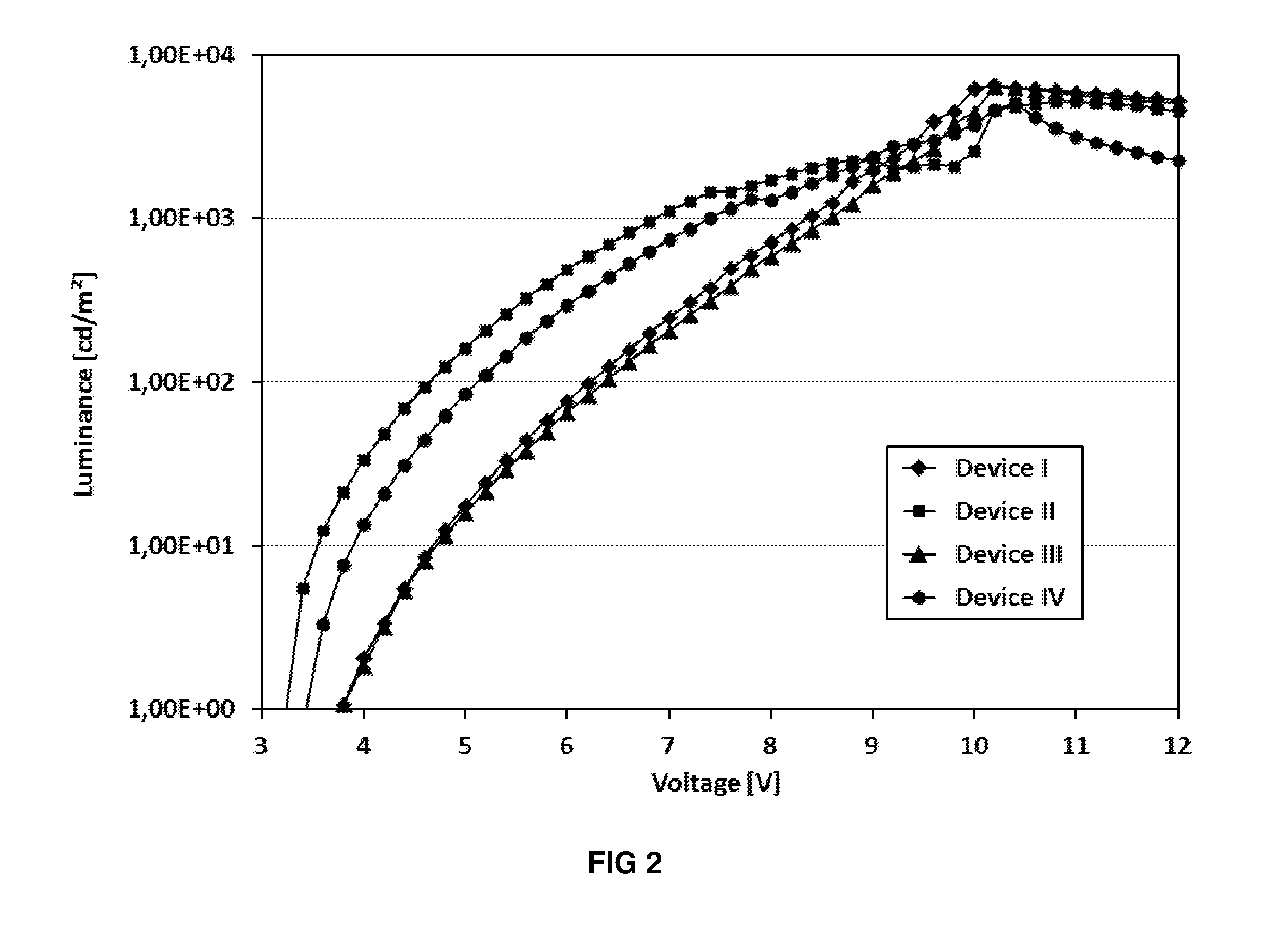
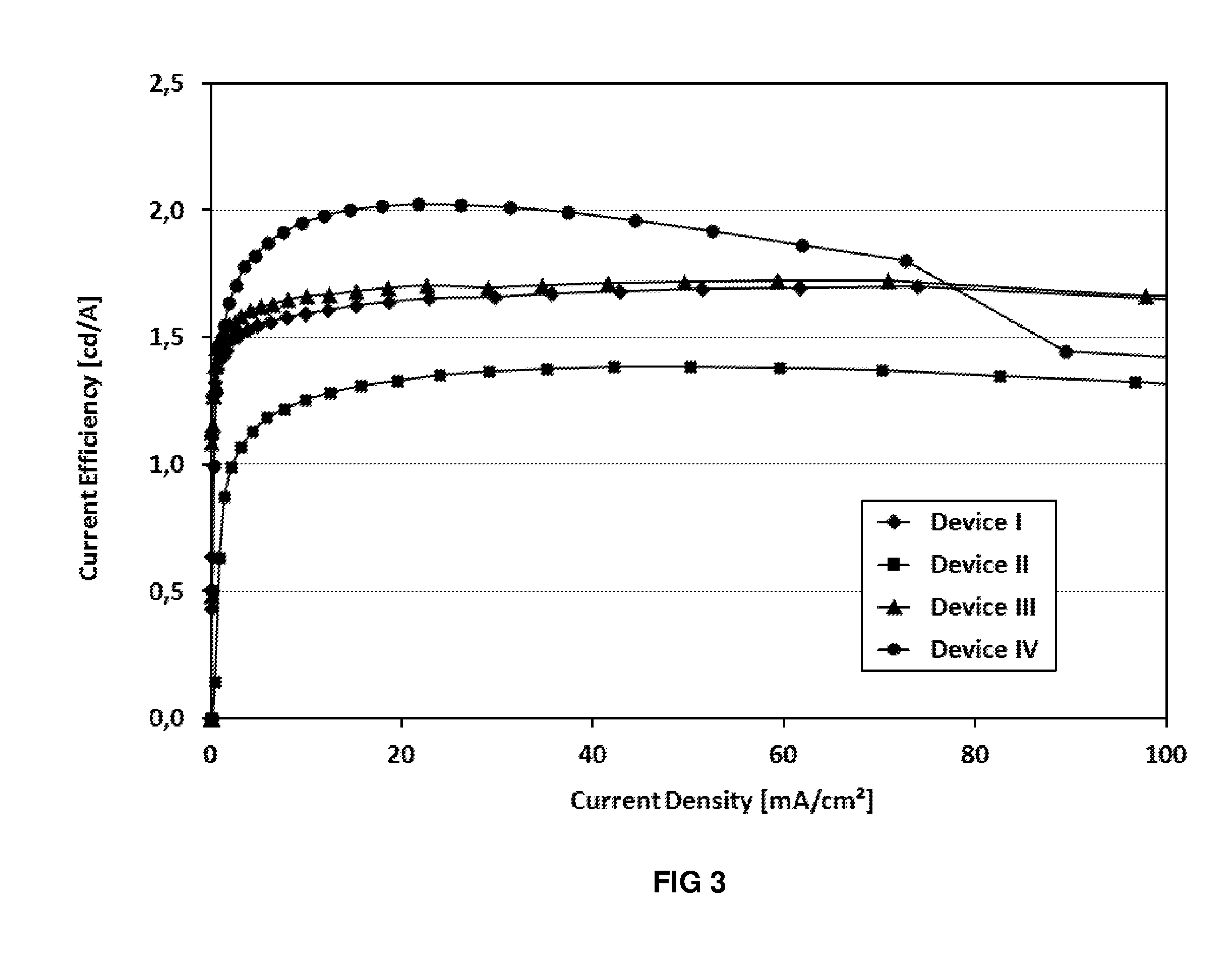
Examples
example 1
Synthesis of 4,10-Diphenyl-4,5,10,11-tetrahydro-1,7-dioxa-5,11-diaza-4,10-dibora-dicyclopenta[a,h]anthracene (9, BNLT)
[0270]
Synthesis of 2,5-bis(2-thienyl)-1,4-phenylenediamine (8)
[0271]In a Schlenk flask, 2,5-dibromo-1,4-phenylenediamine (500 mg, 1.88 mmol) and thiophene-2-boronic acid pinacol ester 7 (1.58 g, 7.52 mmol) were charged under the protection of nitrogen. After adding 30 ml toluene, 10 ml ethanol and 10 ml Cs2CO3 aqueous solution (2.0 mol / l), the mixture was degassed for 30 min. Pd(PPh3)4 (218 mg, 0.188 mmol) was added. The mixture was then heated to 80° C., stirred overnight, poured into brine and extracted with dichloromethane for several times. The organic phase was dried over Mg2SO4 and the solvent was evaporated in vacuo. The product was purified by chromatography on silica gel (CH2Cl2) to give product 8 as yellow flaky crystal (310 mg, 59%). 1H NMR (400 MHz, CDCl3, ppm): 3.81 (br, 4H), 6.82 (s, 2H), 7.12 (dd, J=5.14, 3.53 Hz, 2H), 7.24 (dd, J=3.27, 0.78 Hz, 2H), 7...
example 2
Synthesis of 2,8-Dipropyl-4,10-diphenyl-4,5,10,11-tetrahydro-1,7-dithia-5,11-diaza-4,10-dibora-dicyclopenta[a,h]anthracene (12, BNLT-C3)
[0273]
Synthesis of 2,5-bis(5-propyl-2-thienyl)-1,4-phenylenediamine (11)
[0274]In a Schlenk flask, 2,5-dibromo-1,4-phenylenediamine (1 g, 3.76 mmol) and 2-(4,4,5,5-Tetramethyl-1,3,2-dioxaborolan-2-yl)-5-propylthiophene 10 (3.8 g, 15.04 mmol) were charged under the protection of nitrogen. After adding 75 ml toluene, 30 ml ethanol and 20 ml Cs2CO3 aqueous solution (2.0 mol / l), the mixture was degassed for 45 min. Pd(PPh3)4 (435 mg, 0.376 mmol) was added. The mixture was then heated to 80° C., stirred overnight, poured into brine and extracted by dichloromethane for several times. The organic phase was dried over Mg2SO4 and the solvent was evaporated in vacuo. The product was purified by chromatography on silica gel (CH2Cl2) to give product 11 as yellow flaky crystal (860 mg, 63%). 1H NMR (400 MHz, CDCl3, ppm): 1.00 (t, J=7.34 Hz, 6H), 1.73 (dd, J=15.00...
example 3
Synthesis of 2,8-Dihexyl-4,10-diphenyl-4,5,10,11-tetrahydro-1,7-dithia-5,11-diaza-4,10-dibora-dicyclopenta[a,h]anthracene (15, BNLT-C6)
[0276]
Synthesis of 2,5-bis(5-hexyl-2-thienyl)-1,4-phenylenediamine (14)
[0277]In a Schlenk flask, 2,5-dibromo-1,4-phenylenediamine (500 mg, 1.88 mmol) and 2-(4,4,5,5-tetramethyl-1,3,2-dioxaborolan-2-yl)-5-hexylthiophene 13 (2.21 g, 7.52 mmol) were charged under the protection of nitrogen. After adding 25 ml toluene, 10 ml ethanol and 10 ml Cs2CO3 aqueous solution (2.0 mol / l), the mixture was degassed for 30 min. Pd(PPh3)4 (217.3 mg, 18.8 mmol) was added, then the mixture was heated to 80° C. and stirred overnight. The reactant was poured into brine and extracted by dichloromethane for several times. The organic phase was dried over Mg2SO4 and the solvent was evaporated in vacuo. The product was purified by chromatography on silica gel (petroleum ether / CH2Cl2=1) to give product 14 as yellow flaky crystal (550 mg, 66%). 1H NMR (400 MHz, CDCl3, ppm): 0.9...
PUM
 Login to View More
 Abstract
Description
Claims
Application Information
 Login to View More