
Compositions comprising a mitofusin inhibitor for promoting cell reprogramming and a use thereof
a technology of mitofusin and cell reprogramming, which is applied in the direction of drug compositions, non-embryonic pluripotent stem cells, genetically modified cells, etc., to achieve the effects of improving the efficiency of reprogramming, shortening the time required for reprogramming, and high efficiency
- Summary
- Abstract
- Description
- Claims
- Application Information
AI Technical Summary
Benefits of technology
Problems solved by technology
Method used
Image

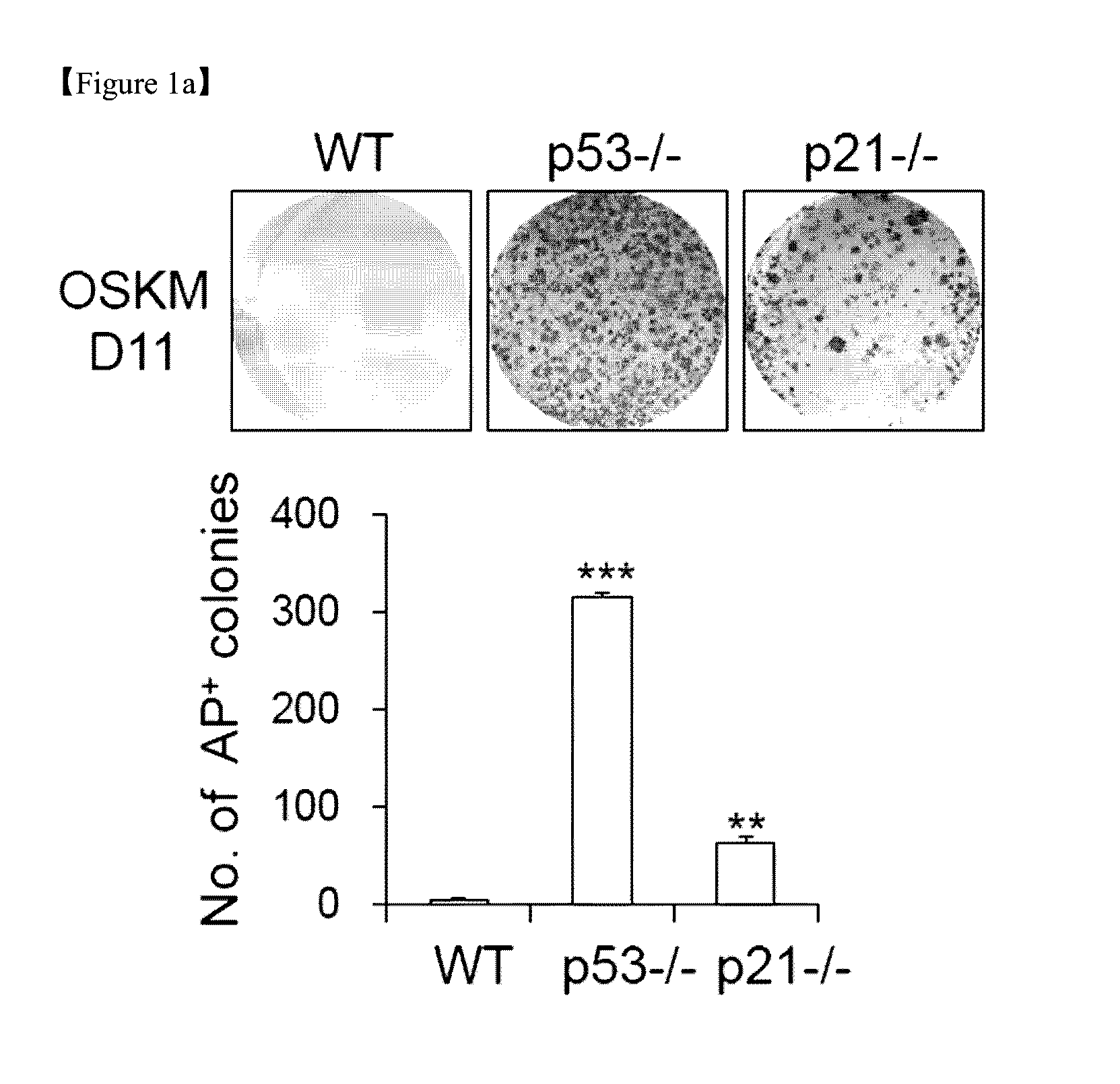
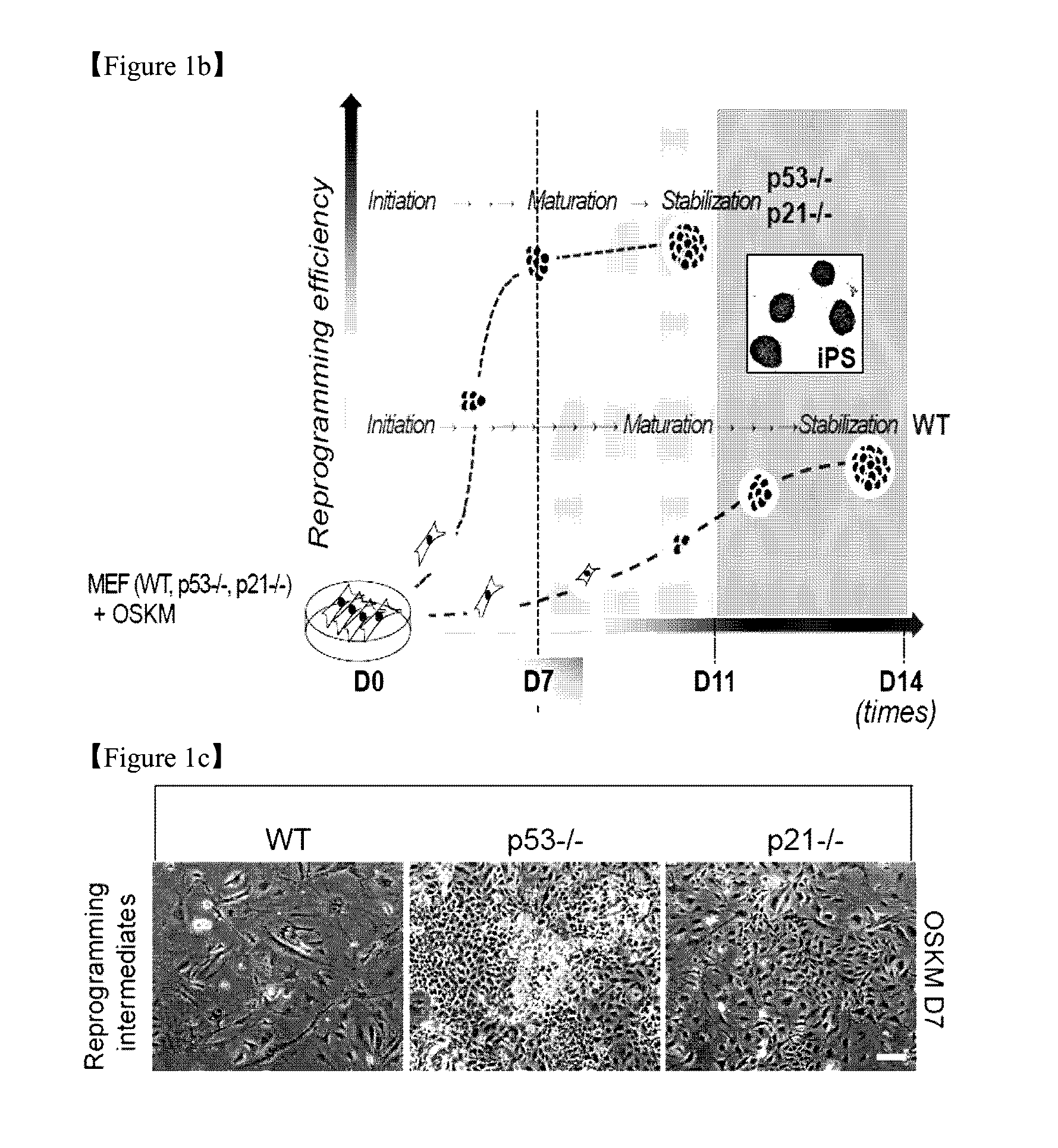
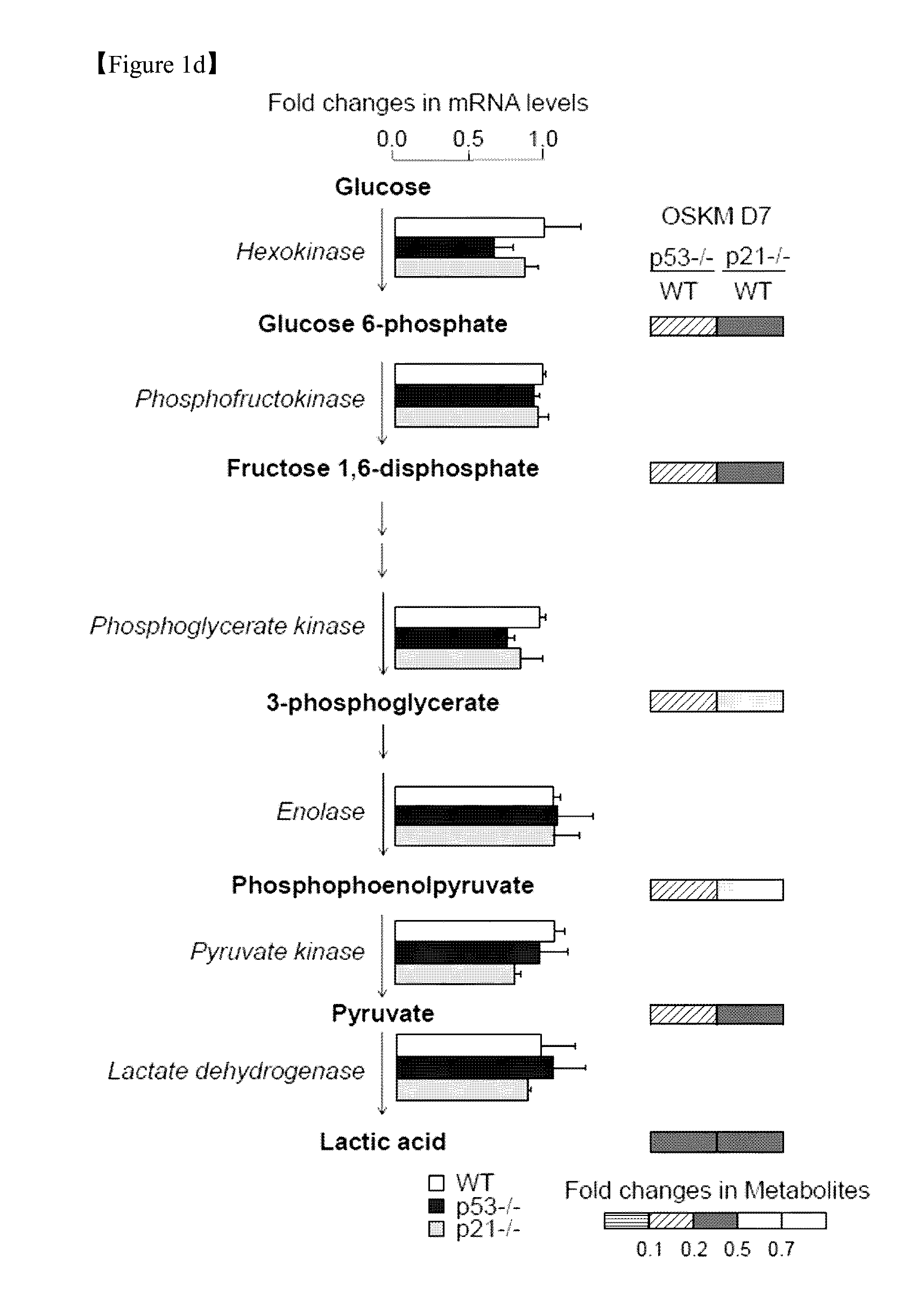
Examples
experimental example 1
Reagents
[0141]Mdivi1, 2-deoxy-D-glucose (2-DG), and lentiviral vectors that express each shRNA for gene knockdown were purchased from Sigma. siRNAs for mitofusin 1 or 2 (Mfn1 / 2) knockdown were purchased from Dharmacon. Nutlin3a was purchased from Cayman Chemical Co. A Screen-Well™ REDOX library was purchased from Enzo Life Sciences. The shRNA sequences for Mfn1 / 2 (shMfn1, shMfn2) and siRNA sequences for Mfn1 / 2 (siMfn1, siMfn2), used in the present invention, are presented in Table 1 below.
TABLE 1mouseshMfn1TargetGCGTTTAAGCAGCAGTTTGTASEQ ID NO: 5Sequence:Hairpin5′-CCCG-GCGTTTAAGCAGCSequence:AGTTTGTA-CTCGAG-TACAASEQ ID NO: 6ACTGCTGCTTAAACCC-TTTTTG-3′shMfn2TargetTGGATGGACTATGCTAGTGAASEQ ID NO: 7Sequence:Hairpin5′-CCGG-TGGATGGACTATGSEQ ID NO: 8Sequence:CTAGTGAA-CTCGAG-TTCACTAGCATAGTCCATCCA-TTTTTG-3′humanshMfn1TargetATCCGGAACTTGATCGAATAGSEQ ID NO: 9Sequence:Hairpin5′-CCGG-ATCCGGAACTTGASEQ ID NO: 10Sequence:TCGAATAG-CTCGAG-CTATTCGATCAAGTTCCGGAT-TTTTTTGAAT-3′shMfn2TargetGCTCAGTGCTTCATCCCAT...
experimental example 2
Mice and Cell Culture
[0142]All animal experimental protocols were approved by the bioethics committee of KRIBB. MEFs were isolated from embryonic day 12.5 embryos obtained from WT, p53-KO(p53− / −) and p21-KO (p21− / −) mice (The Jackson Laboratory) and maintained in DMEM (Invitrogen) supplemented with 10% fetal bovine serum (FBS, Invitrogen), 1% non-essential amino acids (NEAA, Invitrogen), 0.1 mM β-mercaptoethanol (Sigma), and 1% penicillin / streptomycin (Invitrogen). The mouse embryonic stem cell (ESC) line J1 (ATCC) and induced pluripotent stem cell (iPSC) lines were routinely maintained on γ-irradiated MEFs or Matrigel™ (BD Biosciences)-coated plates in DMEM (Invitrogen) supplemented with 15% FBS, 1% NEAA, 1% L-glutamine (Invitrogen), 20 mM HEPES (Invitrogen), 0.1 mM β-mercaptoethanol, 1% penicillin / streptomycin, and 1,000 U / ml LIF (Millipore). The culture medium was changed every other day. Human H9 ESC lines (WiCell Research Institute) were routinely maintained on γ-irradiated MEF...
experimental example 3
Virus Production and iPSC Generation
[0143]GP2-293 packaging cells were co-transfected with pMX vectors containing the human cDNAs for Oct4 (POU5F1), Sox2, Klf4, and c-Myc (OSKM, Addgene) and the VSV-G envelope vector using Lipofecamine 2000 transfection reagent (Invitrogen). Virus-containing supernatants were collected at 48 and 72 hours after transfection and concentrated via ultracentrifugation (Beckman Coulter) at 25,000 rpm for 90 minutes. To generate iPSCs, MEFs were seeded at 1×10⁵ cells per well in 6-well plates the day before transduction and subsequently transduced with concentrated virus at a multiplicity of infection (MOI) of 1 in the presence of Polybrene (8 μg / ml). Four days after transduction, the MEFs were trypsinized and reseeded at a density of 3×10⁴ cells per well in Matrigel™-coated 12-well plates. On the next day, the medium was replaced with mouse ESC medium, and the medium was changed every other day thereafter.
PUM
| Property | Measurement | Unit |
|---|---|---|
| Molar density | aaaaa | aaaaa |
| Molar density | aaaaa | aaaaa |
| Composition | aaaaa | aaaaa |
Abstract
Description
Claims
Application Information
 Login to View More