

Systems and methods for metabolite topography of the brain with magnetic resonance imaging
a magnetic resonance imaging and brain topography technology, applied in image data processing, telemetric patient monitoring, sensors, etc., can solve the problems of not measuring the production of lactate that ends up being used in oxidative phosphorylation in other cell compartments, the rate of metabolite production and transport is not high, and the conventional metabolite measurement method using mr spectroscopy only allows
- Summary
- Abstract
- Description
- Claims
- Application Information
AI Technical Summary
Benefits of technology
Problems solved by technology
Method used
Image

Examples
Embodiment Construction
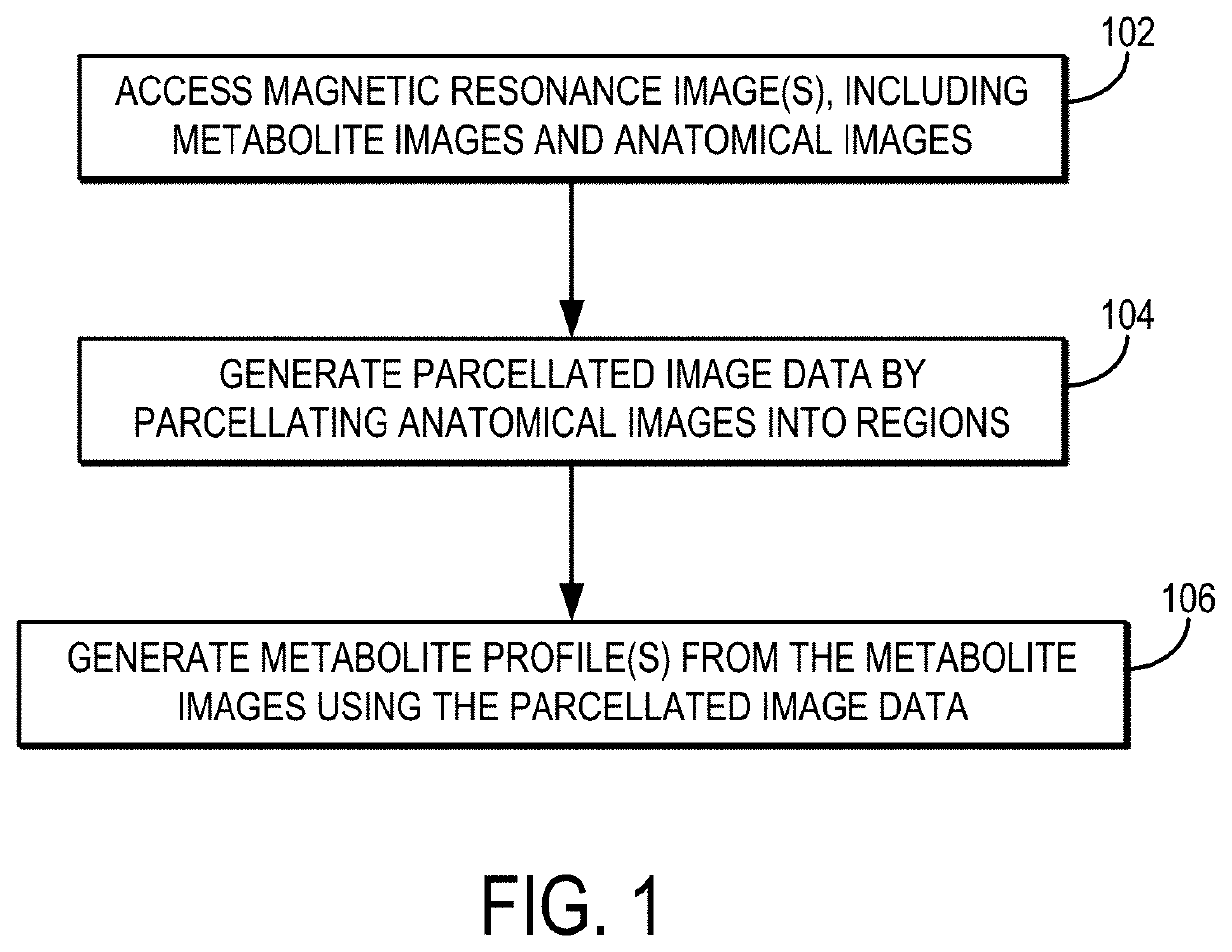
lass="d_n">[0015]Described here are systems and methods for generating metabolite profiles from magnetic resonance images. These metabolite profiles indicate a topography of the metabolites in one or more anatomical regions. The magnetic resonance images can be metabolite images, such as those obtained using hyperpolarized 13C-MRI. Hyperpolarized 13C-MRI is an imaging method that enables time-resolved volumetric imaging of metabolite production within tissue.
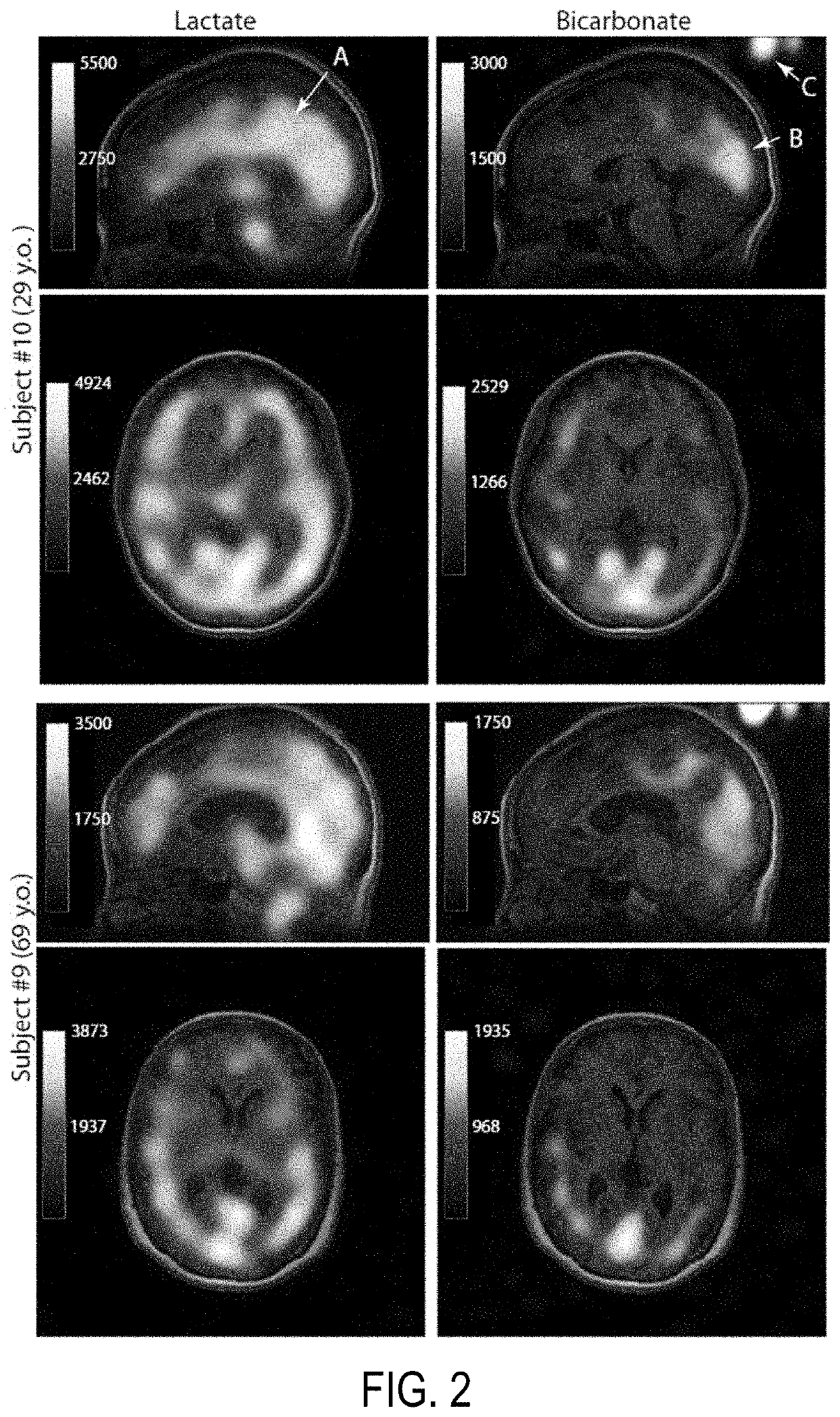
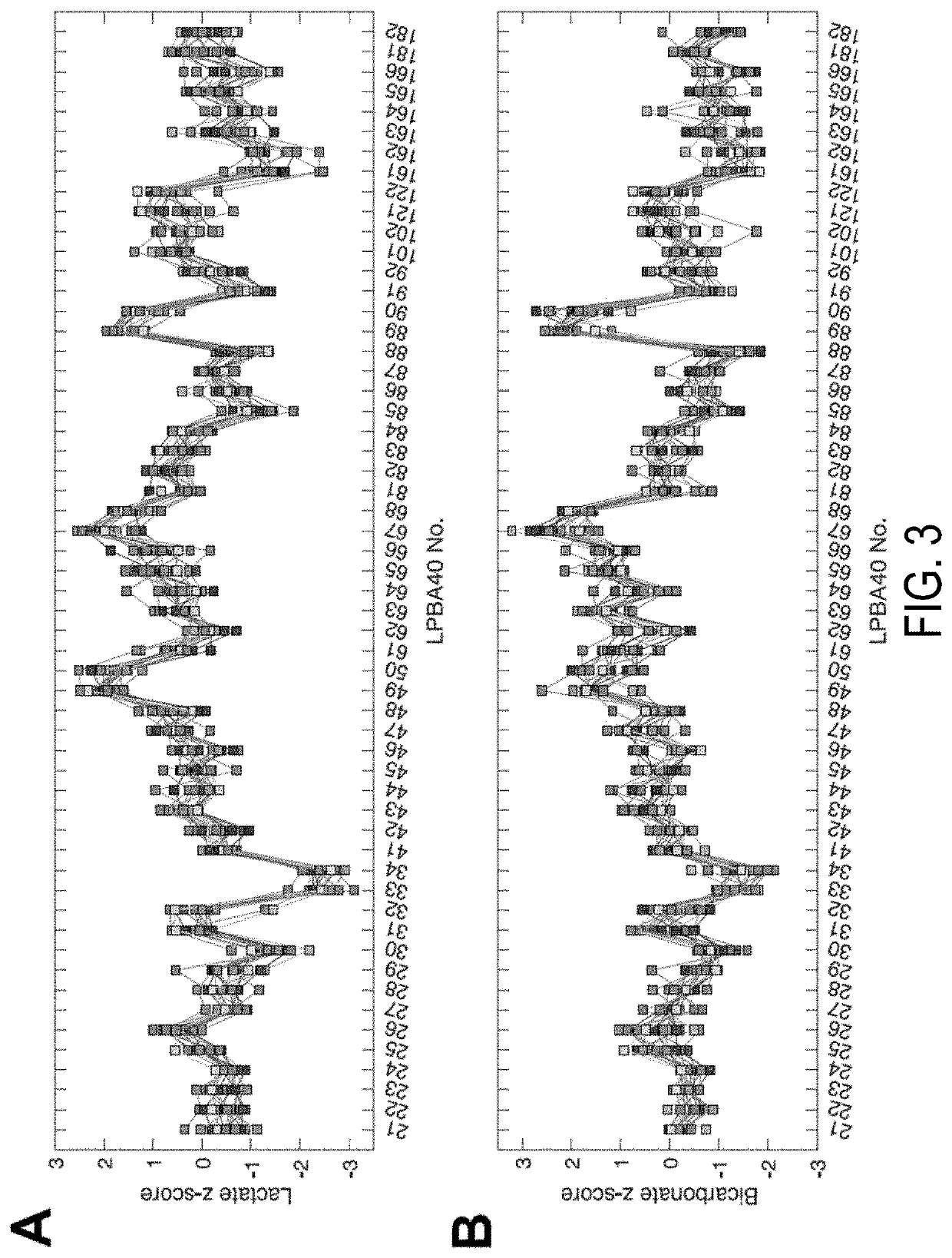
[0016]As one non-limiting example, the distribution of lactate and bicarbonate produced from intravenously injected 13C-pyruvate over the whole brain can be mapped using the methods described in the present disclosure. The metabolite images (e.g., 13C-lactate images) from each subject are parcellated into spatial regions (e.g., brain atlas regions, heart atlas regions) based on structural anatomical images in order to generate or otherwise determine the metabolite signal (e.g., lactate) from each specific brain region, such as t...
PUM
 Login to View More
 Abstract
Description
Claims
Application Information
 Login to View More