
Triazole benzamide derivatives as gpr142 agonists
a technology of benzamide and triazole, which is applied in the field of triazole benzamide derivatives, can solve the problems of -cell failure and insulin deficiency, and achieve the effect of suitable pharmacological and pharmacokinetic properties
Patent Information
- Authority / Receiving Office
- US · United States
- Patent Type
- Applications(United States)
- Current Assignee / Owner
- Publication Date
- 2021-09-02
Smart Images
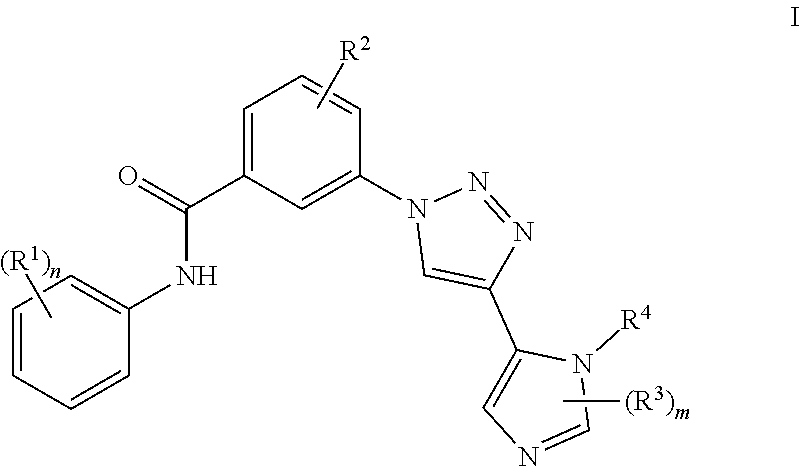
Figure 1 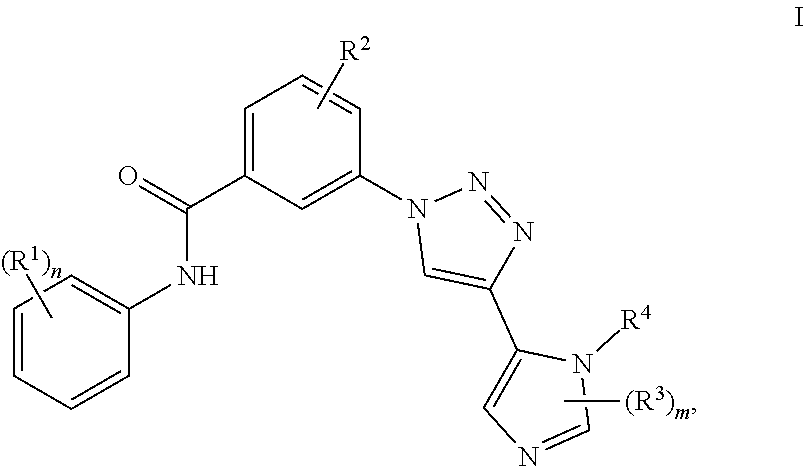
Figure 2 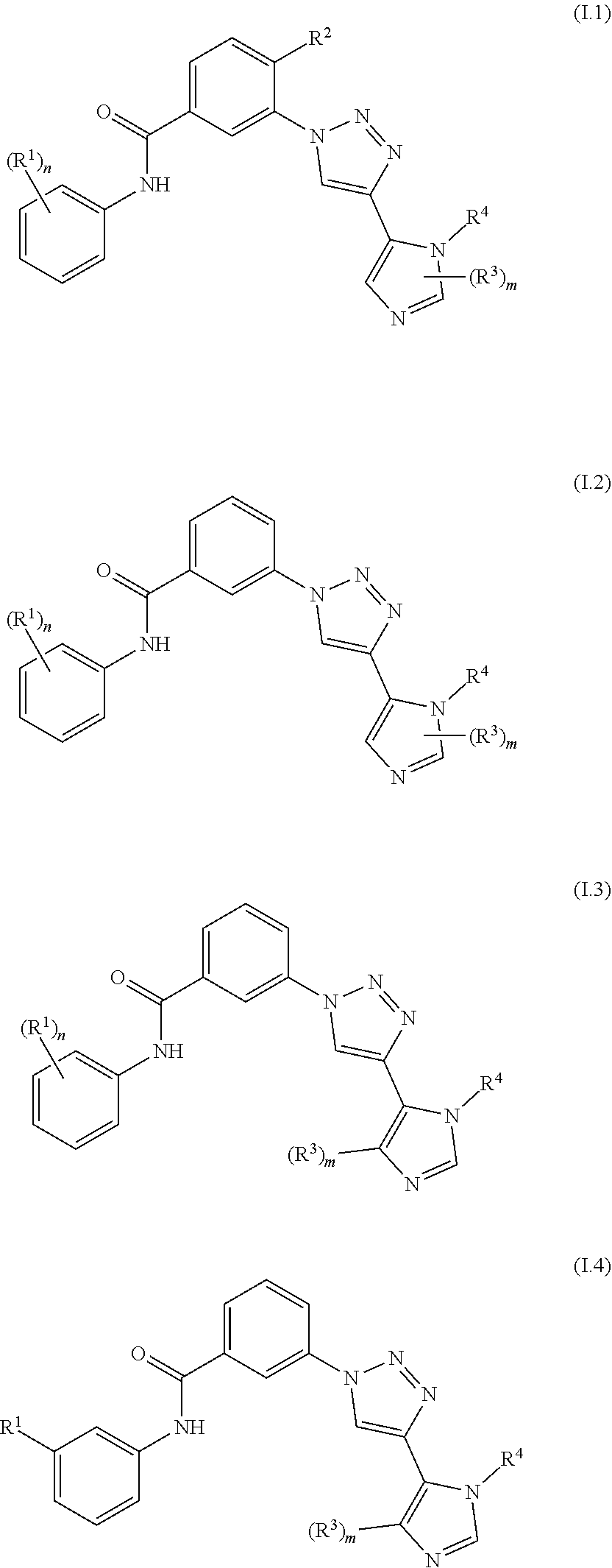
Figure 3
Abstract
Description
FIELD OF THE INVENTION
[0001] This invention relates to novel triazole benzamide derivatives, and pharmaceutically acceptable salts thereof, that are GPR142 agonists. In addition, the invention relates to processes for their preparation, to pharmaceutical compositions and combinations comprising said compounds and to their use in methods for the treatment of diseases which can be influenced by the activation of GPR142. Particularly, the pharmaceutical compositions of the invention are suitable for the treatment of type 2 diabetes.BACKGROUND OF THE INVENTION
[0002] Type 2 diabetes is understood to evolve under circumstances of environmental risk factors and genetic predisposition from a combination of peripheral insulin resistance and pancreatic β-cell dysfunction. The disease represents a vicious cycle of increasing demands for insulin to be secreted in order to overcome insulin resistance driving a progressive decline of β-cell function and mass, ultimately leading to β-cell failure an...
Examples
examples / preliminary remarks
EXAMPLES / PRELIMINARY REMARKS
[0151]The terms “ambient temperature” and “room temperature” are used interchangeably and designate a temperature of about 20° C., e.g. 15 to 25° C.
[0152]As a rule, 1H—NMR and / or mass spectra have been obtained for the compounds prepared.
[0153]Unless otherwise specified, compounds containing chiral centers have the stereochemistry depicted. The assignment of stereochemistry has been made either by use of a chiral starting material of known stereochemistry, by stereoselective synthesis of known stereochemistry or by biological activity.
[0154]Analytical Methods
[0155]HPLC-MS methods:
Method:1Device:Agilent 1200 with DA- and MS-DetectorColumn:Sunfire C18, 3 × 30 mm, 2.5 μmColumn Supplier:Waters% SolventGradient / Solvent[H2O,% SolventFlowTemperatureTime [min]0.1% TFA][Acetonitrile][mL / min][° C.]0.0097 3 2.2600.2097 3 2.2601.200100 2.2601.250100 3601.400100 360Method:2Device:Agilent 1200 with DA- and MS-DetectorColumn:XBridge C18, 3 × 30 mm, 2.5 μ mColumn Sup...
example 1
4-Methyl-3-[4-(1-methyl-1H-imidazol-5-yl)-1H-1,2,3-triazol-1-yl]-N-[3-trifluoromethyl)phenyl]benzamide
[0172]
[0173](3-Dimethylamino-propyl)-ethyl-carbodiimide (108 mg) is added to a mixture of 4-methyl-3-[4-(1-methyl-1H-imidazol-5-yl)-1H-1,2,3-triazol-1-yl]benzoic acid (80 mg), 3-trifluoromethyl-phenylamine (35 μL) and 4-dimethylaminopyridine (69 mg) in dichloromethane (2 mL). The reaction mixture is stirred at room temperature overnight. The solvent is evaporated in vacuo and the residue is purified by HPLC (water / acetonitrile / trifluoroacetic acid, water) to give the title compound.
[0174]LC (Method 1): tR=0.91 min; Mass spectrum (ESI+): m / z=427 [M+H]+.
[0175]The following examples are prepared in analogy to Example 1, starting from the corresponding intermediates:
ExampleStructureStarting MaterialsAnalysis3Intermediate 2 and 3-chloro- phenylamineLC (Method 1): tR = 0.87 min; Mass spectrum (ESI+): m / z = 379 [M + H]+4Intermediate 2 and 3-trifluoro- methoxy- phenylamineLC (Method 1):...
example 2
3-[4-(1-Methyl-1H-imidazol-5-yl)-1H-1,2,3-triazol-1-yl]-N-[3-(trifluoromethyl)-phenyl]benzamide
[0176]
[0177](3-Dimethylamino-propyl)-ethyl-carbodiimide (85 mg) is added to a mixture of 3-[4-(1-methyl-1H-imidazol-5-yl)-1H-1,2,3-triazol-1-yl]benzoic acid (60 mg), 3-trifluoromethyl-phenylamine (28 μL) and 4-dimethylaminopyridine (82 mg) in N,N-dimethylformamide (2 mL). The reaction mixture is stirred at room temperature overnight. The solvent is evaporated in vacuo and the residue is purified by HPLC (water / acetonitrile / trifluoro-acetic acid) to give the title compound. LC (Method 1): tR=0.89 min; Mass spectrum (ESI+): m / z=413 [M+H]+.
[0178]The following examples are prepared in analogy to Example 2, starting from the corresponding intermediates:
ExampleStructureStarting MaterialsAnalysis 7Intermediate 2 and 3-methyl- phenylamineLC (Method 1): tR = 0.83 min; Mass spectrum (ESI+): m / z = 359 [M + H]+ 9Intermediate 2 and 2-fluoro-3- trifluoromethyl- phenylamineLC (Method 1): tR = 0.88 m...