
Ras association domain containing protein
a technology of association domain and protein, which is applied in the field of association domain containing protein, can solve the problems of asthma and other allergic diseases, and achieve the effect of increasing the frequency of structural interactions and facilitating interaction with nucleic acids
- Summary
- Abstract
- Description
- Claims
- Application Information
AI Technical Summary
Benefits of technology
Problems solved by technology
Method used
Image

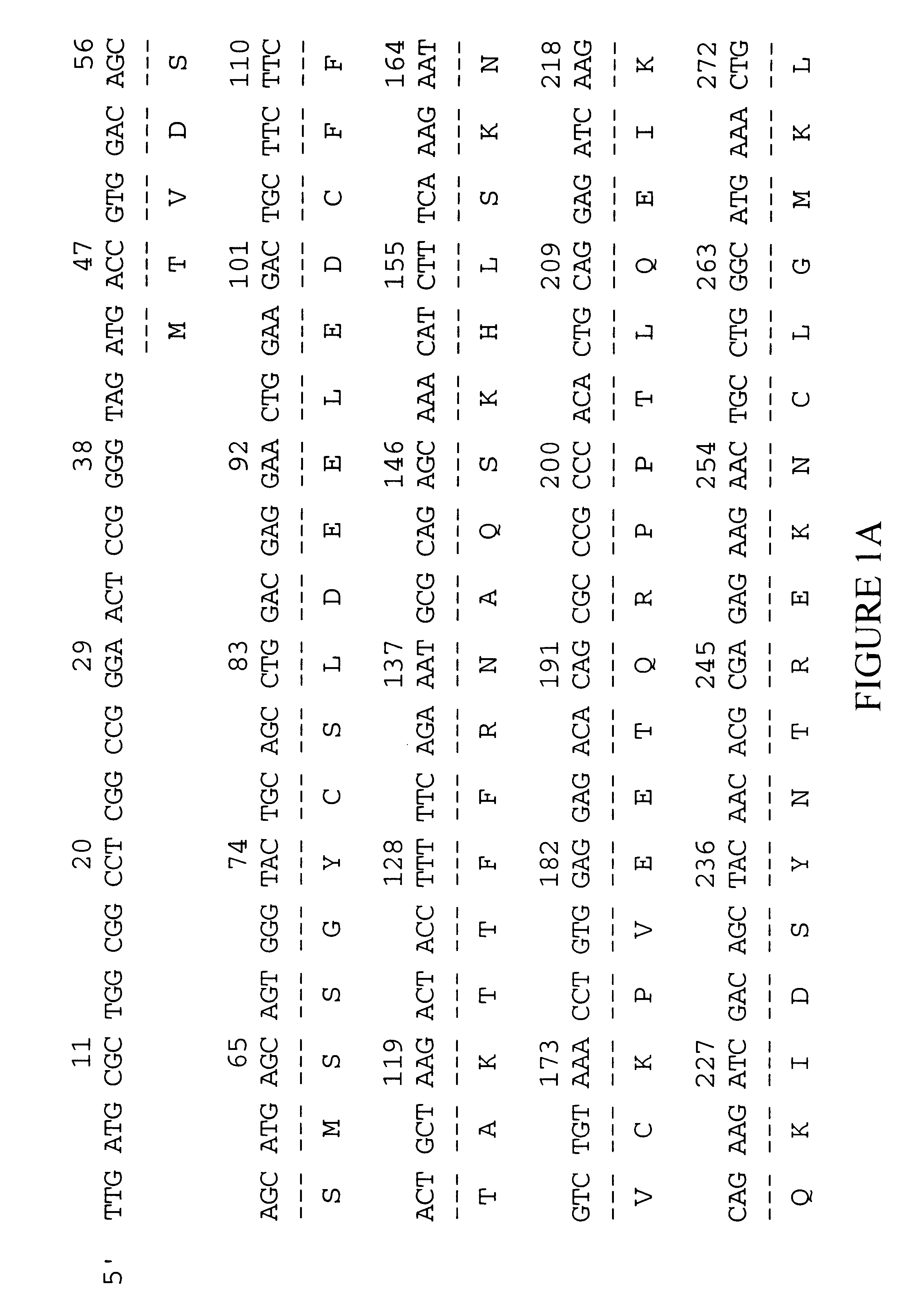
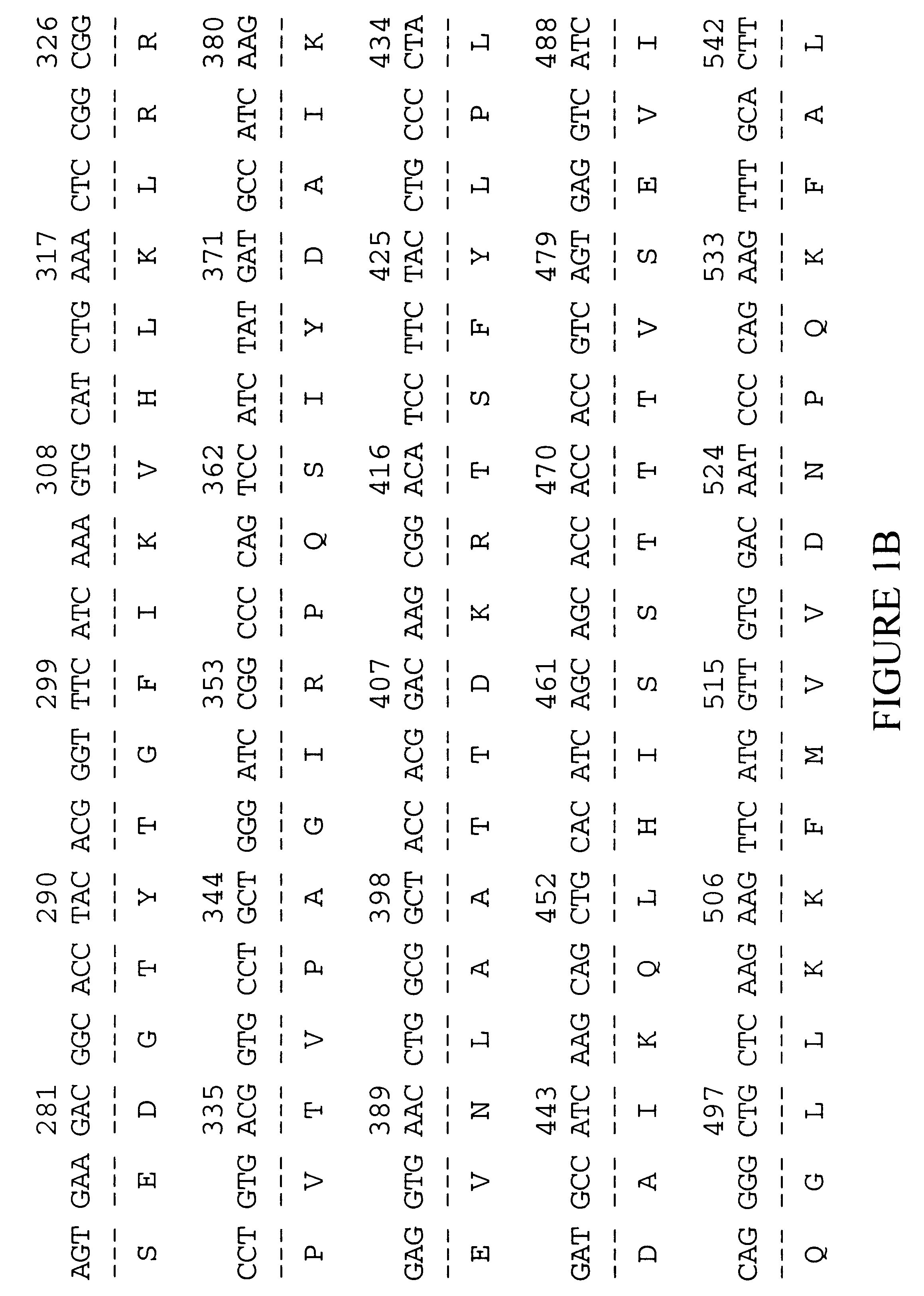
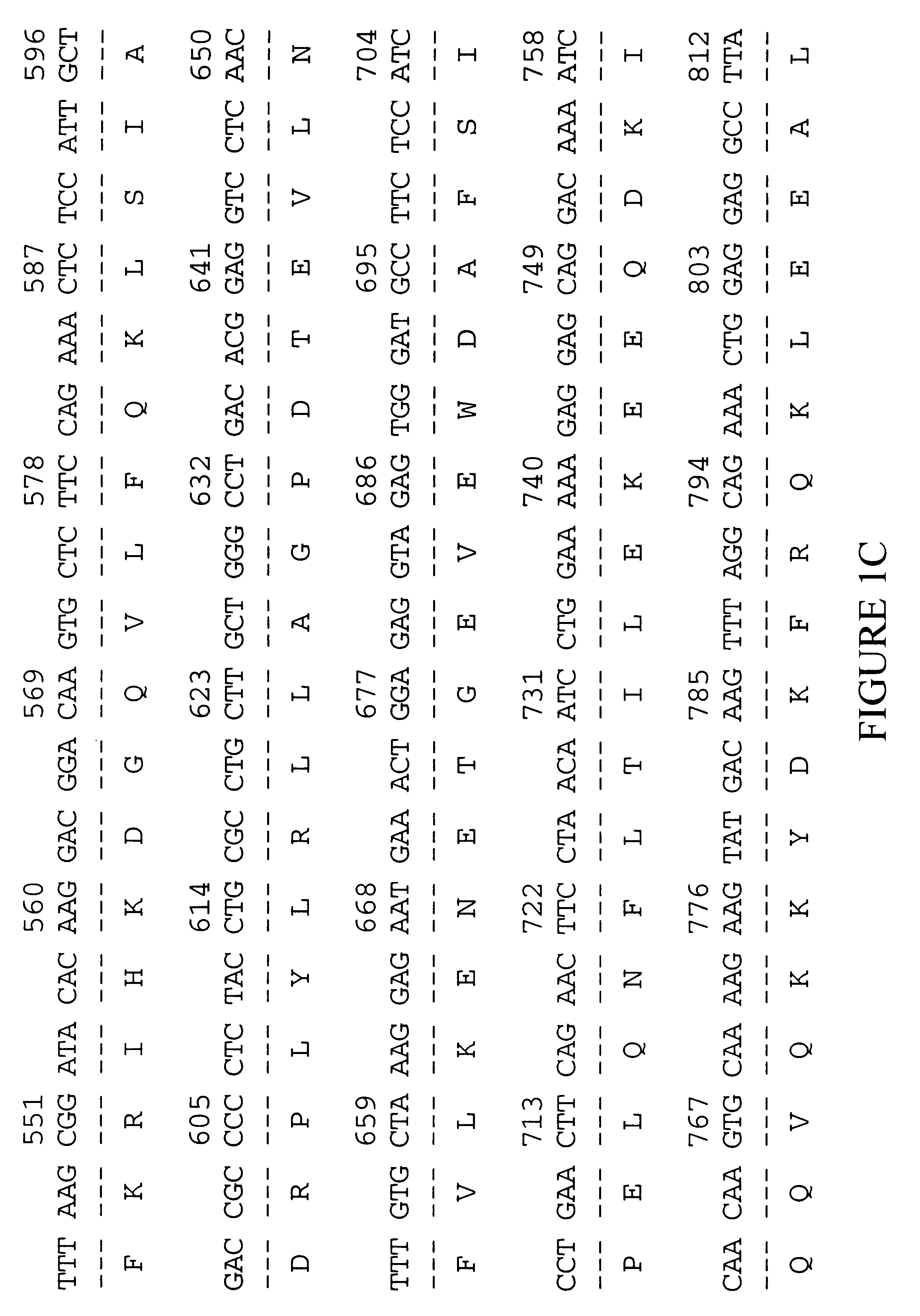
Examples
examples
The examples below are provided to illustrate the subject invention and are not included for the purpose of limiting the invention. For purposes of example, preparation of the human tumorous ovary tissue (OVARTUT05) library will be described.
I cDNA Library Construction
The tissue for the OVARTUT05 library was obtained from a 62 year-old Caucasian female (specimen #0598A). Pathology indicated a grade 4 endometnoid carcinoma with extensive squamous differentiation forming a solid mass in the right ovary. The frozen tissue was homogenized and lysed in TRIZOL reagent (1 g tissue / 10 ml; Life Technologies) using a POLYTRON homogenizer (PT-3000; Brinkmann Instruments, Westbury N.Y.). After a brief incubation on ice, chloroform was added (1:5 v / v), and the lysates were centrifuged. The upper chloroform layer was removed to a fresh tube and the RNA extracted with isopropanol, resuspended in DEPC-treated water, and treated with DNase for 25 min at 37.degree. C. The RNA was re-extracted twice w...
PUM
| Property | Measurement | Unit |
|---|---|---|
| pH | aaaaa | aaaaa |
| pH | aaaaa | aaaaa |
| pH | aaaaa | aaaaa |
Abstract
Description
Claims
Application Information
 Login to View More