
Conductive polishing pad with anode and cathode
a polishing pad and conductive technology, applied in the field of polishing pads, can solve the problems of inability to carry out ecmp, the mechanical aspect of the cmp is reaching the limit of its ability to planarize such ic substrates, and the delamination and fracture of the underlayer cap and dielectric material,
- Summary
- Abstract
- Description
- Claims
- Application Information
AI Technical Summary
Benefits of technology
Problems solved by technology
Method used
Image

Examples
Embodiment Construction
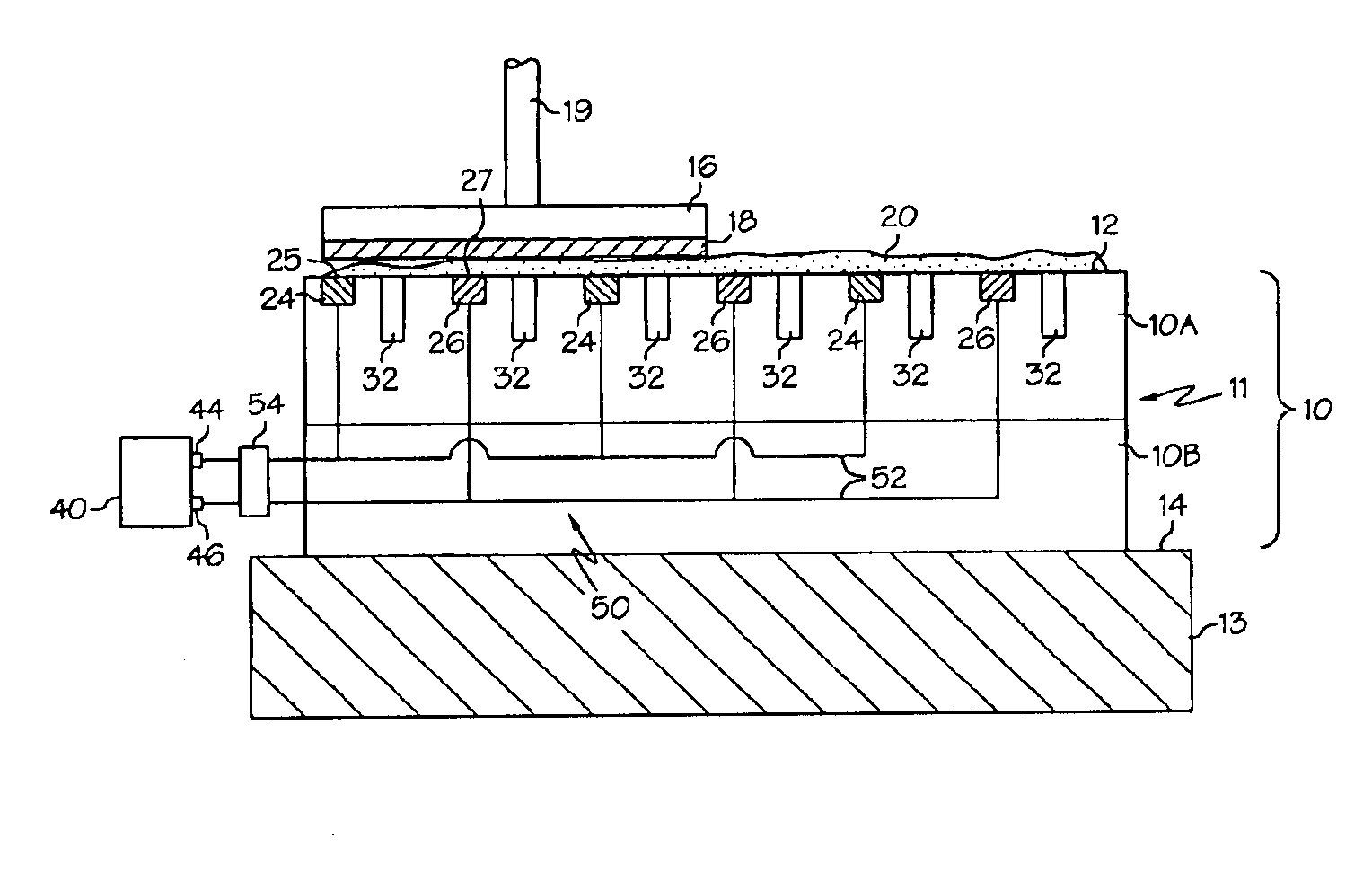
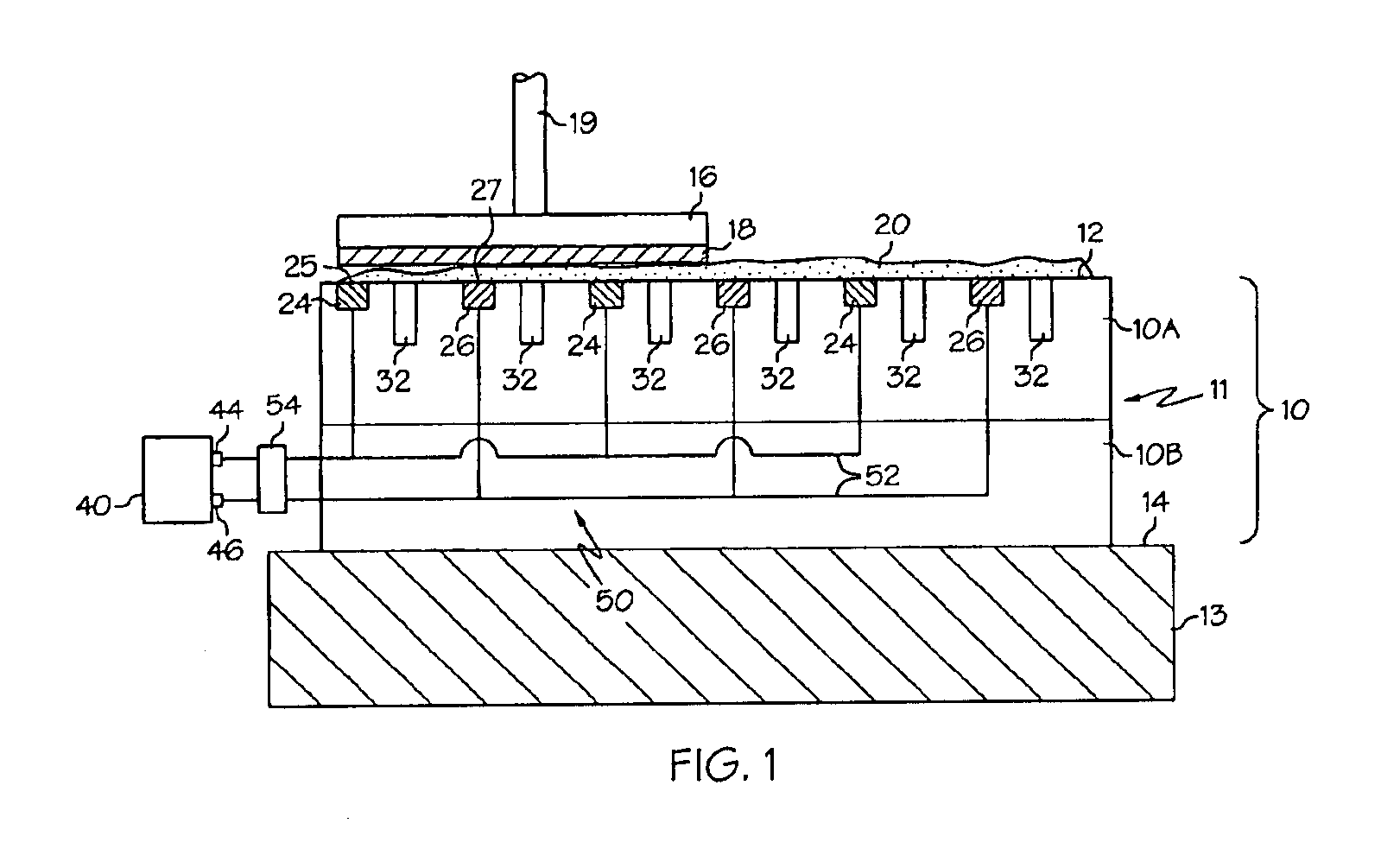
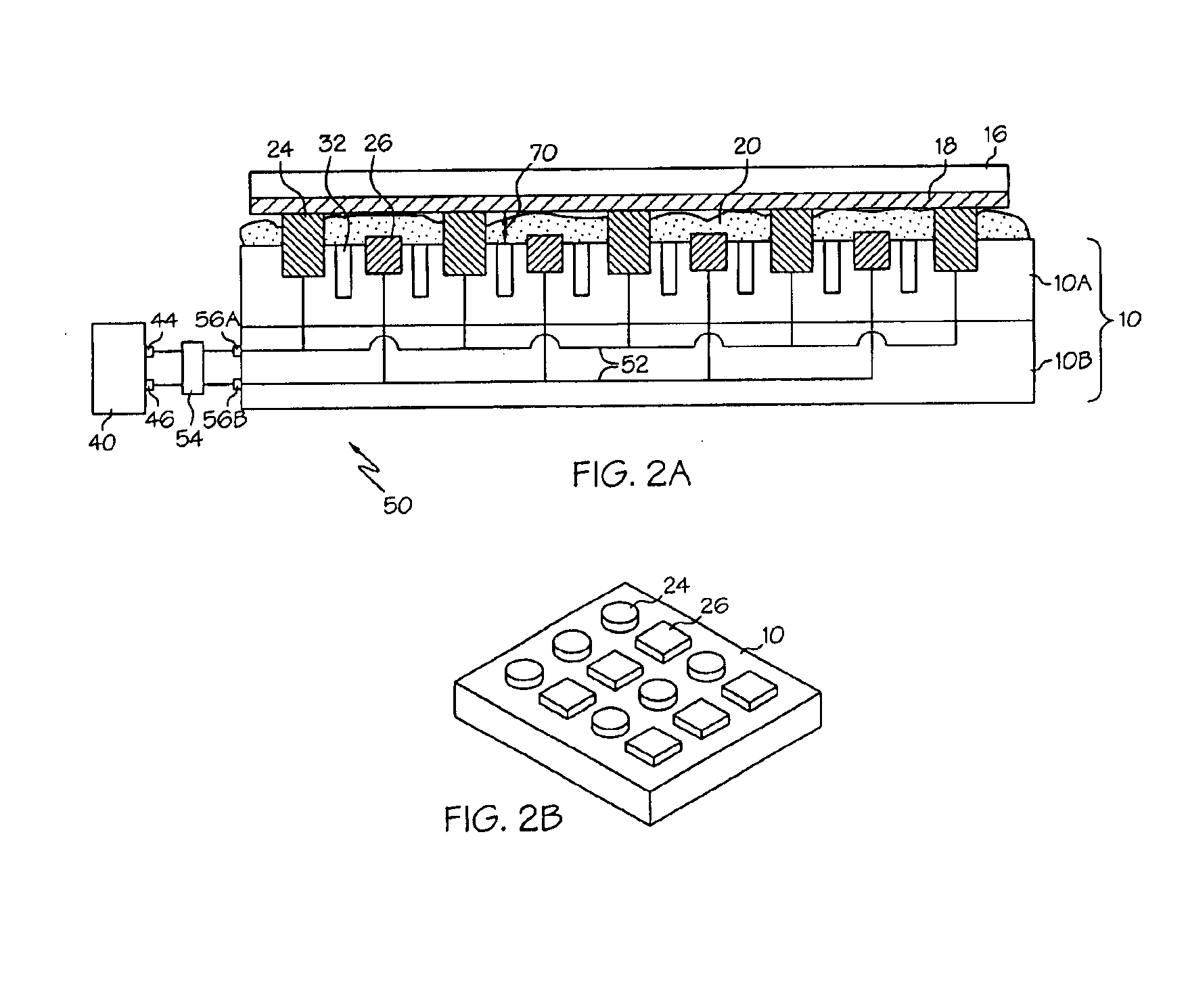
[0032]In the description below, a generalized embodiment of the conductive polishing pad of the present invention is first described. Then several specific embodiments of different polishing pad geometries are set forth for the sake of illustration. An electrical connector system for maintaining electrical connections between the anodes, cathodes and current supply when the polishing pad is in motion relative to the current supply is then described. Next, an embodiment of a polishing / planarizing system that utilizes the conductive polishing pad of the present invention is then described.
[0033]The polishing pad and systems described hereinbelow are suitable for polishing or planarizing various types of semiconductor substrates and wafers that have an uppermost metal layer, or metal portions on the surface to be polished. The present invention is also well-suited for polishing relatively brittle substrates (e.g., gallium arsenide, silicon-on-insulator, low k dielectrics, etc.) because...
PUM
| Property | Measurement | Unit |
|---|---|---|
| Length | aaaaa | aaaaa |
| Length | aaaaa | aaaaa |
| Length | aaaaa | aaaaa |
Abstract
Description
Claims
Application Information
 Login to View More