[0007]This invention relates to the design of a new
thermodynamic cycle and associated engine
layout for increased fuel-efficiency and reliability relative to current engines based on either the Otto or
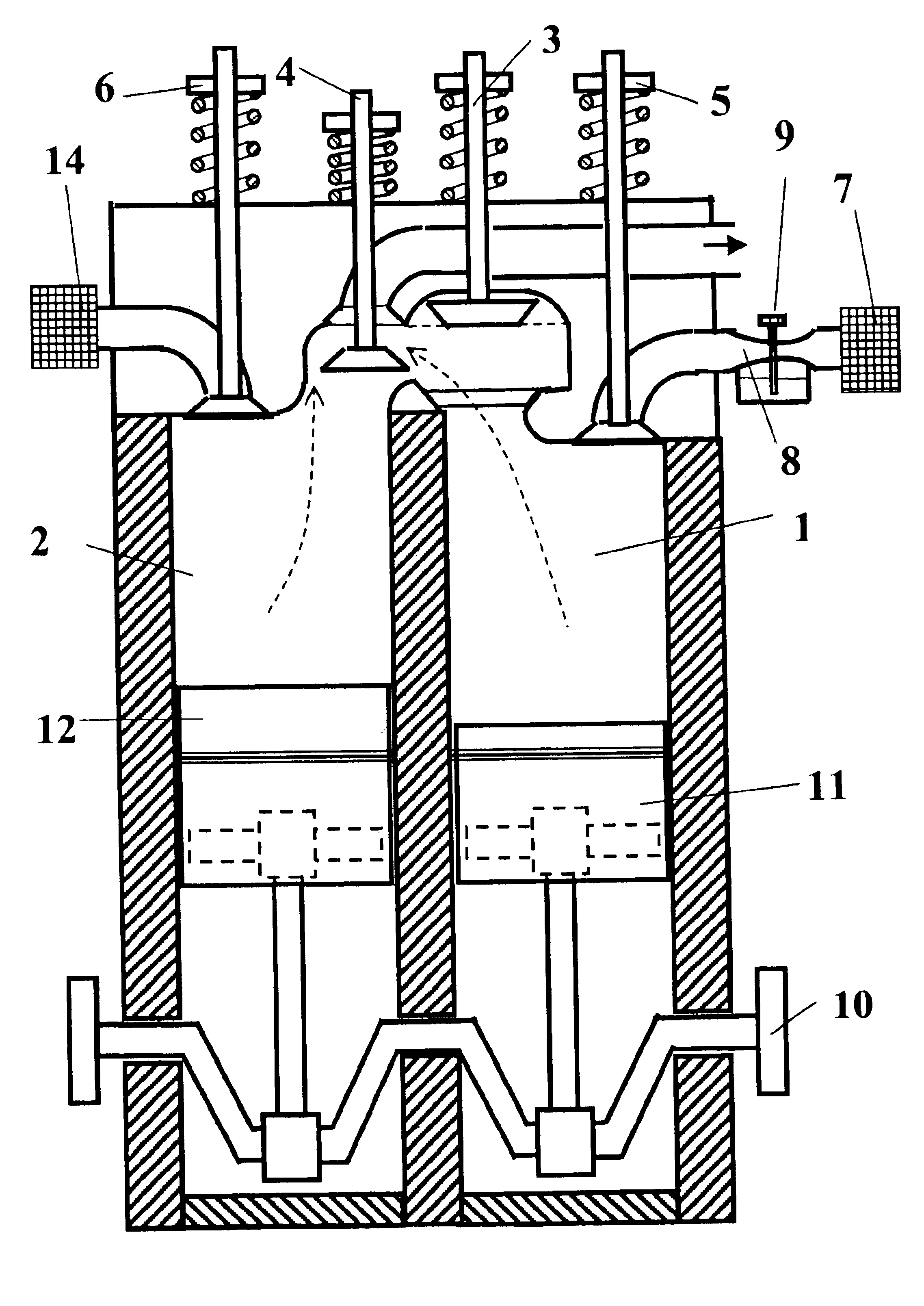
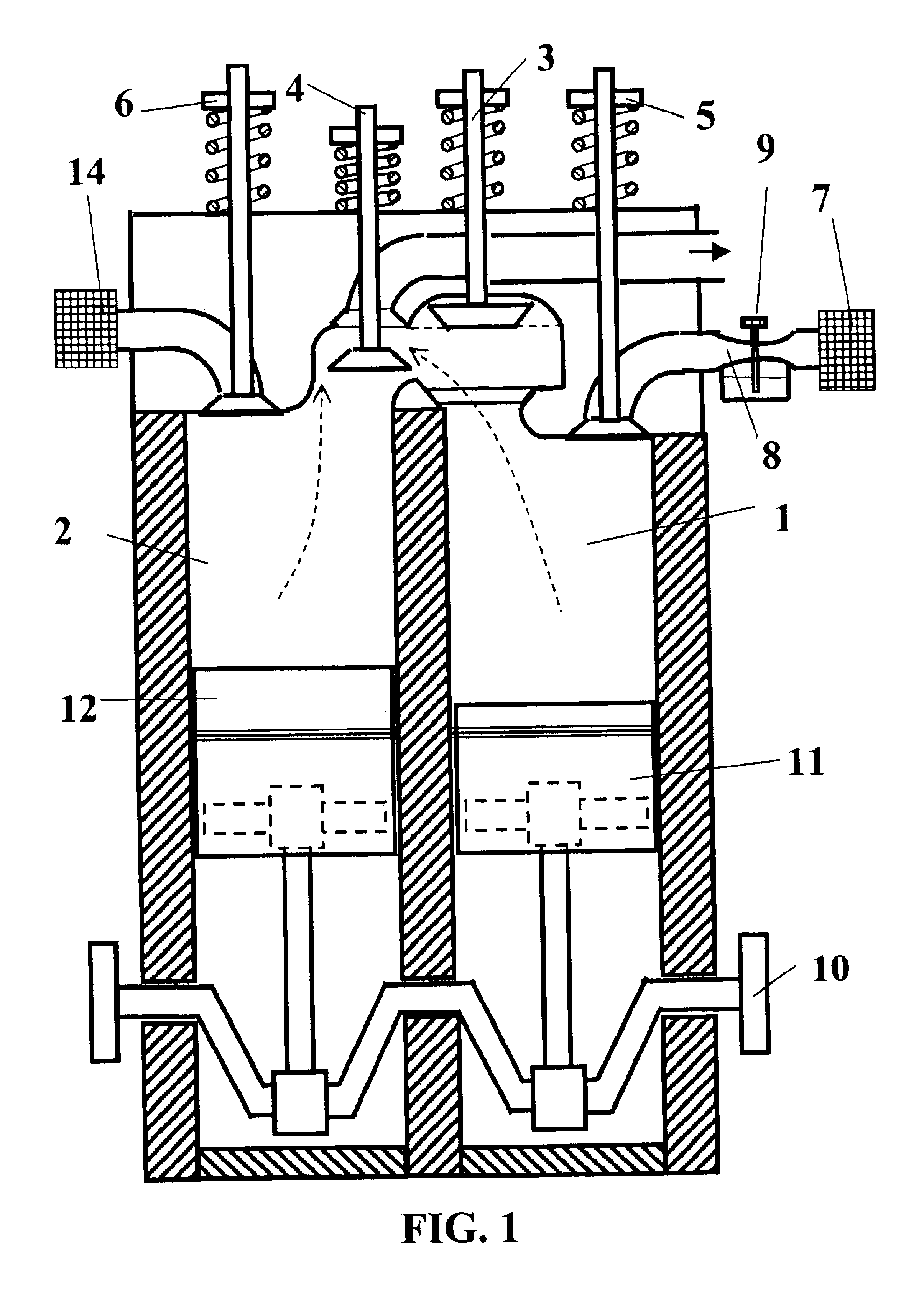
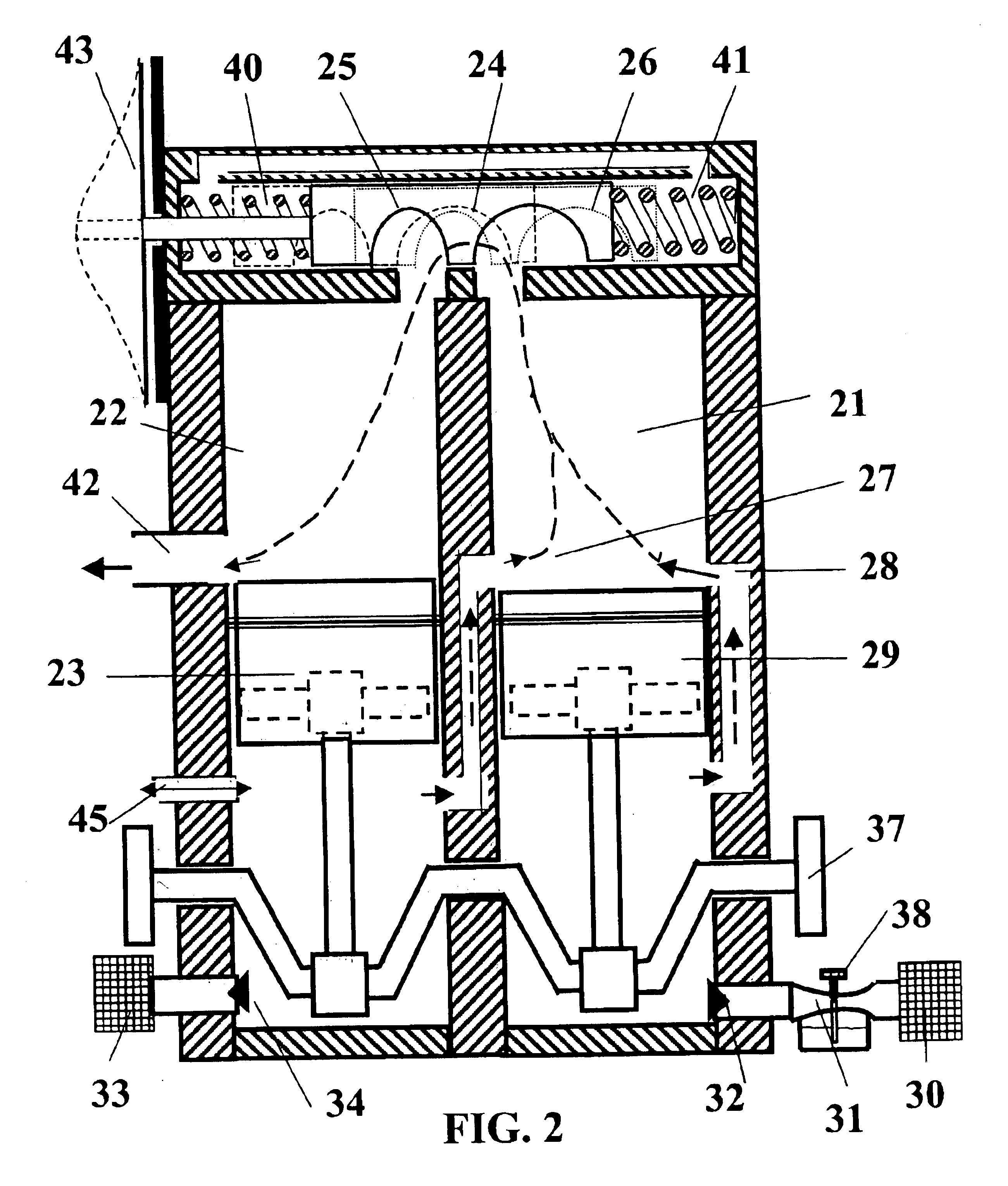
Diesel cycle. The herein disclosed Compression Ignition By Air Injection Cycle and Engine is hereafter referred to as the CIBAI cycle or engine. The thermodynamic equation for its efficiency has been shown to exceed that of both the Otto and Diesel cycles over a wide range of operating conditions. The CIBAI cycle eliminates the need for spark / glow plugs or high-pressure cylinder fuel injectors, thereby enhancing its reliability. With the exception of an additional “cylinder-connecting valve” all other components used are standard for I.C. engines. Described herein are the Compression Ignition By Air Injection (CIBAI) Cycle and Engine. The engine comprises conventional
piston engine components such as:
crankshaft in a casing, cylinders, pistons,
carburetor or low pressure
inlet manifold injection and the in case of 4-
stroke engines
cylinder head valves while for 2
stroke engines cylinder wall ports with
crank-case compression. To enable operation on the CIBAI cycle the engine must have pairs of cylinders with pistons operating in phase with their cylinder heads in close proximity. For a single
crankshaft configuration, each cylinder pair is mounted side-by-side inline with the
crankshaft. If two crankshafts are used, then cylinders can be mounted
head to head or in a V formation. One of the cylinders in each pair is used to compress an air-fuel mixture, with a volumetric
compression ratio rvaf, just short of knock level. The other cylinder compresses only air to
high pressure and temperature with volumetric
compression ratio rva. One additional item is required: the cylinder connecting valve which upon opening should not alter the combined volume of the air-fuel mixture and hot
air volume. This cylinder-connecting valve remains closed during most of the compression stroke, but opens near
Top Dead Center. At that instant nearly all of the hot high-pressure air expands into the cylinder with the air-fuel mixture. The sudden compression and heating of the pre-evaporated air-fuel mixture causes spontaneous ignition near
Top Dead Center. The
combustion pressure rise transfers some of the
combustion products back into the air-compressing cylinder. By the end of the expansion stroke each cylinder contains nearly the same amount of
combustion products. The sudden rise in air-fuel mixture pressure just prior to ignition gives the CIBAI cycle a higher effective
compression ratio than the
Otto cycle. The CIBAI cycle constant volume heat addition renders it also more efficient than
constant pressure burning Diesel cycles over most commonly used compression ratios. A comparison of ideal cycle efficiencies for the CIBAI- Otto- and Diesel cycles has been shown here assuming both pistons used in the CIBAI cylinder pair have the same displacement volume Vo. The following efficiency controlling parameters have been kept equal for comparison purposes:



 Login to View More
  Login to View More