

Osteogenesis stimulator with digital signal processing
a stimulator and digital signal technology, applied in electrotherapy, therapy, etc., can solve the problems of patient compliance and unaddressed need in the industry, and achieve the effect of improving directional control and increasing the targeted stimulation area
- Summary
- Abstract
- Description
- Claims
- Application Information
AI Technical Summary
Benefits of technology
Problems solved by technology
Method used
Image

Examples
Embodiment Construction
[0018]A preferred embodiment of the invention and modifications thereof will now be described with reference to the drawings.
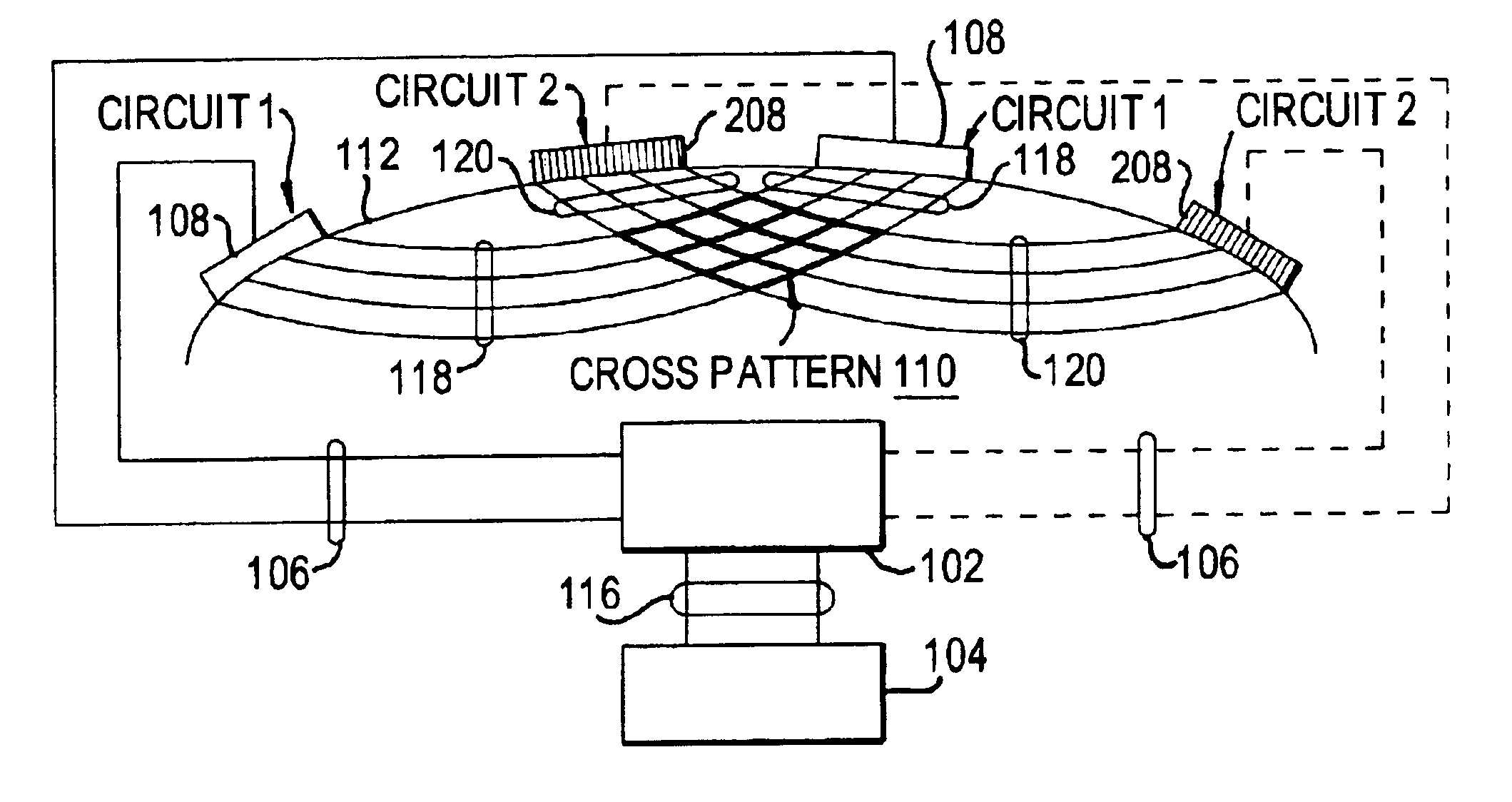
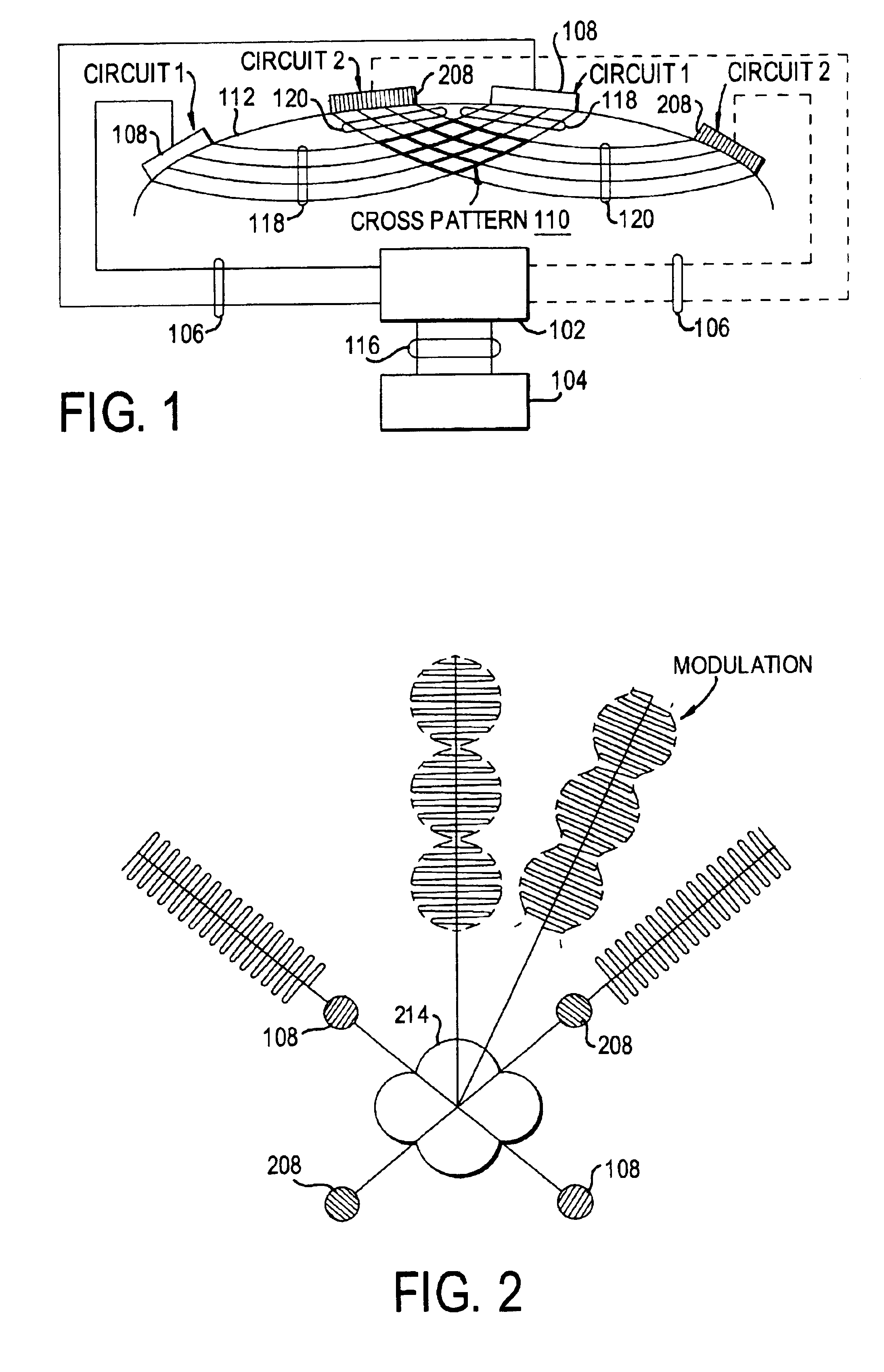
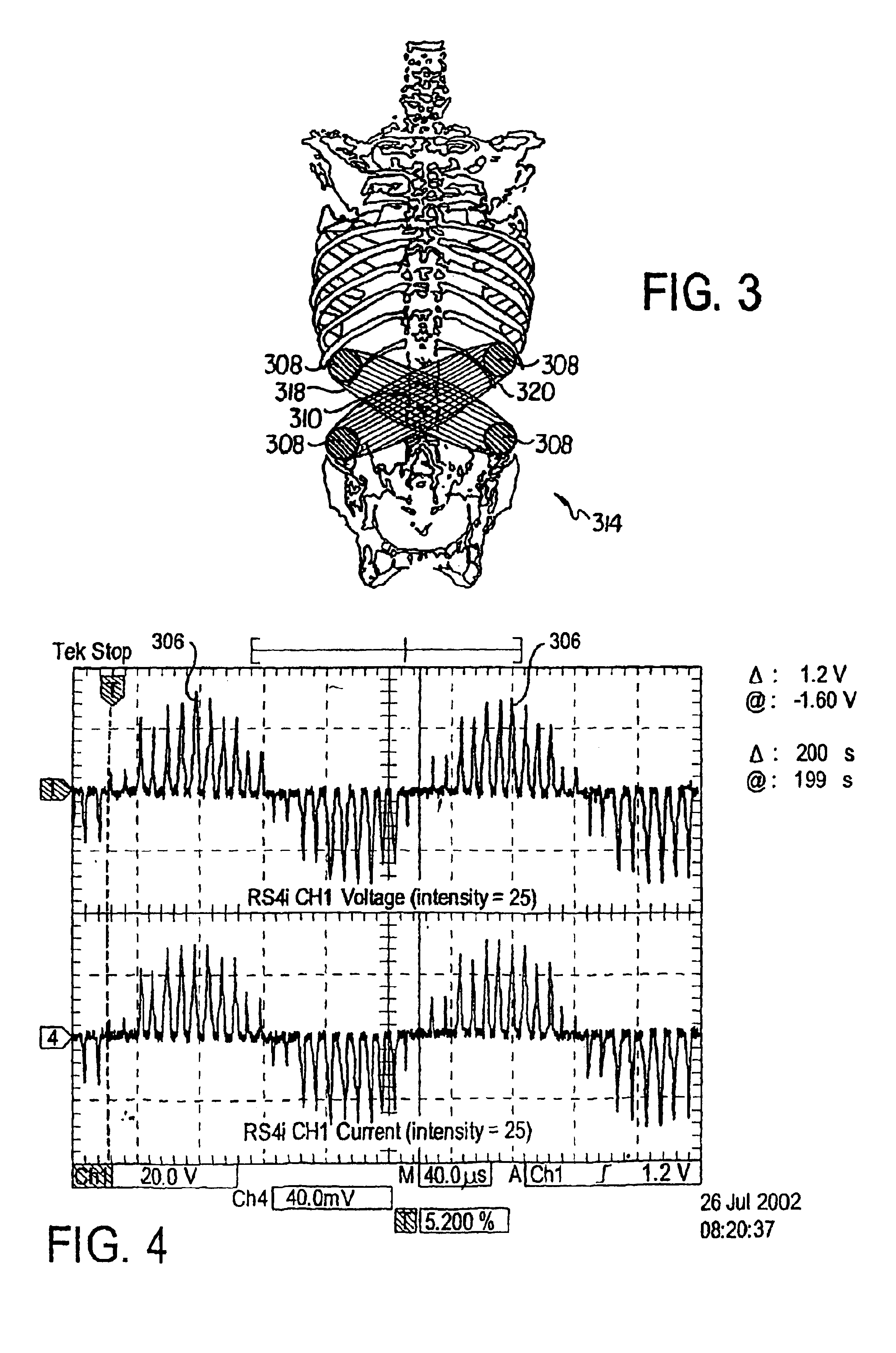
[0019]FIG. 1 shows a stimulator 100 for the electrical stimulation of bone to promote osteogenesis utilizing an interferential current 110 that has a base medium frequency alternating current between 1K-20 KHz. The interferential current 110 is set up between two circuits 118, 120 that are arranged in a cross-pattern. A first pair of surface electrodes 108, 208 are positioned on a subject's skin surface 112 at one set of diagonal corners of a targeted area 214 (see FIG. 2). A second pair of surface electrodes 108, 208 is then positioned at the other set of diagonal corners of the targeted area 214. A digital signal processor 102 is connected to the first and second pairs of surface electrodes 108. When a signal generating source 104 is connected to the digital signal processor 102, a sine-wave-like waveform signal output 106 is created. The results indicate th...
PUM
 Login to View More
 Abstract
Description
Claims
Application Information
 Login to View More