
Enzyme isolated from a Bifidobacterium
a technology of bifidobacterium and enzyme, applied in the field of galactosidase with transgalactosylation, galactosidase, can solve the problems of not being able to identify the enzyme possessing this activity or any sequence, and requiring either high temperature or high lactose, so as to enhance the growth of health-promoting bifidobacterium, high transgalactosylation activity, and high efficiency
- Summary
- Abstract
- Description
- Claims
- Application Information
AI Technical Summary
Benefits of technology
Problems solved by technology
Method used
Image

Examples
example 1
[0040]Isolation and characterisation of transgalactosylating β-galactosidase from B. bifidum. PstI digested chromosomal DNA from B. bifidum DSM 20215 was ligated into pKS plasmid (Stratagene) using standard procedures. The ligation mixture was transformed into E. coli strain MT102 defective in LacZ and β-galactosidase. β-galactosidase producing clones were identified as blue colonies on plates containing the chromogenic β-galactosidase substrate X-gal.
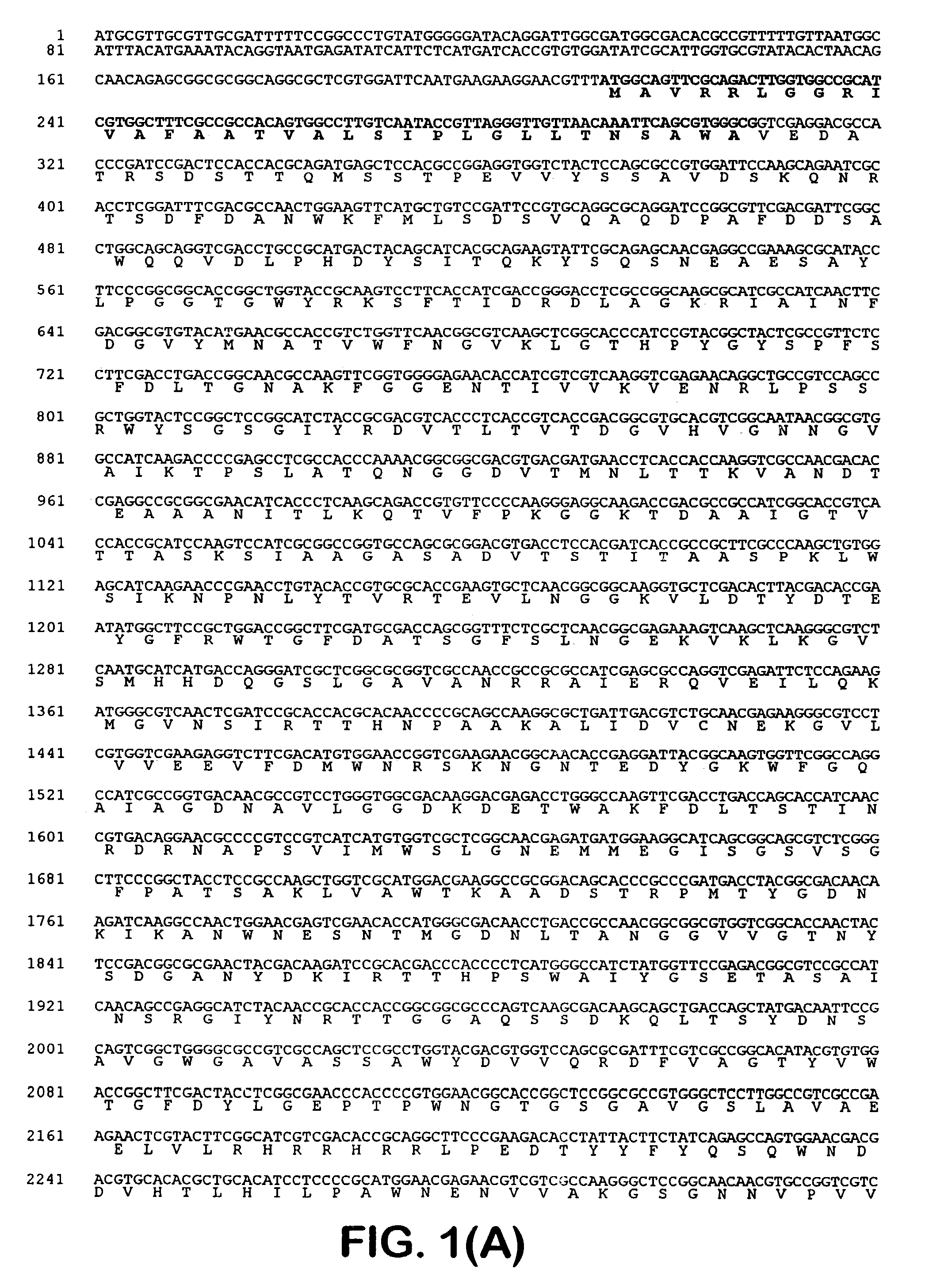
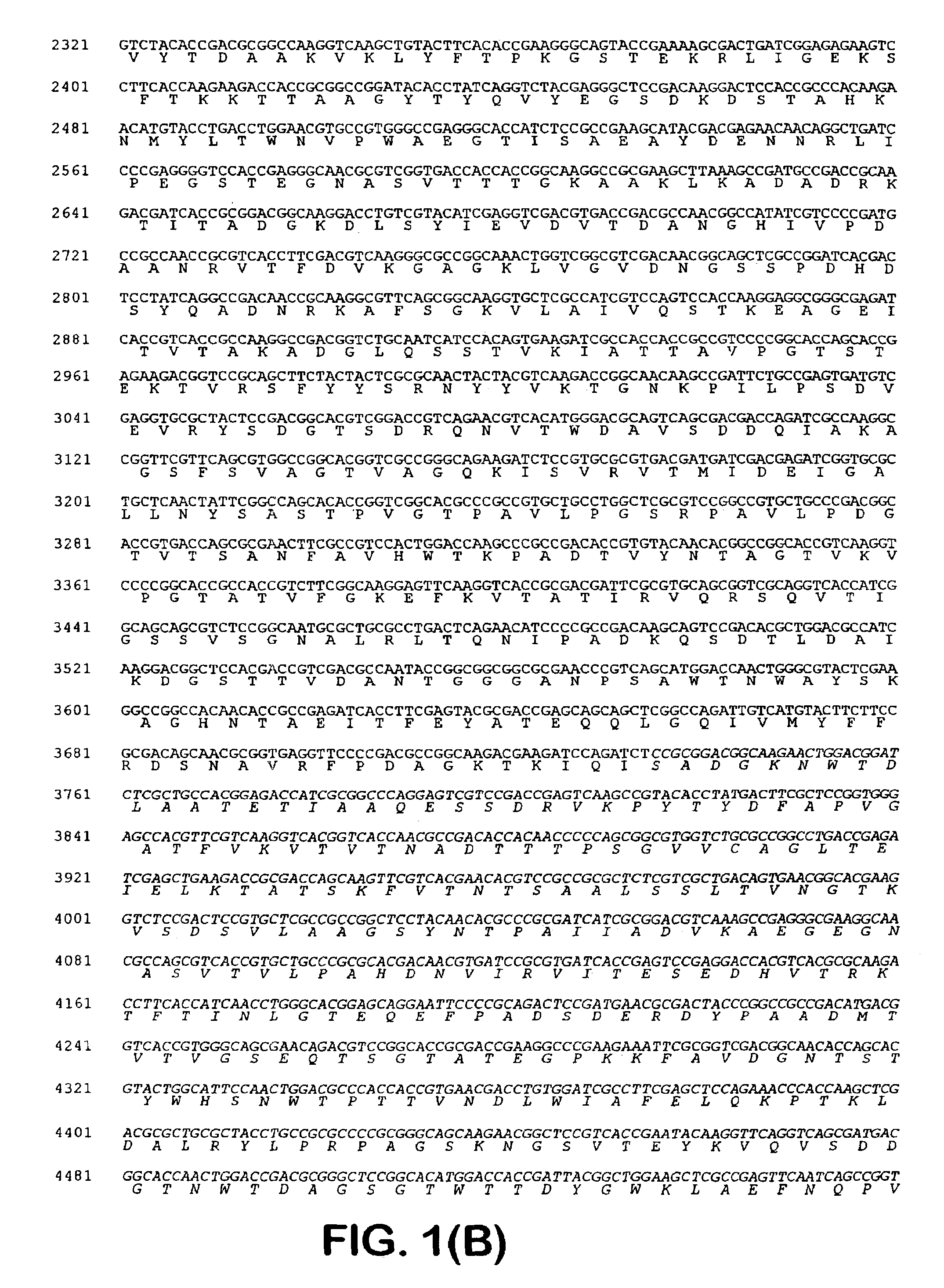
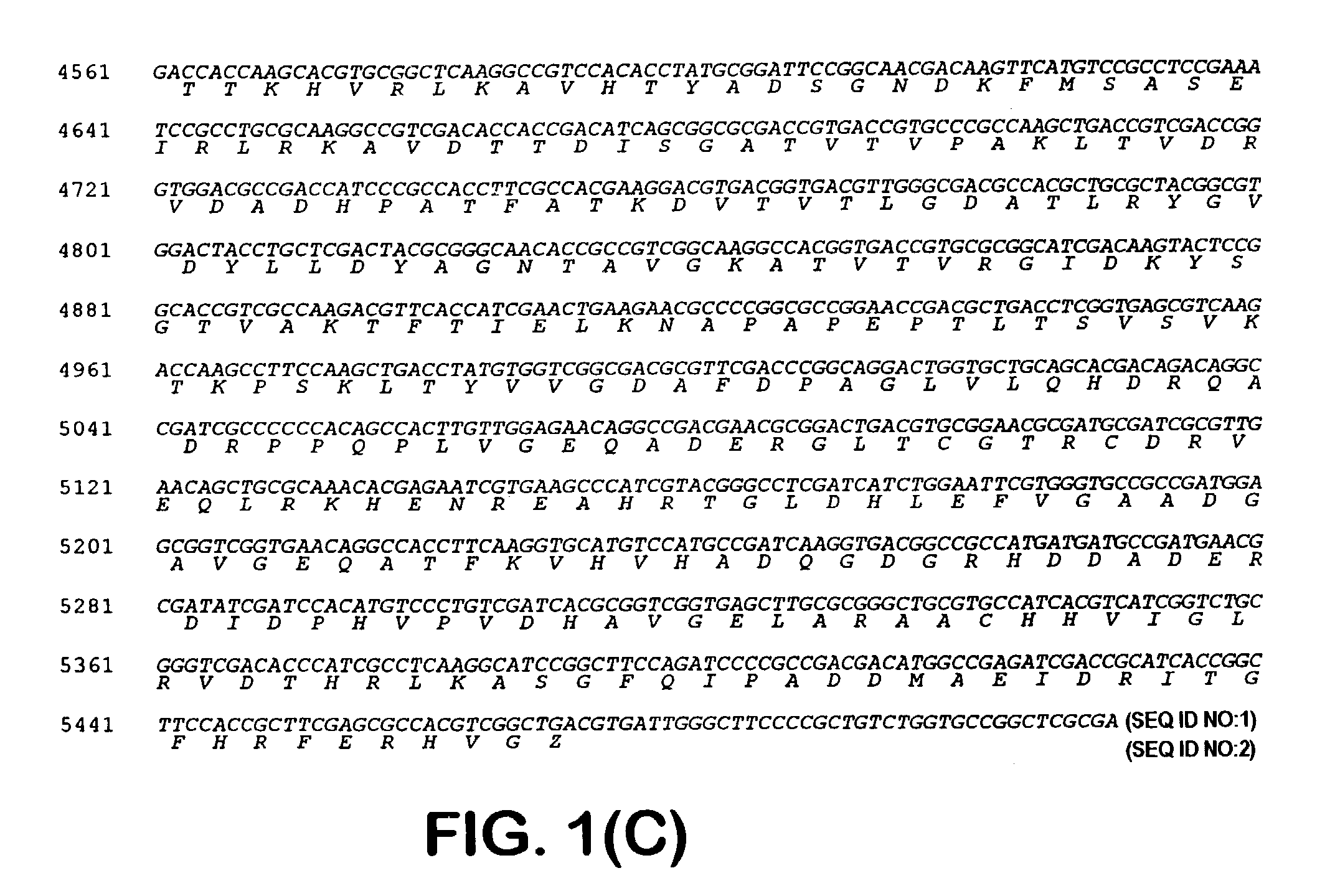
[0041]One of the blue colonies contained a plasmid with an insert of approximately 20 kb, pOLGA5. The insert was further subcloned and partly sequenced and an open reading frame encoding a putative β-galactosidase (OLGA5 β-galactosidase) was identified (FIG. 1). BLAST search showed that OLGA5 β-galactosidase showed the highest degree of homology with Streptomyces coelicolor β-galactosidase (AL133171) and Thermoanaerobacter ethanolicus (YO8557) with 38% and 30% identity, respectively. FIG. 3 shows an “identity tree” of OLGA5 and related...
example 2
[0044]Construction of a truncated OLGA5 β-galactosidase with high transgalactosylase activity. The region of OLGA5 homologous to other β-galactosidases is located in the N-terminal end of the protein. The C-terminal half showed no homology to any known β-galactosidase. However, a sialidase-like galactose-binding domain was observed in the C-terminal part. The role of this C-terminal part of the OLGA5 β-galactosidase was investigated by construction of truncated deletion mutants. The hydrolytic and transgalactosylating activities of the resulting recombinant β-galactosidases were analyzed. FIG. 5 shows that it was possible to delete almost one third of the OLGA5 enzyme and still retain hydrolytic activity.
[0045]When the transgalactosylating activity was analysed, similar results were obtained with extracts from E. coli containing the plasmids pOLGA5, pOLGA342, and pOLGA345. However, extracts of cells harbouring pOLGA347 showed an increased level of oligosaccharides produced and almos...
example 3
[0046]Characterization of the transgalactosylating activity of OLGA347. Two methods were used to quantitate the transgalactosylating activity of OLGA347 β-galactosidase: TLC analysis of reaction mixtures containing radioactively labelled lactose and HPLC analysis after enzymatic conversion of unlabeled lactose.
[0047]Experiments with radioactivity were carried out with lactose containing the 14C-label at the C-1 position of glucose. Since the label was in the glucose part of the disaccharide, only reaction products containing glucose were detected. FIG. 7 shows the result of a transgalactosylation experiment with 15% lactose and varying amounts of OLGA347 enzyme. After separation of the reaction mixture by TLC, the plate was scanned and the radioactive spots were quantitated in a phosphoimager. At low enzyme concentrations (between 0 and 0.2 μl of the extract), the glucose and oligosaccharide levels were almost identical, indicating that all glucose molecules were exploited as substr...
PUM
| Property | Measurement | Unit |
|---|---|---|
| temperatures | aaaaa | aaaaa |
| volume | aaaaa | aaaaa |
| total volume | aaaaa | aaaaa |
Abstract
Description
Claims
Application Information
 Login to View More