
Immunodiagnostic test cards having indicating indicia
a test card and immunodiagnostic technology, applied in the field of immunodiagnostic test cards, can solve the problems of driving additional cost into the design of a suitable illumination system, difficult for image processing algorithms of automated apparatus to accurately locate the exact position of the column(s) in the field of view, etc., to achieve accurate gradation, easy to discern, and better visualize the position
- Summary
- Abstract
- Description
- Claims
- Application Information
AI Technical Summary
Benefits of technology
Problems solved by technology
Method used
Image

Examples
Embodiment Construction
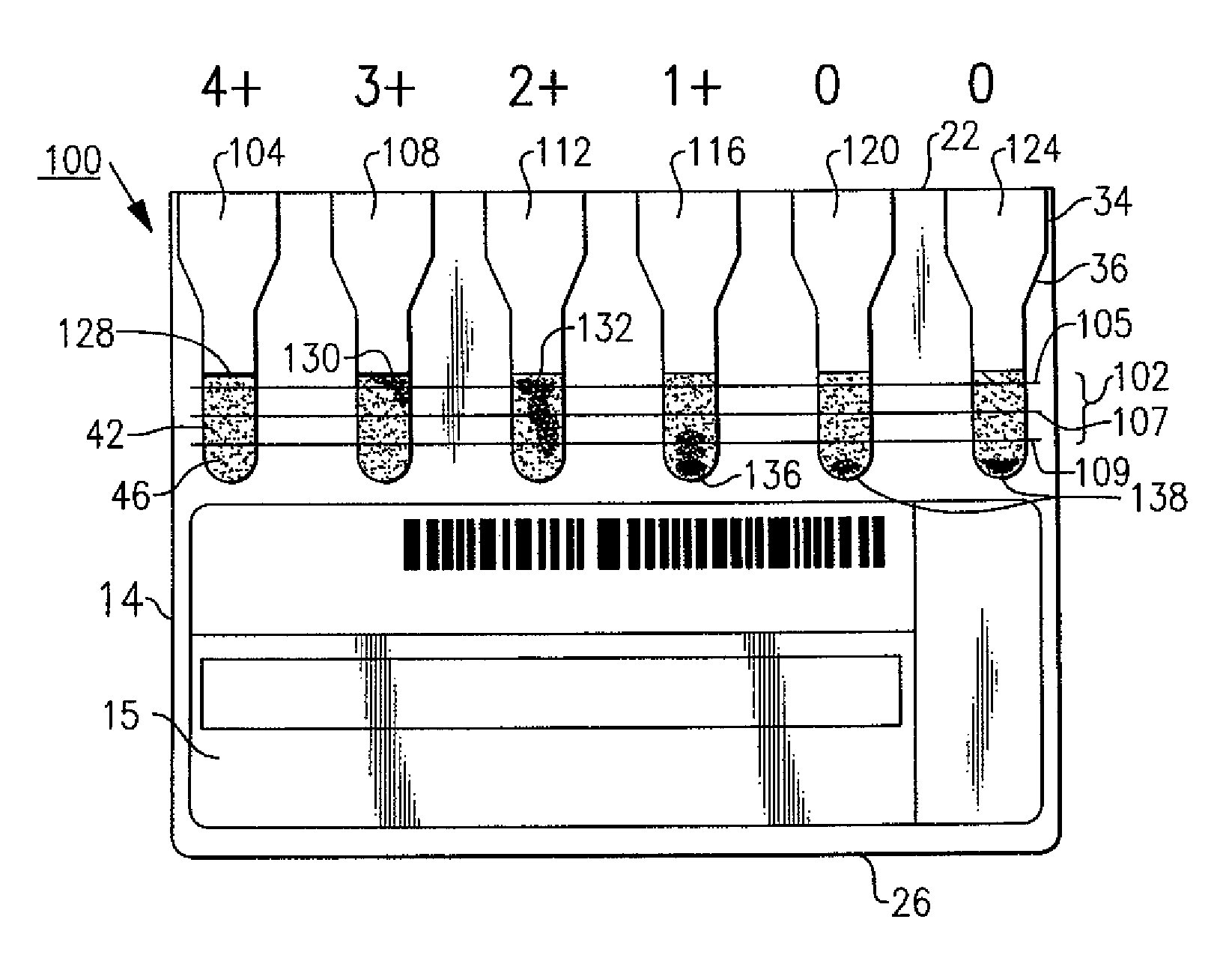
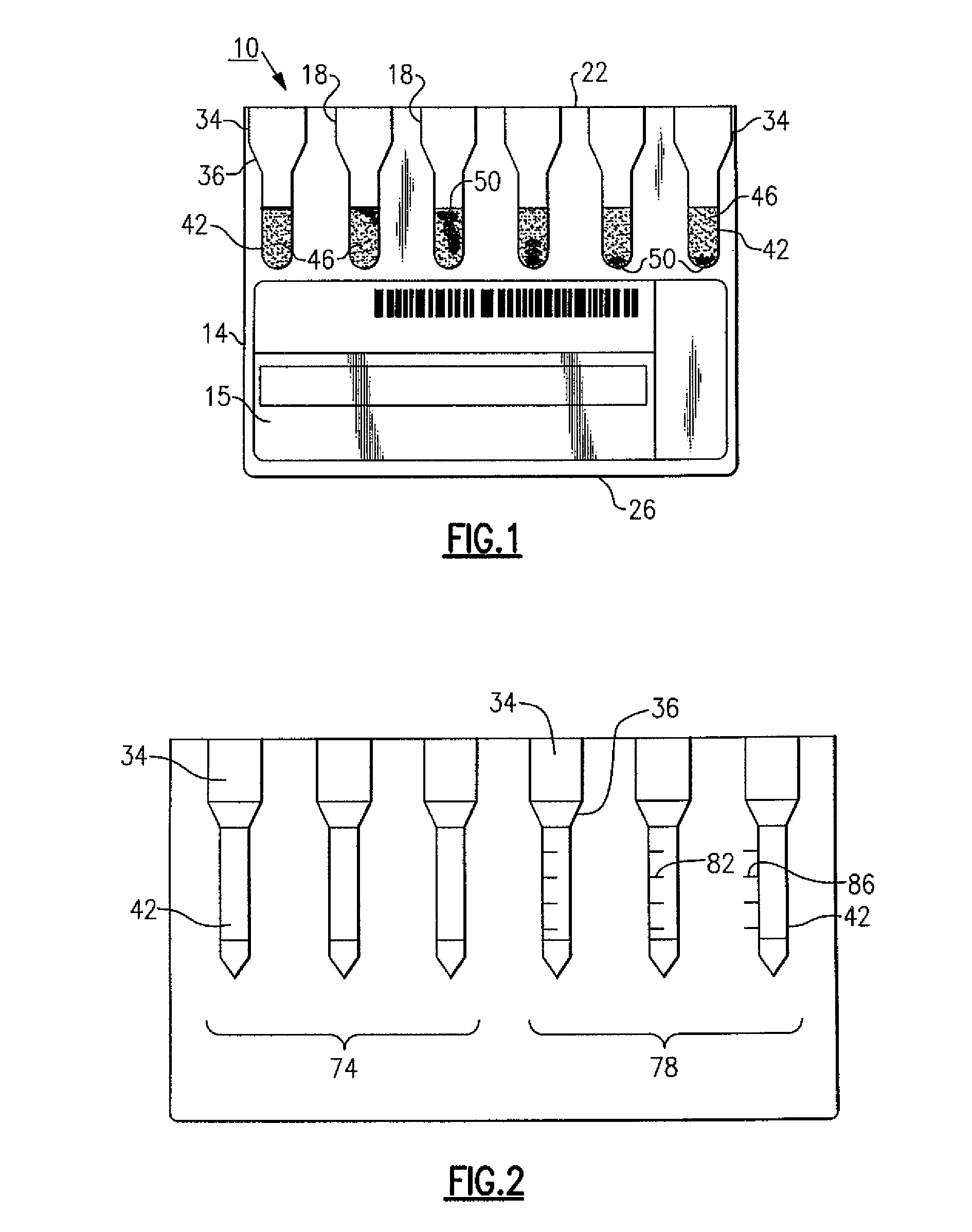
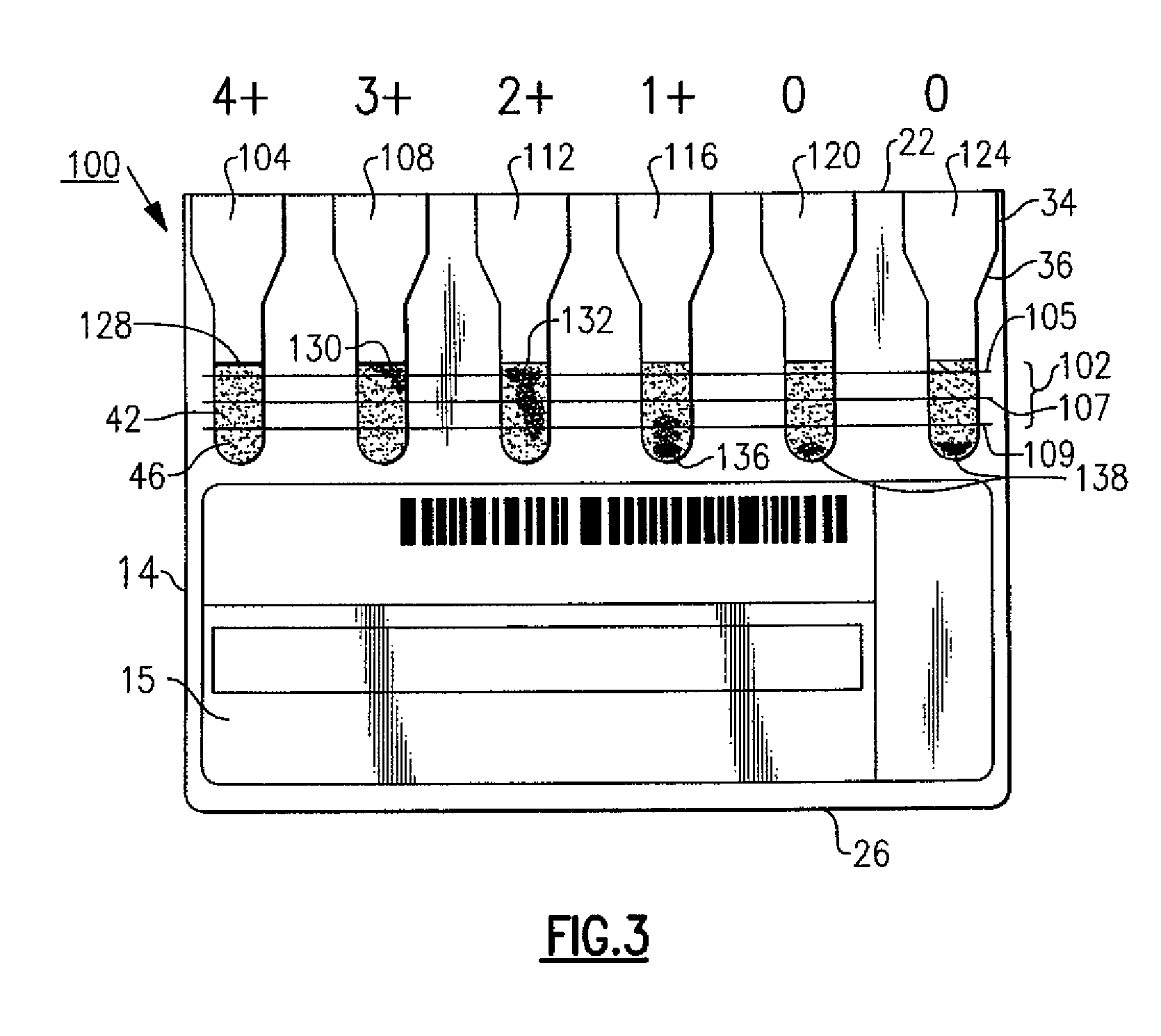
[0015]The following description relates to an improved immunodiagnostic test card or cassette that includes indicia to enable a user and / or an automated apparatus to better visualize and grade sample agglutination reactions for purposes of blood bank applications such as antibody screening and identification, ABO blood grouping and Rh phenotyping, reverse serum grouping, direct antiglobulin testing and antigen typing, among other uses. This indicia also provide a means to more effectively control and maintain aspects relating to the manufacture of an immunodiagnostic test card or cassette. It will be readily apparent to those of sufficient skill that there are available variations and modifications that are within the inventive aspects discussed herein. For example and in the examples described herein, the patient sample tested is red blood cells (RBCs) or sera, though the patient sample can include other body fluids, such as but not limited to amniotic fluid, spinal fluid, urine, p...
PUM
| Property | Measurement | Unit |
|---|---|---|
| diameter | aaaaa | aaaaa |
| diameter | aaaaa | aaaaa |
| transparent | aaaaa | aaaaa |
Abstract
Description
Claims
Application Information
 Login to View More